Last updated November 18, 2026






Free written scope consultation - allowances, timeline, and change-order rules on paper before a single trade is scheduled
Choosing the Right Construction Brand: A Buyer’s Guide for Miami
Every remodeling contractor in Miami claims to be licensed, insured, and “committed to quality.” None of that language is enforceable. The question isn’t what a contractor says about their work; it’s whether they’ll sign a document that specifies what they’re guaranteeing, for how long, and what remedy they owe you if they’re wrong. This guide gives you the exact questions, documents, and checks that separate a verifiable guarantee from a tagline. By the end, you’ll know how to read a written warranty, pull a contractor’s real complaint history, compare two proposals line by line, and ask the two questions that reveal more about a contractor’s character than any review ever will.
Quick Answer
Choose a construction brand in Miami by requiring a written workmanship warranty that names its scope, duration, and remedy; verifying the contractor’s DBPR complaint history and Miami-Dade permit finaling record; confirming a state license plus a local business tax receipt and active workers’ comp coverage; and comparing proposals against a scope matrix instead of the bottom-line number. A brand that hesitates to hand you any of these documents before you sign is telling you something.
Styles & brands we work with
- Kitchen remodeling
- Bathroom remodeling
- Home additions & ADU
- Roofing
- Windows & doors
- Driveway & pavers
- Fence
Table of Contents
- What makes a workmanship warranty enforceable in Florida?
- How do you check a contractor’s real track record in Miami?
- What does “licensed and insured” actually have to mean in Miami?
- How do you compare written proposals from competing contractors?
- What two questions reveal a contractor’s character?
- Why permits and inspections are the quiet backbone of a Miami remodel
- How Miami’s climate should change the contract you sign
What makes a workmanship warranty enforceable in Florida?
A workmanship warranty is enforceable in Florida when it is written into the contract, names a specific duration, defines what it covers, and states the remedy the contractor owes you. “Satisfaction guaranteed” on a brochure covers nothing. A signed document that says “we reinstall any tile that debonds within 12 months at no charge” covers something you can act on.
Ask for the actual warranty document before you sign anything, not after. A warranty that only exists as a line on the proposal is not a warranty; it’s a marketing sentence. In our experience, the contractors who run disciplined jobs hand it over without hesitation because it’s already part of their packet.
Here’s what a written warranty must specify to hold up:
- Scope of coverage. Which trades and systems it protects: framing, drywall, tile, cabinetry installation, roofing, plumbing connections. Vague phrases like “all workmanship” need a definition attached.
- Duration. A real number of months or years, written out. A promise of “a full year” is fine only when the contract says twelve months.
- Remedy. What the contractor actually does when a defect appears. Repair at no charge? Replace? Refund a proportional amount? “We’ll look at it” is not a remedy.
- Exclusions. What voids the warranty: homeowner alteration, acts of God, failure to maintain, products installed over defective substrate supplied by the owner. A warranty with no exclusions listed is either sloppy or hiding something.
- How to file a claim. A phone number, an email, and a response window. If there’s no process, there’s no guarantee.
Bradford Remodeling puts that in writing through the 365-Day Done Right Promise: every completed project carries a full-year written guarantee, and if the work fails inside that window, Bradford returns and corrects it at no charge. Every price is written before any work starts, and the guarantee document is in your hand at close, not promised by email later.
How do you check a contractor’s real track record in Miami?
You check a contractor’s real track record in Miami using three public records, not reviews: the Florida DBPR license and complaint database, Miami-Dade County’s building permit system, and the BBB complaint history. Google reviews tell you how a contractor handles marketing. These three tell you how they handle failure, which is the only thing that matters when the stucco cracks.
- Search the DBPR database. Go to the Florida Department of Business and Professional Regulation license search and pull the contractor’s license number. Look for “active.” Then read the complaint history. A license with a disciplinary action is not automatically disqualifying – some are resolved with a fine – but you need to know what happened and whether the contractor corrected it.
- Search the Miami-Dade permit portal. Find the contractor’s active and finaled permits by license number. A clean record looks like a long list of permits that were pulled, inspected, and closed as final. A suspiciously empty record from a contractor claiming years of work in Miami is worth a hard question – either they don’t pull permits or they route the paperwork through someone else.
- Read BBB complaint resolution. Complaints happen. What separates a professional from a problem is the pattern of responses: did they answer, did they resolve, and did they follow through. A file of answered and closed complaints reads better than a perfect five-star wall with nothing behind it.
What “clean” looks like: an active license, no unresolved complaints, permits finaled on a consistent basis, and a BBB file where the owner responded to every complaint rather than letting them age. What should raise your flag: a wildly full review profile paired with a blank permit history, or a license issued twelve months ago with a hundred “years of experience” claimed in the copy.
What does “licensed and insured” actually have to mean in Miami?
“Licensed and insured” in Miami has to mean four separate things: a valid state license, a local business tax receipt, a certificate of general liability insurance at a limit sized to your project, and active workers’ compensation coverage. If any one of those is missing, the other three don’t protect you.
The state license is issued by the DBPR and can be verified directly; it’s what allows the contractor to pull permits and be bound by Florida’s construction standards. The local business tax receipt is a Miami-Dade requirement that confirms the business is registered locally – a lot of “licensed” crews work in Miami without one. They aren’t the same document, and a contractor who pushes back on being asked for the local receipt is telling you they aren’t set up to be inspected.
General liability insurance protects you if the crew damages your home. Ask for the certificate and match the limit to the size of your job. On a small bath refresh a modest limit may be fine; on a whole-home remodel or a kitchen with structural work, you want coverage that clearly exceeds the value of the work. Have your insurer or a quick call to the listed agent confirm the policy is active as of the proposal date.
Workers’ comp is non-negotiable regardless of crew size. In Florida, a homeowner can be exposed to a personal injury claim if an uninsured worker is hurt on their property. A contractor using two crews of subcontractors needs to be asked directly whether those subs carry their own coverage. Bradford works with background-checked, uniformed technicians, and standards like that are set at the Garrison Partners level rather than left to individual job sites.
How do you compare written proposals from competing contractors?
You compare written proposals by rebuilding them into a single scope matrix – one column per contractor, one row per scope item – and answering “included or not included” for each row. The bottom-line number is the last thing you look at, never the first. Two bids $9,000 apart on a Miami kitchen remodel usually aren’t $9,000 apart on the work; they’re $9,000 apart on what’s in the paperwork.
The scope elements that must be present for bids to be comparable:
- Demolition and disposal – spelled out, including dumpster and haul-away.
- Rough-in and mechanical – plumbing, electrical, and HVAC alterations with line-item pricing for each.
- Substrate and prep – what goes under the tile, behind the shower, under the cabinet run. A contractor who specifies Schluter waterproofing on a shower pan and one who doesn’t are not bidding the same job.
- Materials by brand and model number – KraftMaid or Wellborn cabinetry with the specific door style, not “premium cabinets.” A spec of a Delta or American Standard fixture with a model number, not “chrome faucets.”
- Permit fees and inspection responsibility – who pulls, who pays, who schedules.
- Finish schedule and paint – number of coats, brand, sheen.
- Clean-up and final walk-through – define what “squared away” means at close: site swept, debris gone, punch list signed, written guarantee handed over.
The line items most often omitted and later billed as change orders: moving a drain line, adding a dedicated circuit, repairing subfloor once the old tile is up, replacing a shut-off valve, and repair of drywall after the electrician opens a wall. Ask every contractor to price a contingency line for hidden conditions and state whether the number is fixed or hourly. A written price before work starts, with no numbers that move at the door, is the standard to hold them to. If you’re weighing a whole-home scope, it’s worth reading how a general contractor in Miami scopes and prices a project before you build the matrix.
What two questions reveal a contractor’s character?
Ask two questions before you sign: “Can I see the actual warranty document?” and “Can you walk me through your inspection hold-point schedule?” The answers tell you whether the contractor runs a documented process or is improvising, and that distinction affects your project far more than the bid number.
“Can I see the actual warranty document?” An acceptable answer is an immediate yes – the document lands in your inbox that day, with scope, duration, remedy, and exclusions listed. A polite deferral (“we’ll include that with the contract”) is a yellow flag. A stumble or a pivot to “we stand behind our work” is a red flag. You are asking for a piece of paper, not a promise.
“Can you walk me through your inspection hold-point schedule?” In Miami-Dade, a remodel involves a sequence of inspections: foundation or slab, framing, rough-in (plumbing, electrical, mechanical), insulation, and final. A professional can tell you the sequence in plain language and where in the schedule they hold work until the inspector signs off. That last part is the tell. A contractor who says “we schedule inspections whenever” is going to discover problems late. A contractor who says “we don’t cover drywall until the rough-in inspection passes” is showing you a process you can hold them to.
A third question we’ve seen separate the field: “Who’s on site every day, and how do I reach them?” A real name, a real phone number, and a live person who answers it – that’s an accountability structure. Automated phone systems, voicemail queues, or “your project manager will reach out” with no name attached are ways to avoid being reached.
Why permits and inspections are the quiet backbone of a Miami remodel
Permits and inspections are the backbone of a Miami remodel because the building department is the only party besides you with a formal record of the work. Every inspection that passes becomes a permanent public record tied to the address and to the license. That record is what your homeowner’s insurance relies on if a claim comes up years later, and it’s what a future buyer’s inspector will search before closing.
What to look for on a permit:
- Pulled by the contractor, not the homeowner. A contractor who asks you to pull your own permit is asking you to carry the risk and the record.
- Finaled, not just issued. An open permit from a prior job can jam a future sale or refinance in Miami-Dade. Confirm your contractor closes them.
- Matching scope. A permit for “interior alterations” when you’re moving a load-bearing wall is a mismatch, and the inspector will catch it.
- Fee transparency. Permit fees should be a visible line item, not folded into “miscellaneous” or left to surprise you after approval.
Miami-Dade and city-specific code requirements change, and a contractor who works in Miami regularly enough knows the current review times, the shot requirements, and the standard hold points for your area of the county. On a kitchen, that sequence matters – the rough-in inspection has to pass before the cabinets go in. Read up on what a kitchen remodel in Miami actually involves permit-side before your first walk-through.
How Miami’s climate should change the contract you sign
Miami’s climate should change what your contract specifies above and beyond scope and price: subfloor and wall assembly, waterproofing method, exterior product selection, and the warranty term for moisture-related failure. Salt air, year-round humidity, and hurricane-season wind and rain create failure modes that a contract written for a dry climate won’t anticipate.
In our experience, here’s what climate-smart contracts specify:
- Waterproofing systems by name. On a shower or a bath, the contract should name the bonded waterproofing membrane and the drain assembly method. Schluter is one example of a system with a published specification. A “we waterproof it” clause isn’t a spec.
- Fiber-cement or equivalent substrate in wet zones. Standard drywall in a Miami bathroom is a timed failure. The spec should say what goes behind the tile.
- Exterior products rated for wind-driven rain. James Hardie siding, GAF or CertainTeed roofing systems, Therma-Tru doors – brand and product line written into the scope, with manufacturer installation terms attached so the warranty tracks the product.
- Vapor management and ventilation. Bath vent fans vented to the exterior, not the attic, and rated to a specific CFM. In Miami’s humidity, a duct that terminates in the attic is a mold problem with a five-year fuse.
- A warranty term specific to moisture. If water-related failure is excluded, you need to know that at signature, not after the shower starts to leak.
None of this requires you to become a roofing specialist. It requires the contract to name a specific brand, a specific product, and a specific assembly – so specs are traceable and quality isn’t left to guesswork. On a full bathroom remodel in Miami, that means the membrane, the drain, and the substrate are written into the scope line by line, using trade terms with a plain-English explanation in the same paragraph.
Common Mistakes to Avoid
- Treating “satisfaction guaranteed” as a warranty. It’s a slogan. Ask for the document with scope, duration, remedy, and exclusions spelled out. If they won’t hand it over, that’s your answer.
- Skipping the DBPR check because the reviews were good. A perfect review profile and a blank permit history is the most common mismatched pair we see. Two minutes in the state database takes the guesswork out.
- Choosing the lowest number without a scope matrix. A bid that’s $12,000 lower on a Miami kitchen usually means the substrate, the waterproofing, and the electrical alterations were quietly left out. You’ll pay them in change orders.
- Accepting “we’ll pull the permit after demo.” Demolition started before a permit is issued is work done outside inspection. In Miami-Dade, that’s the fastest way to turn a remodel into a code-correction project.
- Letting workers’ comp slide on small crews. Exposures don’t shrink with crew size. Florida homeowners can end up named in an injury claim when a technician is hurt on their property uninsured.
- Signing without a change-order process defined. Every job has a hidden condition. The contract should state what triggers a change order, how the price gets set, and who signs it.
- Ignoring what the guarantee covers at close. A finished job with no signed written guarantee in your hand isn’t closed. It’s finished. Those are different things.
See the difference
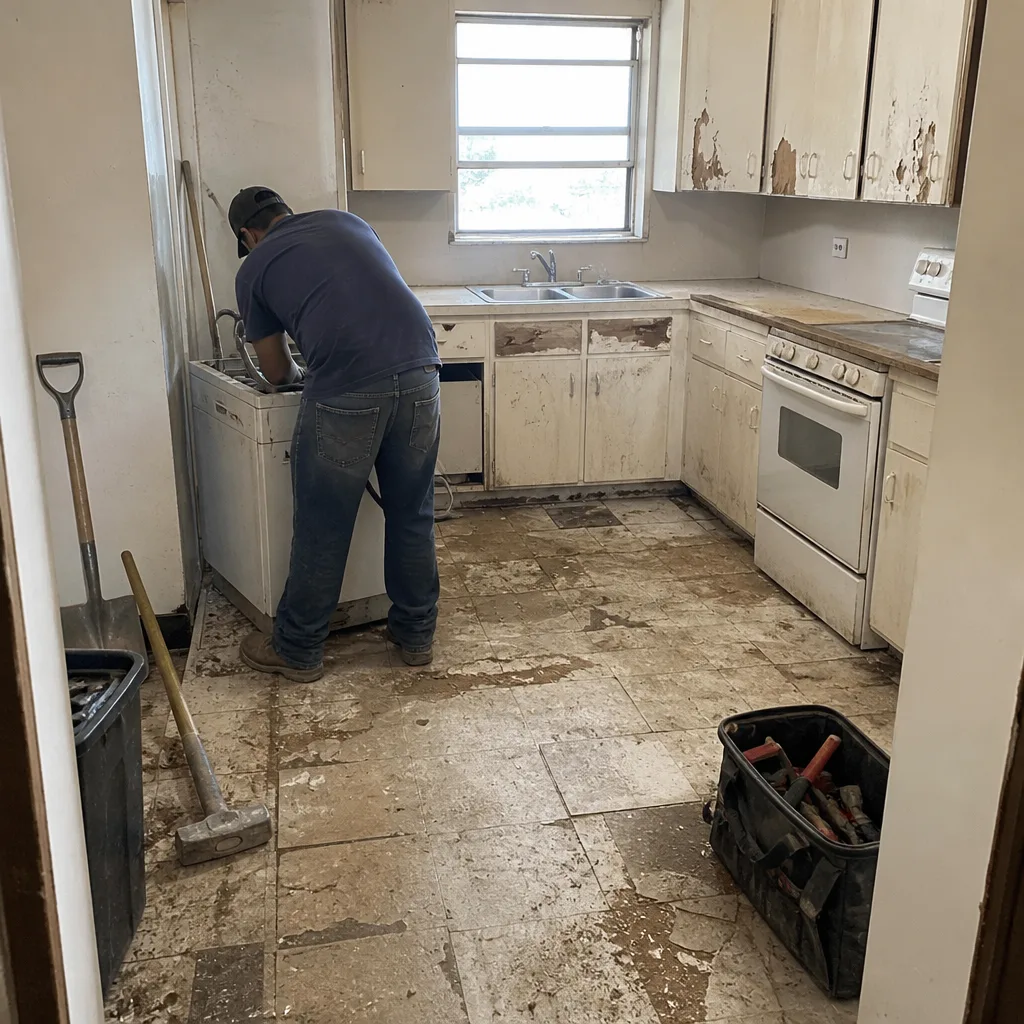 Before
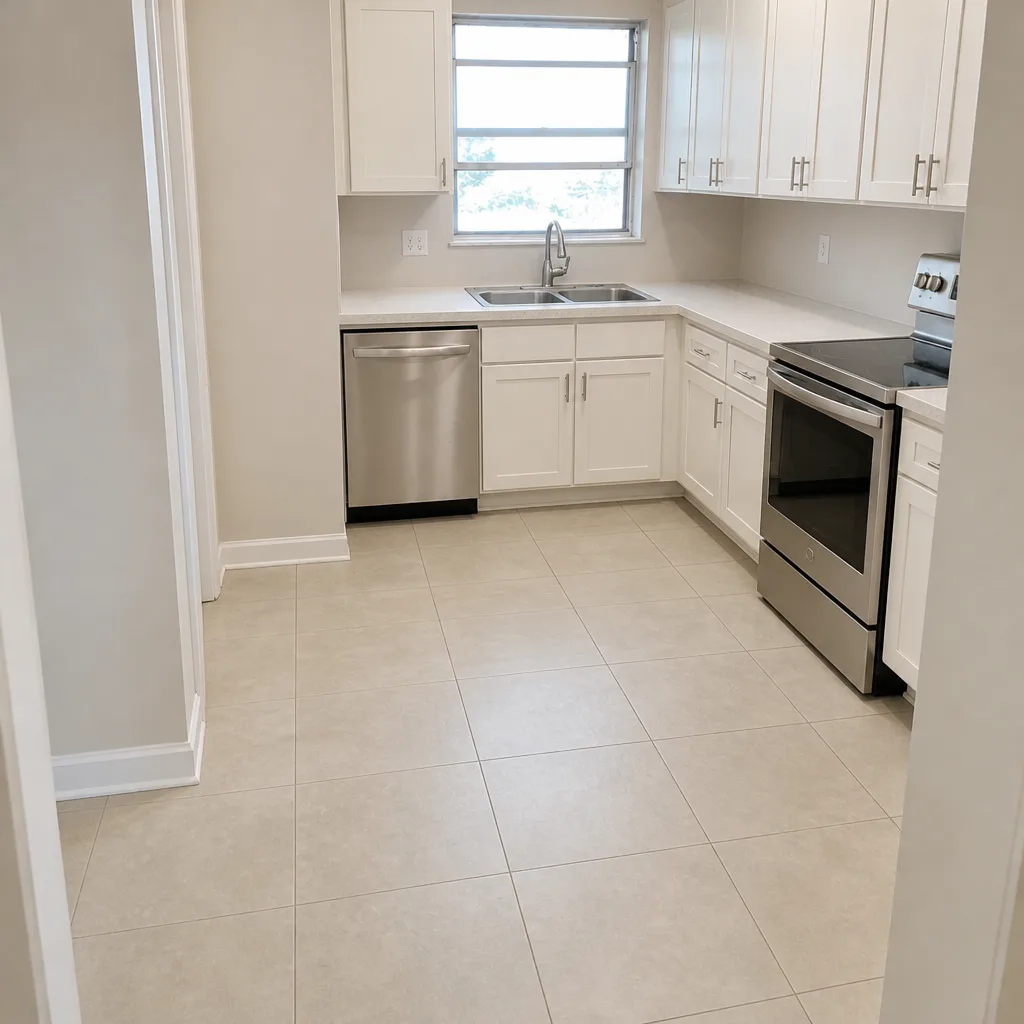 After
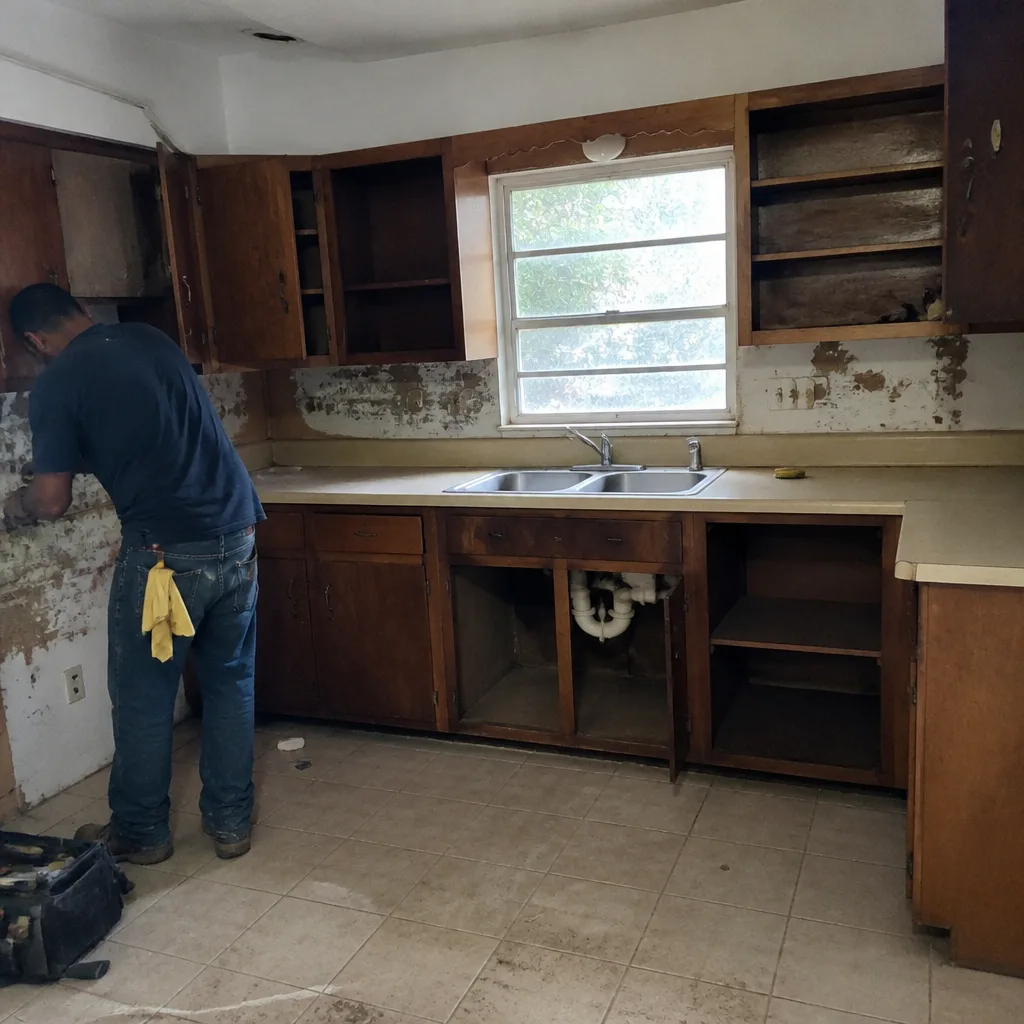 Before
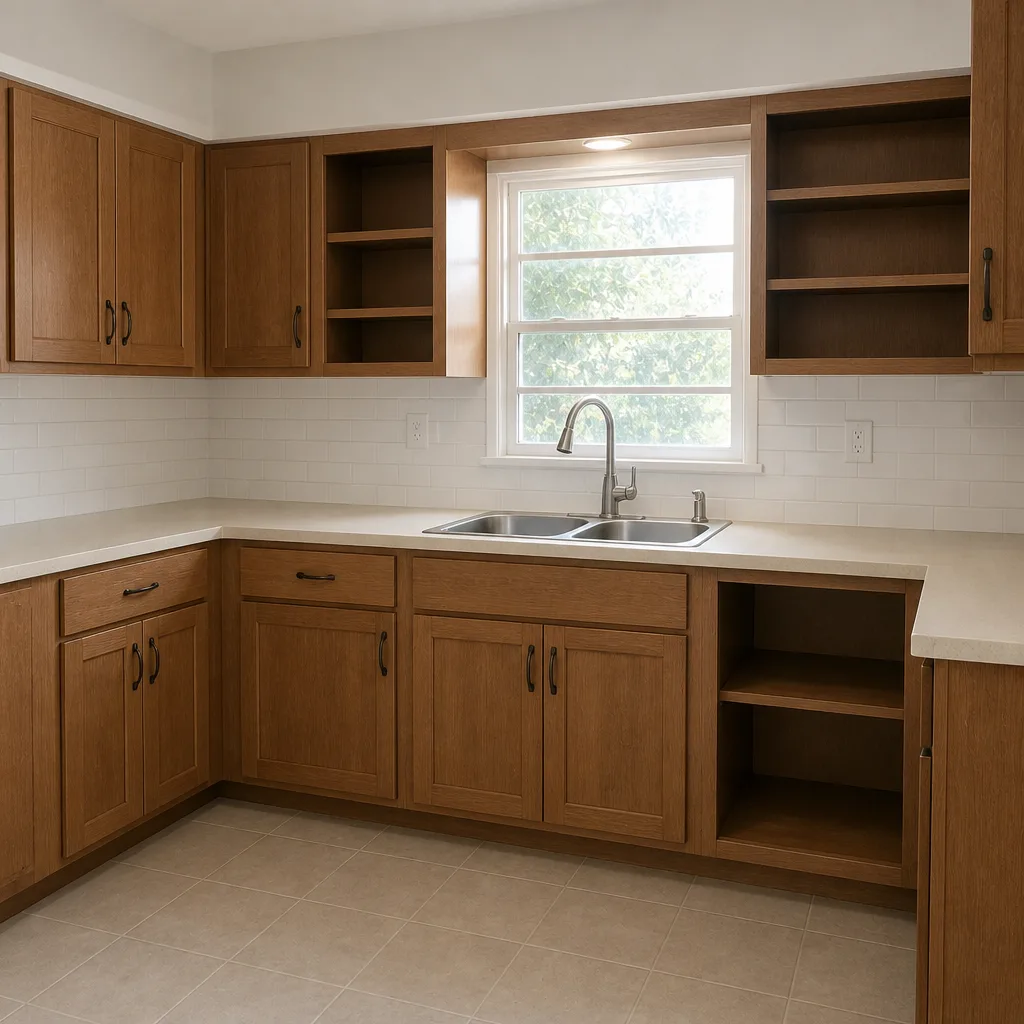 After
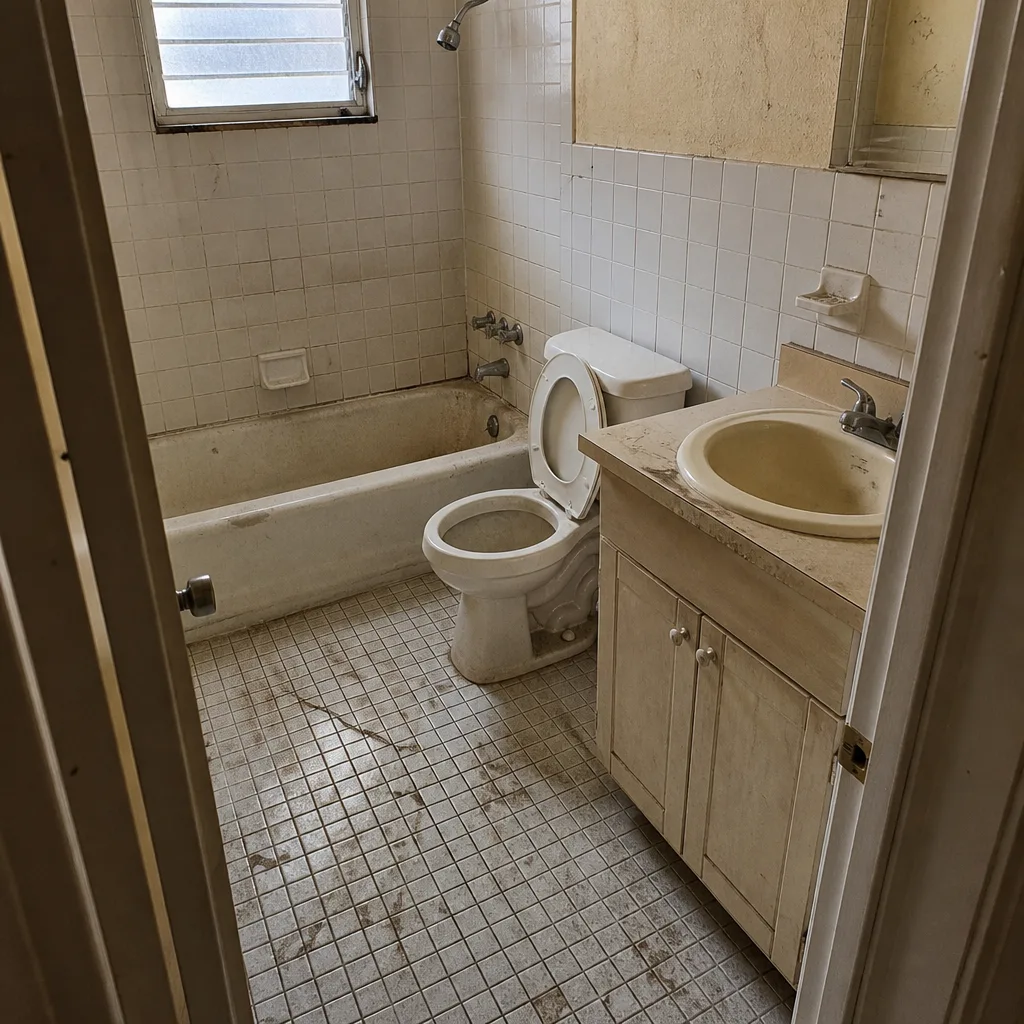 Before
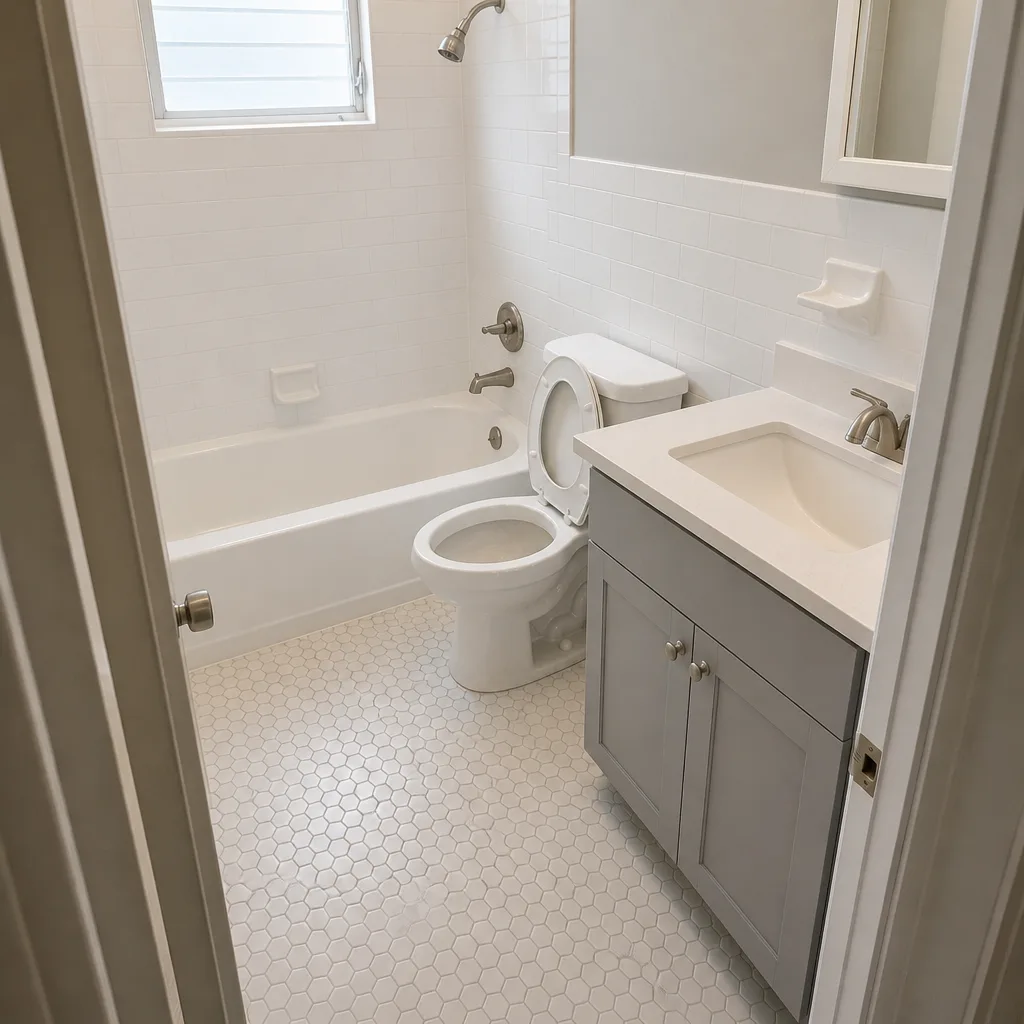 After
When to Call a Professional
Call a professional when the work touches a permit, a load-bearing wall, a waterproofing system, or a mechanical rough-in. Those are the four triggers where the risk of a DIY fix outpaces the savings by an order of magnitude, and they’re the four where Miami-Dade code and inspection will find you out eventually. On a bath or kitchen remodel, a stucco or siding repair after storm season, or any project where you’re not certain what’s behind the drywall, get a written scope before you touch a tool. Bradford Remodeling Co Miami offers free estimates in Miami with a written price before any work starts, and a live person answers the phone whenever you call. Estimates are free, and you get the number in writing: reach us through the Bradford Remodeling Co Miami home page or call (844) 797-4435.
Frequently Asked Questions

Choose a remodeling contractor in Miami by verifying the state license and local business tax receipt, checking the DBPR complaint history and Miami-Dade permit finaling record, confirming active general liability and workers’ comp, and requiring a written workmanship warranty with scope, duration, remedy, and exclusions before you sign. Choose a contractor who hands over all four documents without prompting. Call (844) 797-4435 for an estimate on a project you’re weighing.
A Florida workmanship warranty should include four elements: a defined scope of coverage by trade or system, a specific duration in months or years, a stated remedy the contractor owes if a defect appears, and a list of exclusions. It should also include a claims process with a phone number and a response window. If the warranty lives only as a line on the proposal, it isn’t a warranty. Bradford Remodeling’s 365-Day Done Right Promise covers every completed project for a full year with no-charge correction for covered failures.
Kitchen remodels in Miami generally run from about $28,000 for a cosmetic refresh with new cabinet fronts, counters, and paint up to $85,000 or more for a full reconfiguration that moves plumbing, upgrades electrical, and installs premium cabinetry and stone. The honest number depends on three things: whether the drain moves, whether the electrical panel has capacity, and what the substrate looks like under the old floor. Ask every contractor to state those three in the proposal, line by line. Call (844) 797-4435 for a written price before you commit.
Yes. Workers’ compensation coverage is required for Florida construction businesses that meet the state’s employment thresholds, and you should confirm active coverage regardless of crew size. A homeowner can be drawn into a personal injury claim when an uninsured worker is hurt on their property, so ask for the certificate before the first crew shows up. Verbal confirmation isn’t enough; a current certificate from the carrier is.
A standard bathroom remodel in Miami takes about four to six weeks from demo to close, assuming permits are pulled before work begins and inspections pass on the first try. Moving a drain line or relocating a wall pushes that to eight to ten weeks because plumbing and framing inspections add hold time. A contractor who quotes two weeks for a full bath is quoting work without permit or inspection, and both of those come back to you later.
Not if the proposal is written properly. A real written price lists the fixed scope and states what triggers a change order and how that price gets set. Surprises during demo are normal – hidden rot, a drain that doesn’t align, a subfloor that’s failed – and any contractor who says otherwise hasn’t opened enough walls in Miami. The difference is a contractor who prices a contingency in advance and one who reprices at the door. Call (844) 797-4435 for an estimate with the fixed and contingency lines shown.
The Bottom Line
What separates a construction brand you can rely on in Miami from one you can’t is paperwork, not personality. A verifiable license and local tax receipt, active insurance and workers’ comp, a clean DBPR and permit record, a scope matrix you can compare line by line, and a written warranty with scope, duration, remedy, and exclusions – those are the documents to demand. The two questions that open the conversation are simple: can I see the warranty document, and walk me through your inspection hold points. A brand that answers both without hesitation is one that already runs on a standard. Bradford Remodeling holds itself to The Garrison Standard for exactly this reason, and it’s why every project closes the same way: site clean, scope documented, signed written guarantee in your hand.
Call (844) 797-4435 for a free estimate, or reach the team through the Bradford Remodeling Co Miami home page to start the conversation. Every project gets a written price before any tool comes out, and a live person answers whenever you call.
Written by the team at Bradford Remodeling Co Miami.