Last updated November 18, 2026








Free written scope consultation - allowances, timeline, and change-order rules on paper before a single trade is scheduled
General Contractor Maintenance Schedule: What to Do and When
The number one callback item we see on Miami remodels isn’t bad workmanship. It’s caulk that failed at the 18-month mark because nobody told the homeowner it had a service life. A completed kitchen or bathroom has a maintenance calendar built into its materials whether you know it or not – grout, sealant, flashing, and expansion joints all carry manufacturer-specified service intervals. Miss them in South Florida’s humidity and salt air, and failure timelines compress. This guide translates trade specs into a plain schedule tied to Miami’s actual seasons, so the work you paid for holds up for years instead of months.
Quick Answer
A remodeled home in Miami needs a maintenance walk-through twice a year: once in May before the wet season (June – October) and once in November after hurricane season ends. Re-caulk wet areas every 18 – 24 months, check impact window seals and exterior flashing after every named storm, change HVAC filters every 30 – 60 days in summer, and document every inspection so your remodeling warranty stays valid. Skipping these items is the most common way homeowners unintentionally void coverage on finish work.
Styles & brands we work with
- Kitchen remodeling
- Bathroom remodeling
- Home additions & ADU
- Roofing
- Windows & doors
- Driveway & pavers
- Fence
Table of Contents
- Why Miami Has Two Distinct Inspection Windows
- Re-Caulk and Re-Grout Intervals for Common Miami Materials
- Post-Storm Inspections: Straps, Seals, and Flashing
- HVAC Filter and Duct Cadence in South Florida Humidity
- Which Maintenance Items Void a Remodeling Warranty
- The Annual General Contractor Maintenance Calendar
- How to Document Maintenance (and Why It Matters)
Why Miami Has Two Distinct Inspection Windows
Miami doesn’t have four seasons. It has a wet season and a dry season, and each one stresses a remodeled home in a different way. Treating them as one undifferentiated year is the first mistake. The two windows exist because the failure drivers are opposite.
The wet season, roughly June through October, brings 40-plus inches of rain, high humidity that sits at 80 percent or above for weeks, and the occasional tropical system. This is when water intrusion shows up: caulk lines open at joints, window seals weep, exterior flashing gets tested. The dry season, November through May, brings lower humidity, cooler nights, and the winter dry spell that causes wood framing, cabinetry, and tile substrates to shrink and shift slightly. Expansion and contraction is what opens the hairline cracks you find in dry-season grout.
What to check in the wet-season window (May, before the rains hit):
- All exterior caulk joints around windows, doors, and penetrations – press a fingernail in; if it’s hard or pulling away, it’s done.
- Window and door flashing, especially at the sill and head, looking for staining or soft spots.
- Roof and soffit after the first big rain, from the inside attic side if accessible.
- Bathroom and kitchen caulk at tubs, showers, and backsplashes.
- Drainage away from the foundation and around hardscaping, before daily afternoon storms start.
What to check in the dry-season window (November, after hurricane season):
- Grout lines for hairline cracks caused by seasonal contraction.
- Wood cabinet doors and frames for swelling then shrinking at seams.
- Impact window and door seals for compression loss after heat cycling.
- Attic-accessible hurricane straps and connectors for any loosening.
- Exterior paint and James Hardie siding for cracks at joints.
Two windows, two checklists. That’s the backbone of the whole schedule, and it’s what most homeowners in Miami never get told at project close.
Re-Caulk and Re-Grout Intervals for Common Miami Materials
Here are the numbers, translated from manufacturer and trade specs into plain intervals. These are the ones we specify at project close, and they’re what you should write on a calendar the day the crew leaves.
- Silicone caulk (tub, shower, kitchen backsplash): inspect every 6 months, full replacement at 18 – 24 months. High humidity and daily shower use push it toward the short end.
- Acrylic latex caulk (interior trim, painted joints): replace at 5 – 7 years, or sooner if it cracks at paint transitions.
- Polyurethane exterior sealant (windows, doors, siding joints): inspect yearly, replace at 7 – 10 years. UV exposure on south and west walls shortens this.
- Cementitious grout (tile floors, shower walls): reseal every 12 – 18 months; regrout when you see cracks or crumbling, typically 8 – 12 years depending on traffic.
- Epoxy grout (premium shower installs): doesn’t need sealing, but inspect for chips every year; small chips should be filled promptly.
- Natural stone (marble, travertine) sealant: reseal every 12 months in wet areas, 18 months elsewhere.
To re-caulk a shower correctly, the procedure matters more than the product:
- Remove all old caulk with a plastic scraper and caulk-removal tool. Don’t slice into the substrate.
- Clean the joint with denatured alcohol and let it dry fully – 24 hours minimum in Miami humidity.
- Fill the joint with backer rod if it’s more than 1/4 inch deep, so the caulk has something to bond to.
- Apply 100 percent silicone mold-resistant caulk in a continuous bead, then tool it smooth within 5 minutes.
- Leave it untouched for 24 – 48 hours. No showering, no wiping.
Brand matters less than the type. A Grohe shower valve trim, for example, calls for a specific silicone at the escutcheon plate to keep moisture out of the wall cavity – that’s a spec in the installation manual, not a guess. If it’s unclear which product a fixture requires, check the manufacturer sheet or ask a contractor.
Post-Storm Inspections: Straps, Seals, and Flashing
After a named storm passes, you can check most of the critical items yourself – with a flashlight, no ladder required for the interior work. The point isn’t to fix anything. It’s to catch damage before it becomes a claim, and to know when to call a pro.
Hurricane straps and connectors: In the attic, look at where roof trusses meet the top plate. Straps should be tight, nails fully seated, no rust or movement. If you can wiggle a strap by hand, or see a nail backing out, note it. This is a structural item; don’t try to re-secure it yourself.
Impact window and door seals: Close each window and door and check the perimeter for daylight or a draft. Run a hand along the weatherstripping. Look at the glazing gasket – the rubber holding the glass in the frame – for gaps, tears, or water staining on the interior sill. A leak around an impact window isn’t a window problem; it’s a flashing or installation problem, and it needs a pro.
Exterior flashing: From the ground, look at the metal or membrane flashing above windows, doors, and where the roof meets a wall. Check for lifting, separated metal, or staining below it. Look at the soffit for water marks. If the roof is a GAF or CertainTeed system, any lifted flashing needs a roofer, not a homeowner on a ladder.
After every named storm, check these five things:
- Interior ceiling and wall for new water stains, especially near windows and the roof line.
- Attic for daylight, wet decking, or displaced insulation.
- Impact window sills and door thresholds for interior water.
- Exterior caulk and flashing from the ground – photograph anything suspect.
- Garage door, fence, and hardscaping for shifted or loose elements.
Photograph everything with a date. Documentation is your friend with insurance and with a warranty claim. Anything structural, any active leak, and any roof or height work is a professional’s job – the safety risk is real, and the repair cost small compared to a fall.
HVAC Filter and Duct Cadence in South Florida Humidity
HVAC runs harder in Miami than almost anywhere. The system dehumidifies as much as it cools, and in a house that’s sealed tight after a remodel, the air handler works year-round. The cadence here is shorter than the national average tells you.
- Standard 1-inch filter: replace every 30 days in June – October, every 60 days in the dry season. If you have pets or live near a dusty road, cut those numbers.
- Pleated 4-inch or media filter: every 3 – 4 months, still shorter in summer.
- Duct inspection: every 12 months, and immediately after any remodel dust exposure.
- Condensate drain line: flush every 6 months. A clogged line is the number one cause of attic water damage in Miami homes.
What “dirty” actually looks like: A filter that’s visibly gray is already 50 percent loaded. Hold it up to light – if you can’t see through it, it’s overdue. In the ductwork, look for dust streaks at the registers, a musty smell when the AC first kicks on, or visible dark spotting on the inside of the boot. That dark spotting is where a humidity problem starts turning into a mold problem, and it moves fast in South Florida. Once you smell the musty note, the ducts or the air handler coil need a pro.
A remodeled home with newly sealed envelope and new HVAC runs a different load profile than the old house did. Check the filter more often for the first full year after a whole-home remodel, while the system settles in. If it’s a large project and you want it done as a documented system, our General Contractor in Miami crew can walk the mechanical scope with you.
Which Maintenance Items Void a Remodeling Warranty
This is where homeowners get caught. A warranty covers workmanship and materials that fail under normal use – not failures caused by skipped maintenance. Most manufacturer warranties state it plainly: caulk, sealant, and grout are “consumable” items the owner is responsible for. Miss the interval and a water-damage claim can be denied.
The items most likely to void coverage if ignored:
- Failed sealant and caulk. Water intrusion through a neglected joint is owner responsibility, not workmanship.
- Clogged HVAC condensate line. Attic water damage from a neglected drain is on the homeowner.
- Unsealed stone or grout. Staining and etching in neglected stone is excluded.
- Roof and flashing after a storm. Storm damage that wasn’t reported and allowed to worsen can be excluded.
- Improper cleaning products. Abrasive cleaners on stone or grout, or the wrong product on a Kohler or Moen fixture finish, void the finish warranty.
Our 365-Day Done Right Promise covers our workmanship for a full year after completion: if the work fails inside that window, we come back and correct it at no charge. What it doesn’t cover is a joint nobody re-caulked after two years. That distinction is fair and it’s in writing – and it’s exactly why we hand every homeowner a maintenance sheet at project close.
The Annual General Contractor Maintenance Calendar
Here is the schedule in one place. Print it, put it on the fridge, and set phone reminders for the two big windows.
- January – February (dry): Inspect grout for seasonal cracks, reseal stone and tile, check cabinet seams and wood joints for movement.
- March: Service the HVAC, replace the filter, flush the condensate drain, inspect duct registers for dust streaks.
- April – May (pre-wet-season): Full exterior caulk inspection, window and door seal check, clear gutters and drains, check flashing, walk the roof line from the ground.
- June – October (wet): Monthly filter changes, monthly interior moisture walk (ceiling, sills, under sinks), spot-check shower caulk monthly.
- November (post-season): Post-storm inspection checklist above, photograph everything, document any damage, schedule repairs before dry weather.
- December: Review the year’s notes, plan major maintenance, replace any failed sealant before the dry season ends.
A whole-home remodel changes the load profile of the building. New flashing, new windows, new systems – each has its own service interval. The Bradford Remodeling Co Miami home page lays out how we structure the close-out package, including the maintenance sheet. When you’re planning a kitchen or bathroom project, ask for the same thing from any contractor – a written schedule attached to the warranty.
How to Document Maintenance (and Why It Matters)
Documentation is boring until the day you need a warranty claim or an insurance adjuster. A one-page log per year is enough.
Record the date, what you checked, what you found, and what you did. Photograph caulk joints before replacement, water stains, and any storm damage with a timestamp. Keep manufacturer sheets for fixtures and finishes in a binder or on your phone. If a pro did the work, keep the invoice with the product name and date.
Why it matters: warranty decisions and insurance claims both turn on whether the owner maintained the home. A dated log with photos answers that in one glance. It also gives the next homeowner a documented maintenance history, which is a real point in a Miami resale. And it tells your contractor exactly what was done and when, so a diagnostic visit is fast and accurate. It’s the same documentation discipline we apply at close-out: clean site, documented scope, signed written guarantee in your hand. A short maintenance log continues that standard.
Common Mistakes to Avoid
- Treating caulk as permanent. Silicone in a Miami shower lasts 18 – 24 months, not forever. The number one callback is a failed joint nobody thought to re-caulk.
- Ignoring the condensate line. A clogged HVAC drain during the wet season can flood an attic in hours. Flush it twice a year, no exceptions.
- Skipping the post-storm check. Small flashing or seal failures caught after a storm are cheap to fix. Left a season, they rot sheathing and framing. Photograph everything.
- Using the wrong cleaner on stone and fixtures. Abrasive cleaners etch marble and void finishes on fixtures like Kohler and Moen. Follow the manufacturer’s cleaner list.
- Waiting for a leak to appear. Water damage in Miami usually shows months after the joint failed. Inspect on schedule, not when you see a stain.
- Letting ducts go un-inspected after a remodel. Remodel dust loads the ductwork. One inspection in the first year after a project catches what the filter can’t.
- Failing to document. A warranty or insurance claim without a maintenance log is a fight. A one-page dated log avoids it.
See the difference
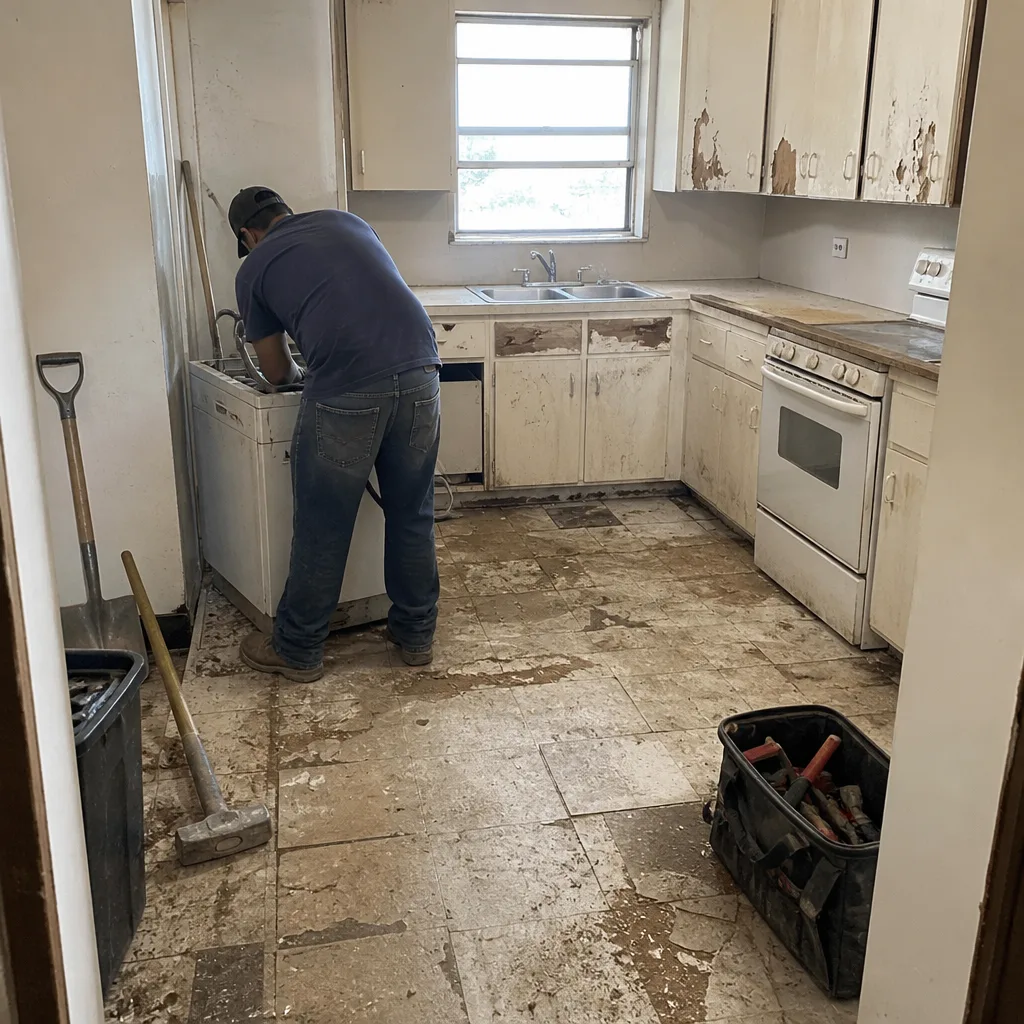 Before
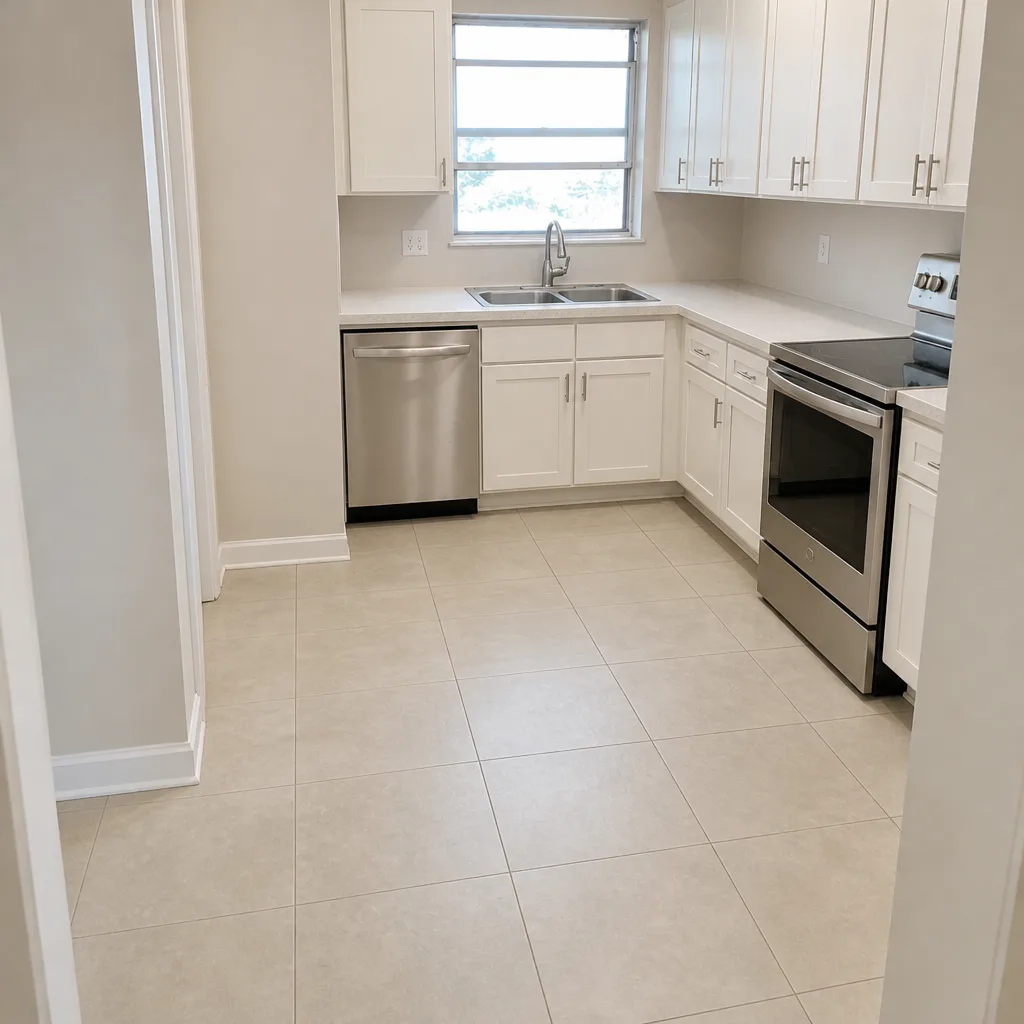 After
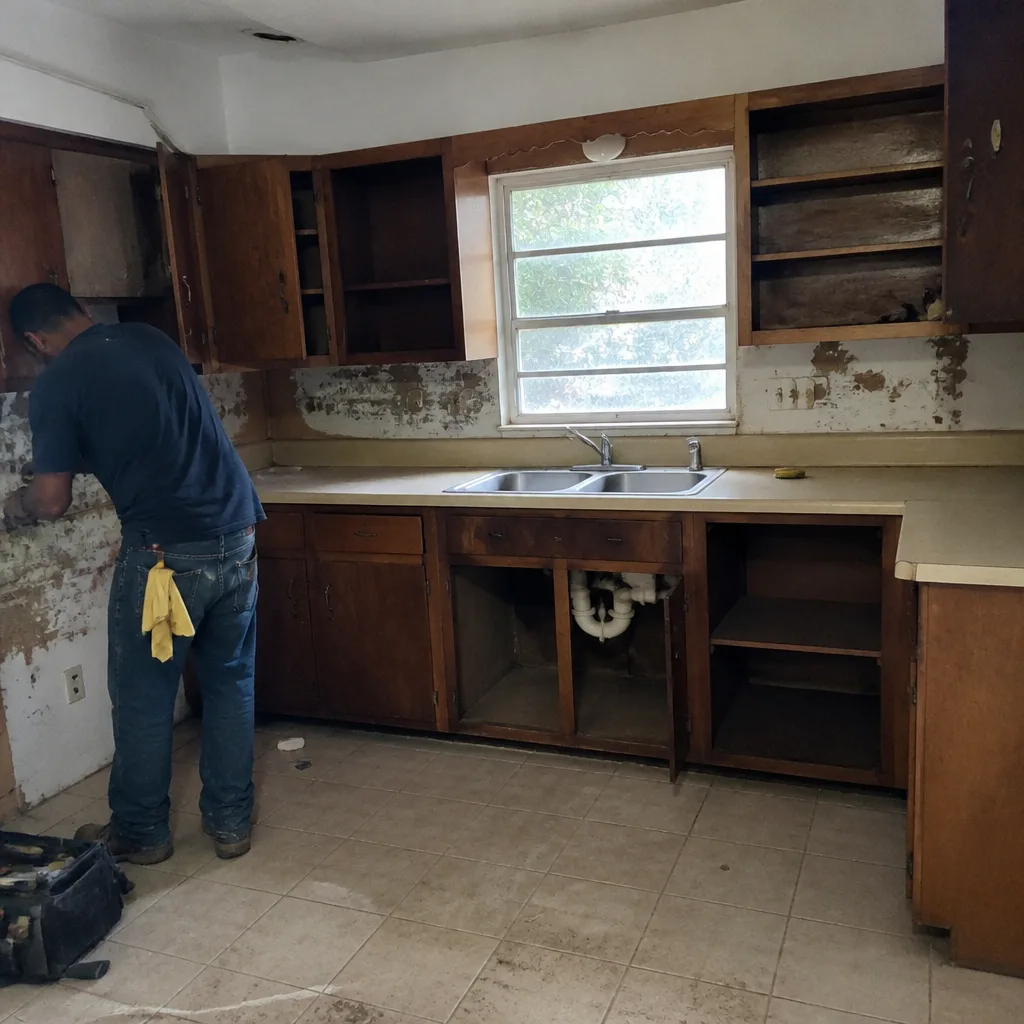 Before
 After
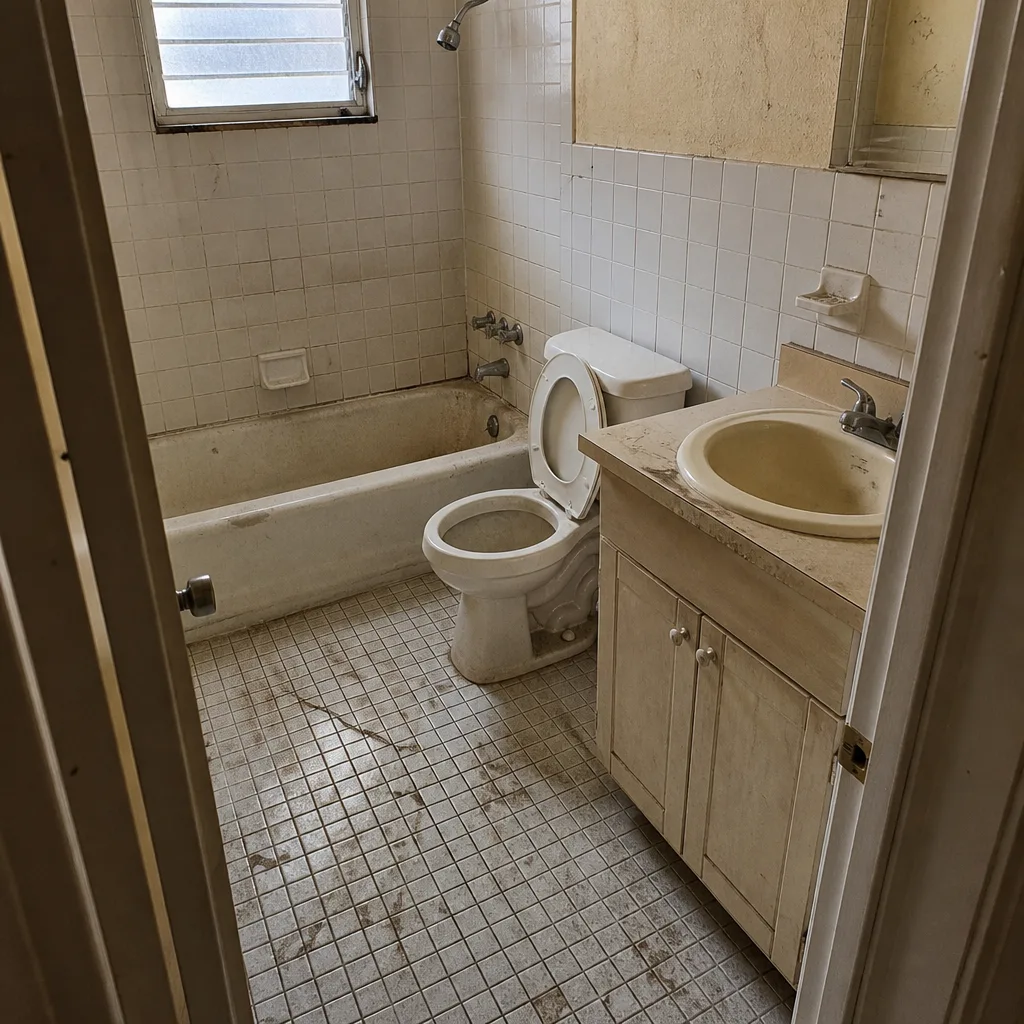 Before
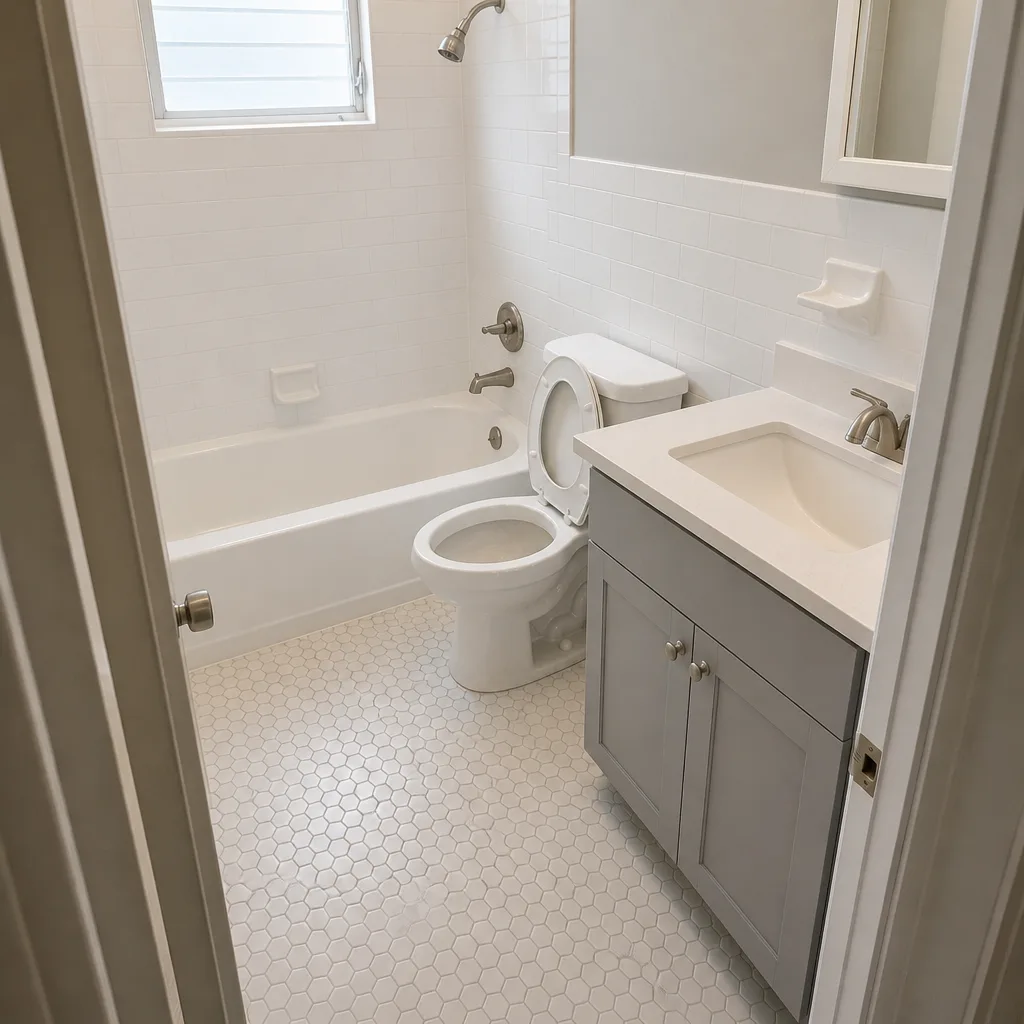 After
When to Call a Professional
Some maintenance is yours; some isn’t. Call a professional for any active roof or ceiling leak, any water intrusion around an impact window or door, any structural item like a loose hurricane strap or displaced flashing, roof and height work, and any sign of mold behind a wall or in the duct system. Electrical, gas, and high-tension garage door hardware are never homeowner jobs. If a grout crack is spreading across a tile field, or a cabinet seam keeps opening and closing with the seasons, that’s a diagnosis, not a cleaning task. Bradford Remodeling Co Miami offers free estimates in Miami for repairs, follow-up work, and scope reviews – call (844) 797-4435 and a live person answers, any hour.
Frequently Asked Questions

Re-caulk the tub and shower every 18 to 24 months, and inspect the joints every 6 months. Miami’s year-round humidity and daily shower use push silicone toward the shorter end. If the caulk is hard, cracked, or pulling away from the tile, it’s due now.
Skipped maintenance on consumable items voids coverage. Neglected caulk, sealant, and grout; a clogged HVAC condensate line; unsealed stone; and storm damage that wasn’t reported can all exclude a claim. A written maintenance log with photos protects your coverage. Our 365-Day Done Right Promise covers workmanship for a full year; it doesn’t cover a joint nobody maintained.
Yes, from inside the attic. Look for loose straps, backed-out nails, and movement you can produce by hand. If a strap wiggles, note it and call a contractor – don’t try to re-secure structural connectors yourself. This is the kind of item that matters most after a named storm in Miami.
Every 30 days from June through October, and every 60 days through the dry season, for a standard 1-inch filter. Use a 3 – 4 month interval for a thicker media filter, still shorter in summer. If the filter is visibly gray or you can’t see through it, it’s overdue.
The wet season is about water: caulk, flashing, seals, and drainage. The dry season is about movement: grout cracks, cabinet joints, and seal compression. Check the dry checklist in January – February and the wet checklist in April – May. Two windows, two sets of items.
Yes. Our technicians have up to 22 years of experience, and we offer free estimates in Miami for post-project maintenance, repairs, and scope reviews. We work with a documented roster of name-brand materials – KraftMaid and Wellborn cabinetry, Cambria and Caesarstone surfaces, Kohler and Moen fixtures, GAF and James Hardie exteriors – so repairs match what’s already installed. Call (844) 797-4435 to schedule your free estimate.
The Bottom Line
Your remodel has a maintenance schedule built into its materials. Miss the intervals and Miami’s humidity and storm seasons compress failure timelines – caulk at 18 months, grout cracks within a year, attic water damage in a season. Check twice a year, once before the wet season and once after hurricane season. Re-caulk and re-grout on the manufacturer’s schedule, flush the HVAC drain, photograph what you inspect, and keep a log. That’s the difference between a remodel that holds for a decade and a callback at 18 months. A written price before work starts, a full-year guarantee, and a maintenance sheet at close: that’s The Garrison Standard, and it’s how we run every job.
Call Bradford Remodeling Co Miami at (844) 797-4435 for a free estimate on a project, a repair, or a maintenance scope review. Your kitchen or bathroom project deserves the same squared-away close: clean site, documented scope, signed written guarantee in your hand. See how we handle Kitchen Remodeling in Miami and Bathroom Remodeling in Miami the same way.
Written by the team at Bradford Remodeling Co Miami.