Last updated November 18, 2026







Free written scope consultation - allowances, timeline, and change-order rules on paper before a single trade is scheduled
How Long Does General Contractor Take? Timelines and What to Expect
Miami-Dade Building Department permit wait times have ranged from 6 weeks to 5 months depending on project type and review backlog. Most contractor timelines you’ll see quoted say “2 weeks for permits.” That number is the application processing estimate, not the approval estimate. The gap between those two figures is where Miami remodeling schedules go to die.
We’ve watched homeowners sit on a signed contract for four months waiting on a structural review they were told would take 14 days. The crew was ready. The cabinets were ordered. Nothing could start. This guide breaks down how long a general contractor actually takes in Miami, how to read a real project schedule, why inspection scheduling compresses timelines more than labor does, and what a written schedule guarantee should contain before you sign anything.
Quick Answer
A general contractor project in Miami runs 8 to 16 weeks for a mid-scope remodel and 5 to 9 months for a whole-home renovation or addition. Permit review and inspection scheduling account for roughly 30 to 50 percent of that calendar time, not the physical construction. A realistic schedule builds permit approval, inspection queue delays, and weather float days into the written timeline before work begins.
Styles & brands we work with
- Kitchen remodeling
- Bathroom remodeling
- Home additions & ADU
- Roofing
- Windows & doors
- Driveway & pavers
- Fence
Table of Contents
- The Miami-Dade Permit Calendar: What the Review Timelines Actually Look Like
- How to Read a Gantt-Style Project Schedule
- Identifying the Critical Path vs. Tasks With Float
- Why Inspection Scheduling, Not Labor, Compresses Miami Timelines
- South Florida Weather Windows and How to Price Float Days
- What a Written Schedule Guarantee Should Include
- Timeline by Project Type: Kitchens, Bathrooms, Whole Home
- Questions to Ask Before You Sign
The Miami-Dade Permit Calendar: What the Review Timelines Actually Look Like
Permit review time in Miami-Dade depends heavily on which trade discipline triggers the review and whether the project requires plan review at all. A like-for-like water heater swap moves through a different queue than a structural beam replacement. Understanding those queues is the difference between a schedule you can trust and one you can’t.
Published department data across recent cycles has put typical review ranges in these categories:
- Structural review (beam replacements, wall removals, additions): 8 to 20 weeks in heavy backlog periods, sometimes longer if a second review cycle is triggered by corrections.
- Mechanical review (HVAC changeouts, new ductwork, mini-split additions): 3 to 8 weeks, with smaller jobs often moving faster through express lanes.
- Electrical review (panel upgrades, service changes, new circuits): 2 to 6 weeks, but panel upgrades on older Miami homes frequently draw corrections that extend the clock.
- Plumbing review (re-pipes, fixture relocations, drain line changes): 2 to 6 weeks, and re-pipes in pre-1980 homes often require additional documentation.
Here’s the part most homeowners miss: those ranges describe the review, not the total permit-to-approval window. Add plan preparation, submittal, comment response, and resubmittal, and a structural permit that “takes 12 weeks” can consume 18 to 22 weeks of calendar time. Corrections cycles are the silent schedule killer. A well-prepared submittal – drawings complete, product specs attached, product approval numbers current – avoids most of them. That’s the difference between a contractor who quotes around the permit and one who engineers their way through it. If you want to see how we structure the pre-submittal phase, the general contractor services in Miami page covers it in detail.
How to Read a Gantt-Style Project Schedule
A Gantt chart is a horizontal bar chart showing every task in a project against a date axis. Each bar is a task, the bar’s length is the task duration, and the bars are stacked in sequence. It looks like a sideways staircase. Most contractors will hand you one if you ask. Very few homeowners know how to read it, and that’s a problem, because the chart contains the answer to “when will this be done.”
Here’s how to read one in five steps:
- Find the start date and end date bars. The leftmost bar should be permit submittal or demolition prep. The rightmost bar should be final inspection and punch list. If the chart has no final inspection bar, it’s not a complete schedule.
- Trace any single row across from left to right. Each row is a task. A row that starts before the row above it finishes is running in parallel, meaning two crews are working at once. Too much parallelism is a red flag for a crew that’s overbooked.
- Look for the permit bars. There should be a distinct bar for submittal, review, and approval, not one bar labeled “permits.” The single-bar version hides the review duration.
- Identify the inspection bars. Each inspection should be its own bar with a buffer zone after it. An inspection scheduled the same day the previous trade finishes has zero buffer, which means any delay cascades.
- Check the float allowance. The schedule should show cushion days – visible gap bars – between major phases. A schedule with no visible gaps is a schedule that will slip the first time something goes wrong.
A real Gantt chart for a Miami kitchen remodel will run 60 to 90 rows. If you’re handed a one-page chart with 12 bars, that’s not a schedule, that’s a summary. Ask for the full version. In our experience, the contractors who push back on that request are the ones who don’t build schedules in the first place.
Identifying the Critical Path vs. Tasks With Float
The critical path is the longest sequence of dependent tasks in a project. Every task on the critical path must finish on time or the whole project slips. Tasks off the critical path have float, meaning they can shift a few days without pushing the final date.
For a typical Miami kitchen remodel, the critical path usually looks like this:
- Permit submittal → structural review → permit approval
- Demolition → framing → rough-in plumbing → rough-in electrical → rough-in mechanical → rough-in inspection
- Insulation and drywall → cabinet install → countertop template → countertop install (Cambria and Caesarstone surfaces require a template visit, adding 3 to 7 days) → final inspection
Notice what’s on that path: cabinet install waits on drywall, which waits on rough-in inspection, which waits on permit approval. A four-week permit delay doesn’t shift the start of cabinet install by four weeks – it shifts it by four weeks plus every dependent task’s buffer, which often cascades into six or eight weeks of total slip.
Tasks with float, in contrast, are the ones that can flex. Paint color selection, appliance delivery timing, and light fixture choices are all float tasks. If those slip two days, the project doesn’t. Learn to tell the difference before construction starts, and you’ll know which decisions need urgent attention and which can wait a week.
Why Inspection Scheduling, Not Labor, Compresses Miami Timelines
Here’s a number most contractors won’t tell you: on a typical Miami remodel, inspection scheduling consumes more calendar time than any single trade’s labor. The inspector comes when the queue says they come, not when your crew finishes the rough-in.
Miami-Dade runs multiple inspection divisions – building, electrical, plumbing, mechanical – and each has its own queue and its own scheduling window. A common pattern is: electrician finishes rough-in at 3 p.m. on Tuesday, contractor submits for inspection Wednesday morning, inspector is scheduled for the following Monday or Tuesday. That’s a five-to-seven day gap on every single inspection. On a job with six inspections, that’s four to six weeks of pure wait time, and none of it is billable labor.
Good contractors manage this in three ways:
- Request inspections early. The best crews call for the electrical rough-in inspection the moment the conduit is in, not after they’ve cleaned up and finished the panel work. Submitting the request early buys a day or two.
- Bundle inspections. Some trades allow combined rough-in inspections – plumbing and mechanical in one visit – which cuts total queue time by roughly a third.
- Schedule the next trade to overlap with the inspection window. If the framer starts prep work in an area the inspector doesn’t need to see, the schedule doesn’t freeze while waiting for the inspection.
This is the single biggest reason project timelines in Miami slip compared to national averages. Crews are not slow. The inspection queue is long, and a contractor who doesn’t build that queue into the schedule is quoting a fantasy. When we plan a project in Brickell or Coral Gables, the inspection windows are on the schedule before demolition ever starts.
South Florida Weather Windows and How to Price Float Days
Exterior work in South Florida has real seasonal constraints, and a schedule that ignores them will slip every time. The winter dry season – roughly November through April – is the reliable window for roofing, exterior painting, and hardscaping. Hurricane season runs June 1 through November 30, and the summer afternoon thunderstorm pattern from June through September can shut down exterior work for two to three hours most afternoons.
What that means for schedule planning:
- Roof work is best scheduled November through April. A GAF or Atlas shingle install during a July thunderstorm week can stretch two days into seven because each day starts with a wet roof and a safety hold.
- Exterior painting needs three to four dry days in a row for proper cure. Summer scheduling should assume one rain day per two workdays, not one per week.
- Hardscaping and pavers (Belgard and Unilock installs) are forgiving on rain but brutal on saturated substrate. A wet base means the pavers come up and the base gets redone.
- Impact window installs (PGT, Therma-Tru doors) can proceed in light rain but not during active storm warnings, so exterior openings stay covered longer during summer storms.
Float days are the answer. A disciplined schedule prices 5 to 10 percent of the calendar as weather float, explicitly labeled, for any project with exterior work in hurricane season. That float is written into the schedule and the written price. If the weather holds, the float converts to a faster finish. If it doesn’t, the project still lands on the written end date. When a contractor quotes an exterior project in June and doesn’t mention float days, ask why. The answer tells you whether they’ve actually run exterior work in a South Florida summer.
What a Written Schedule Guarantee Should Include
A schedule guarantee is a written commitment to milestone dates and a stated remedy if the contractor misses them. Most contractors won’t offer one. The ones who do, a small handful, should be held to a specific standard of what’s in the document.
Here’s what a schedule guarantee should contain, at minimum:
- Named milestone dates. Not “approximately.” Concrete calendar dates for permit approval expected, demolition start, rough-in complete, inspection passed, and final walkthrough.
- Float allowances in writing. A stated number of weather delay days, inspection queue days, and homeowner decision days that are already factored into the total. The homeowner should know what’s been priced in and what hasn’t.
- Contractor obligations when a milestone is missed. The remedy could be a schedule credit, an expedited crew, or another defined action. If the guarantee has no remedy, it’s not a guarantee, it’s a wish.
- Homeowner obligations. A schedule guarantee is two-sided. Homeowner selection delays, appliance delivery windows, and access restrictions also carry stated deadlines. If you miss yours, the remedy doesn’t apply.
- What’s excluded. A hurricane making landfall, a citywide inspection shutdown, and material backorders from a single-source supplier should each be listed as exclusions. A guarantee with mystery exclusions is worthless.
Our approach at Bradford Remodeling Co Miami is simple: every written price comes with a written schedule, and every completed project carries the 365-Day Done Right Promise – if the finished work fails inside the guarantee window, we return and correct it at no charge. That’s the same discipline in both documents. The price doesn’t move at the door. The finished work doesn’t fail inside a year. If you want to see how that plays out on a specific project, the kitchen remodeling services page breaks down the schedule line by line.
Timeline by Project Type: Kitchens, Bathrooms, Whole Home
Timelines vary heavily by scope, and the ranges below assume permits are required, Miami-Dade review runs at typical pace, and the homeowner makes decisions inside the agreed window. Expect these figures as realistic ranges, not sales points.
- Bathroom remodel (single bath, layout unchanged): 5 to 9 weeks total, of which permit review is 2 to 4 weeks and construction is 3 to 5 weeks.
- Kitchen remodel (layout change, new cabinets and counters): 9 to 16 weeks total, of which permit review is 4 to 8 weeks and construction is 5 to 8 weeks. Cabinet lead times from KraftMaid or Wellborn typically run 4 to 7 weeks and can dominate the back half of the schedule.
- Whole-home remodel (multiple rooms, systems updates): 5 to 9 months. Structural review, if triggered, dominates the front end. Expect 6 months as the realistic median when a structural element is in scope.
- Addition or second-story work: 7 to 12 months, and sometimes longer. Storm and wind-load review for additions in Miami-Dade is strict, corrections cycles are common, and inspections run heavier on new structural work.
Every one of those ranges assumes a contractor who builds the permit calendar into the quote. If a contractor tells you a kitchen remodel is 6 weeks start to finish in Miami, they are quoting construction time only and you should ask what the total permit-to-punch-list number is. That question alone will separate the disciplined contractors from the optimistic ones. Our bathroom remodeling services page shows the per-week breakdown for a typical bath so you can see what an honest schedule looks like.
Questions to Ask Before You Sign
The questions you ask before signing set the tone for the whole project. Here’s a short list worth asking every contractor on your shortlist:
- “What’s the expected permit review duration for my exact scope, by trade, based on your recent jobs?” A vetted answer names the trade discipline and a range. A vague answer says “2 weeks.”
- “Will the schedule show permit bars and inspection bars as separate line items?” Yes means they build real schedules. No means you’re getting a summary.
- “How many inspection queue days per inspection are built into my schedule?” A real answer is a number, usually 4 to 7 days per inspection.
- “What’s the weather float on my project and where does it appear?” Ask to see it on the Gantt chart.
- “What happens to my schedule if a correction cycle triggers on the permit?” Corrections can add 2 to 6 weeks. The contractor should know that and have a mitigation plan.
- “Is the schedule part of the contract or a separate document?” It should be part of the contract, with remedies attached.
If you’re planning a project and want to walk through these questions on a real scope, the home page at Bradford Remodeling Co Miami is the place to start, and every conversation with us includes a written price and a written schedule before any commitment.
Common Mistakes to Avoid
- Accepting a permit timeline that says “2 weeks.” That’s the application processing estimate, not the approval estimate. On structural work in Miami-Dade, the real number is often 4 to 5 months.
- Not asking to see the full Gantt chart before signing. A one-page schedule with 12 bars hides the inspection and permit wait time. Ask for the full 60-to-90-row version.
- Treating cabinet and counter lead times as float. In Miami, KraftMaid and Wellborn cabinet orders can run 4 to 7 weeks. Cambria and Caesarstone counters template after cabinet install and ship 5 to 10 days after. None of that is float.
- Scheduling exterior work in July without float days. Summer thunderstorms in Miami-Dade will eat two to three hours per afternoon on most weeks. A schedule without weather float is a schedule that slips.
- Thinking a fast bid is a fast project. A contractor who gives you a low number and a short timeline is often the one who hasn’t priced the permit queue. Check whether they’ve named the actual review durations by trade.
- Missing the corrections cycle. Roughly a third of residential permit submittals in Miami-Dade draw a corrections notice on first review. If the schedule doesn’t allow for one, it’s already off.
- Skipping the schedule guarantee. A price without a schedule, or a schedule without milestone dates and remedies, leaves you with no recourse when work slips. Demand both in writing.
See the difference
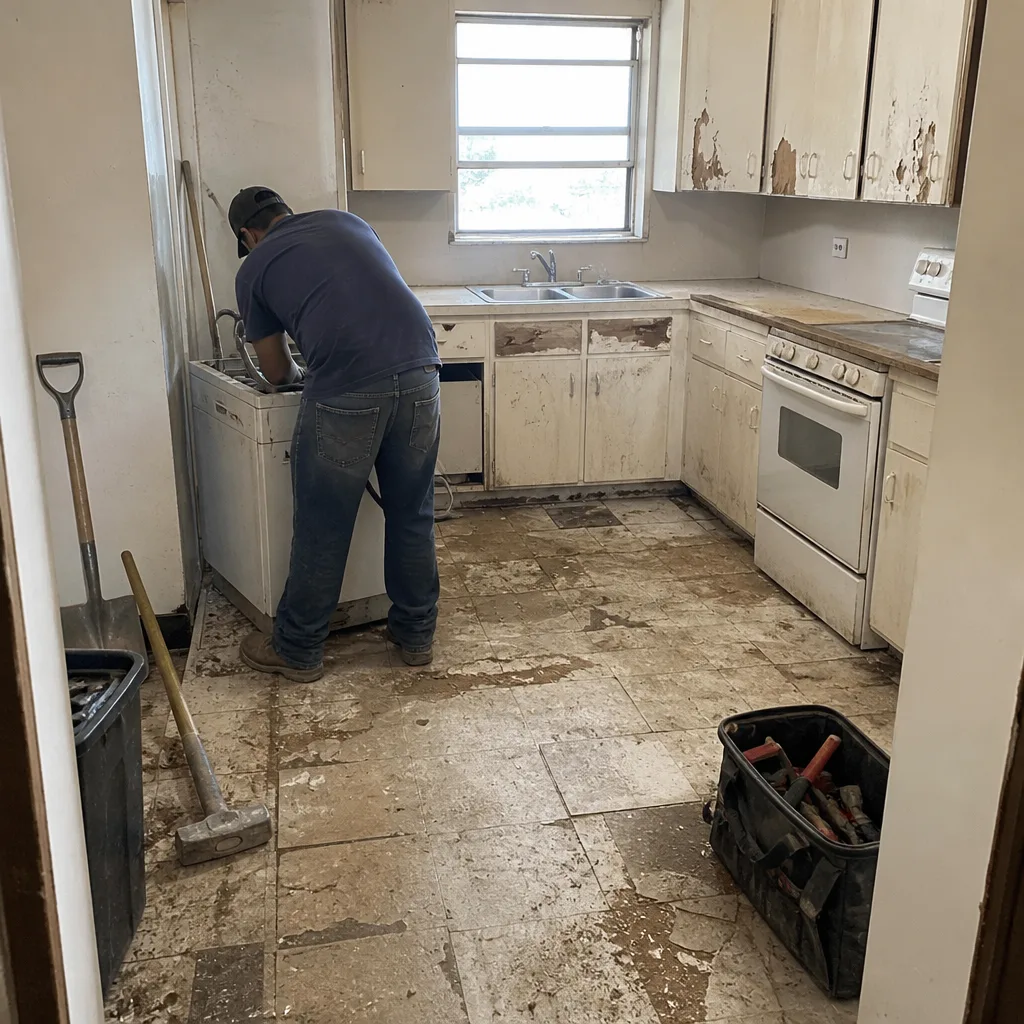 Before
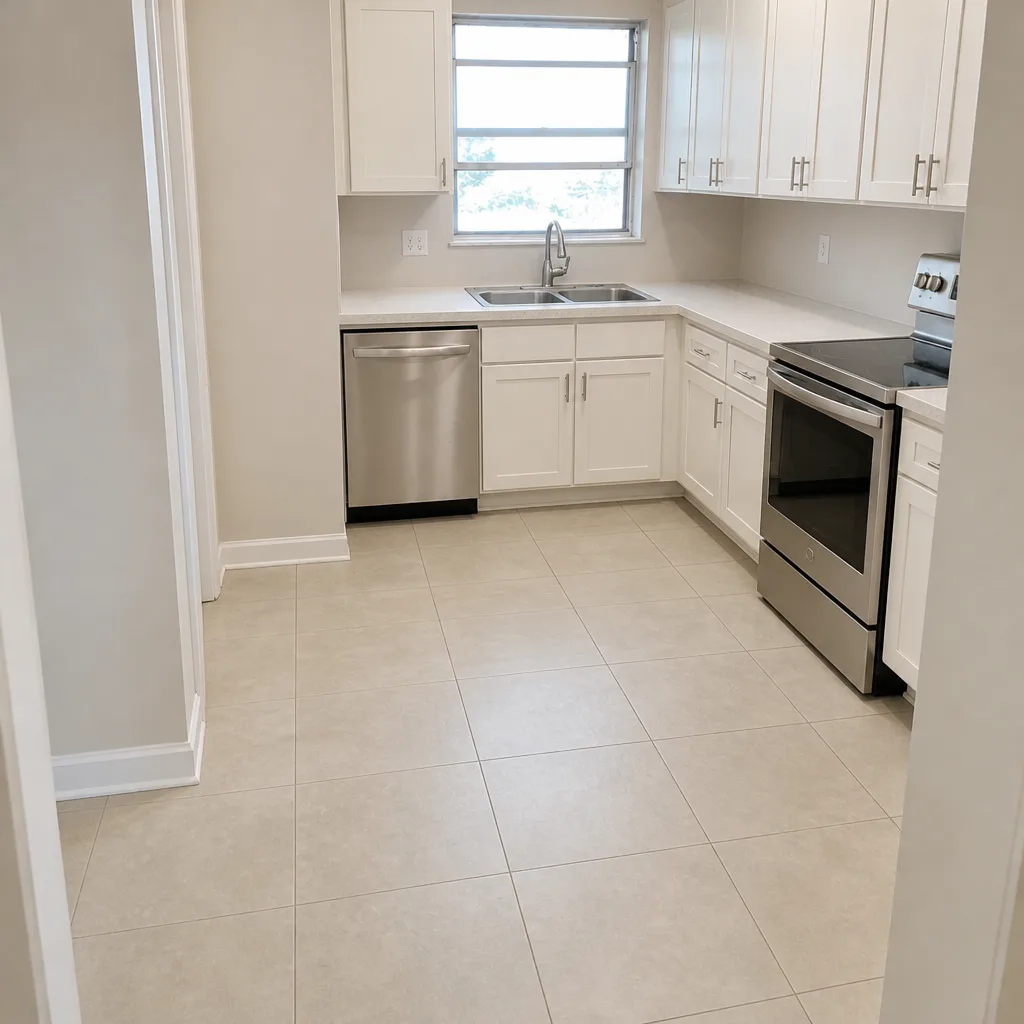 After
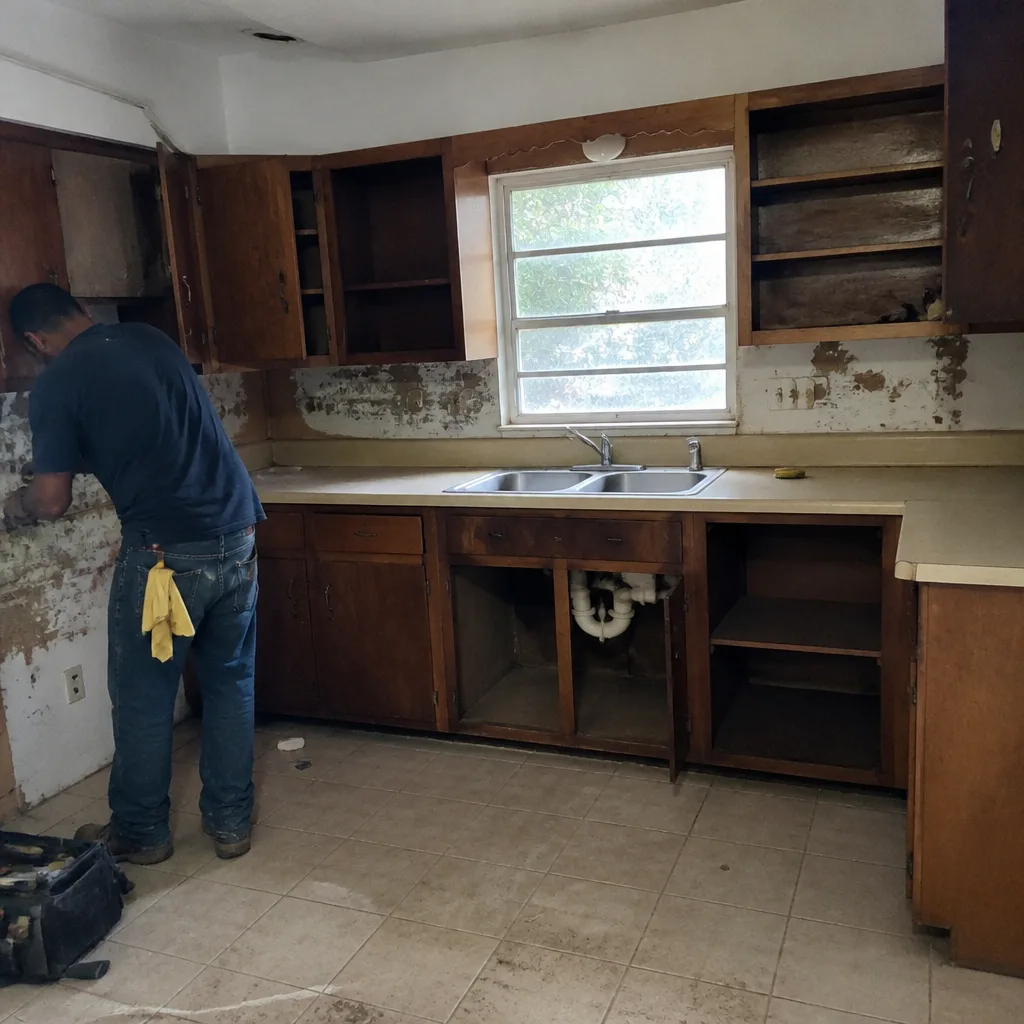 Before
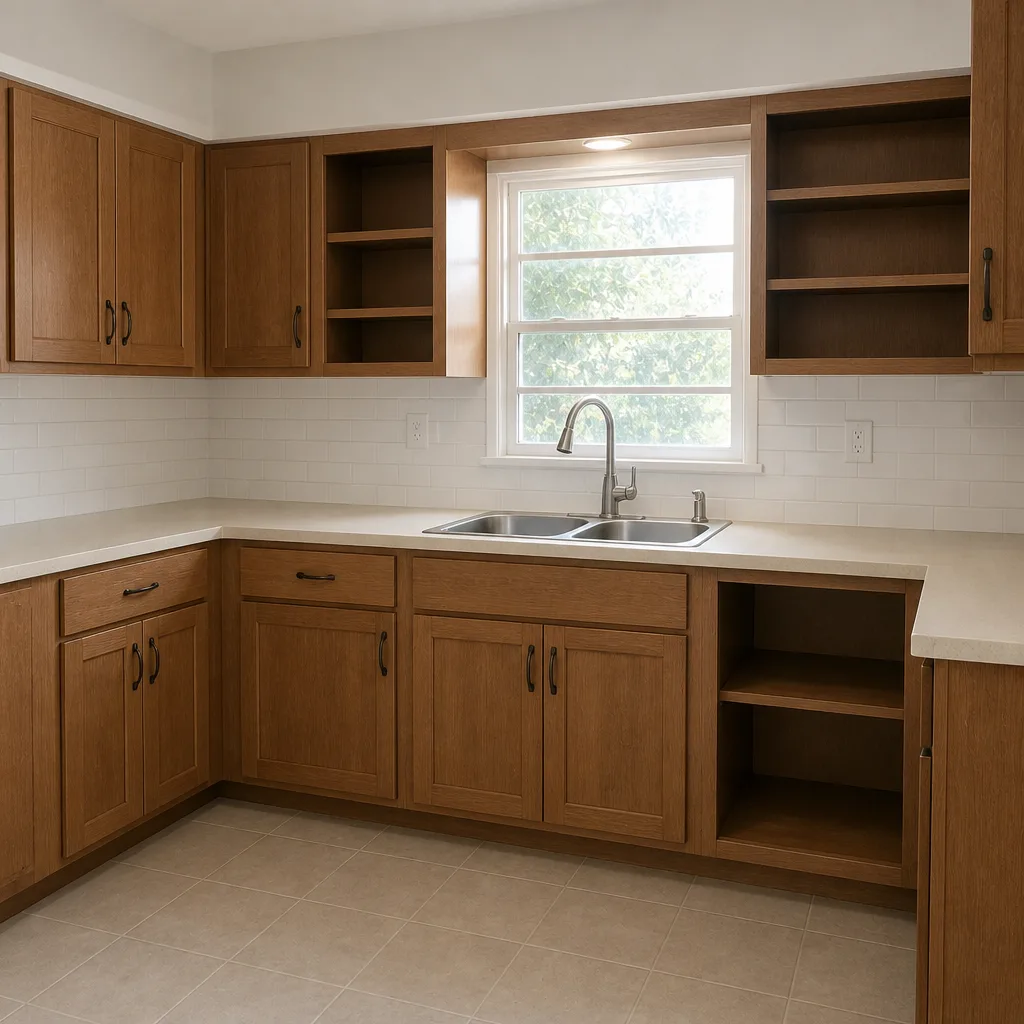 After
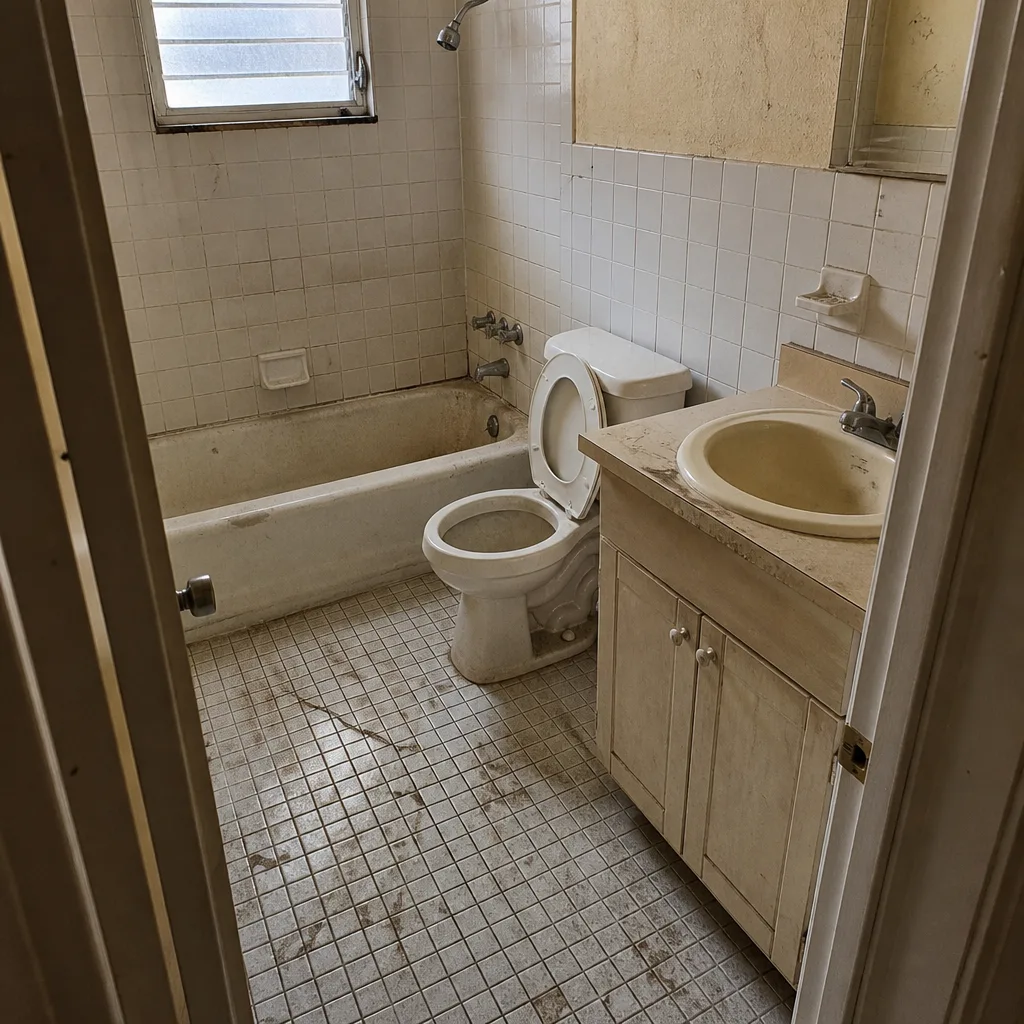 Before
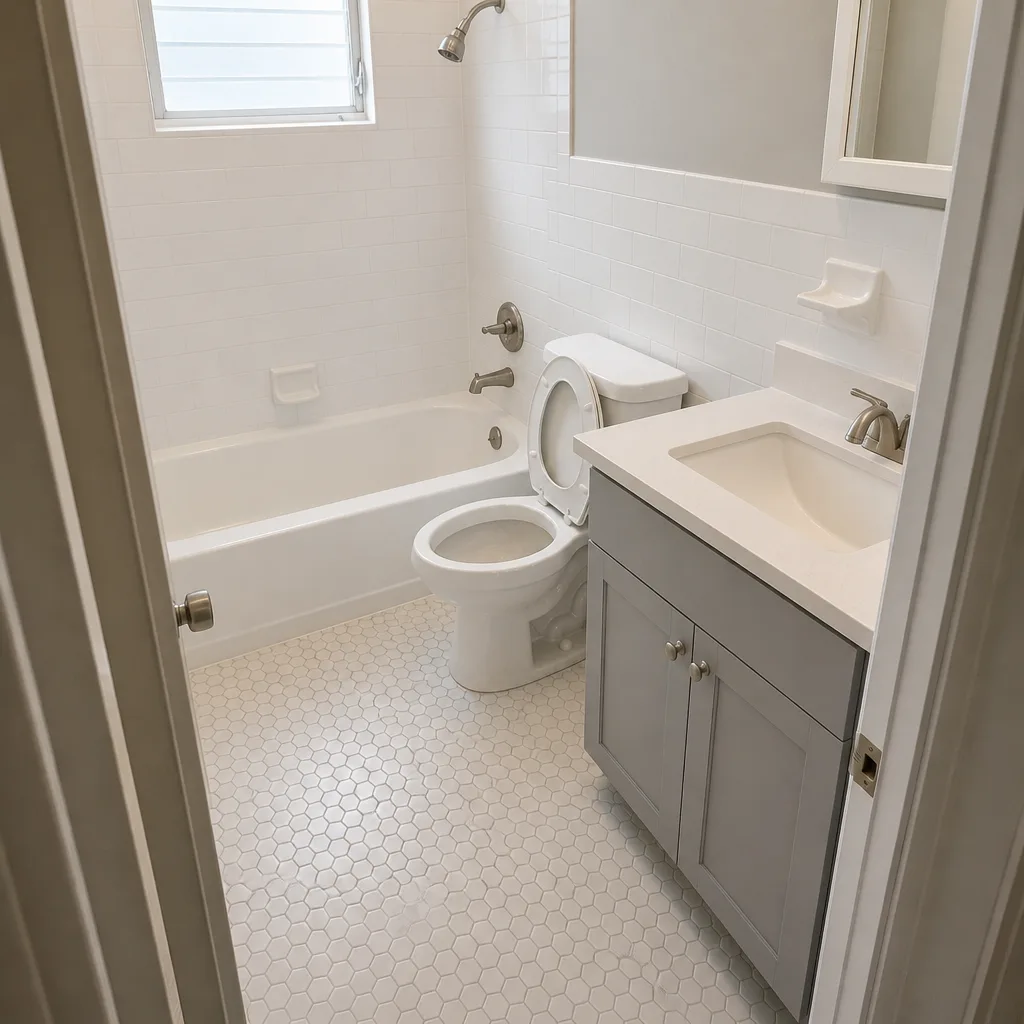 After
When to Call a Professional
You need a professional when the scope touches structural, electrical, or plumbing systems, when permits are required, or when the schedule has to land on a specific date. In Miami, that’s most projects. Layout changes in kitchens, bathroom re-pipes, panel upgrades, and any work that changes a wall, a window, or a load path all need a permitted contractor who owns the schedule end to end.
You also need one when you’ve been quoted a timeline that feels too short. A 6-week kitchen remodel in Miami, start to finish with permits, is not a real number. A contractor willing to walk you through the permit calendar, the inspection queue, and the weather float – in writing, before you sign – is a contractor who will actually deliver. Bradford Remodeling Co Miami offers free estimates in Miami, with a written price and a written schedule before any work starts. Call (844) 797-4435 and we’ll walk you through the realistic calendar for your project.
Frequently Asked Questions

A home remodel in Miami typically takes 8 to 16 weeks for a mid-scope project and 5 to 9 months for a whole-home renovation. The range is driven more by permit review durations at Miami-Dade Building than by construction labor, which is why two projects with identical scopes can land on wildly different end dates. Call (844) 797-4435 for a written schedule built around your specific scope.
Miami-Dade Building operates separate review queues for structural, mechanical, electrical, and plumbing permits, and each queue has its own backlog and correction rate. A plumbing re-pipe may clear in 2 to 4 weeks while a structural beam replacement can run 12 to 20 weeks or longer. Corrections cycles extend both. The variance isn’t random; it’s a function of which review queue your project enters and whether your submittal draws a comment on the first pass.
A Gantt chart is the full task-by-task horizontal bar chart with dates, dependencies, and float visible across 60 to 90 rows. A schedule summary is a one-page document with 12 or fewer bars that compresses the whole project into headline phases. Ask for the Gantt chart. The summary hides the permit and inspection bars, which are where timelines actually slip.
No, not for permitted scope. Demolition that exposes structural, electrical, or plumbing systems requires an approved permit before work proceeds, and starting without one risks a stop-work order, fines, and a delay far longer than the permit review itself. Pre-construction activities – material orders, cabinet selection, site prep that doesn’t disturb the systems – can proceed while the permit is in review. That’s where a disciplined contractor earns their keep.
Hurricane season runs June 1 through November 30, and the summer thunderstorm pattern can shut down exterior work for two to three hours most afternoons. A realistic schedule prices 5 to 10 percent of the calendar as weather float and labels it explicitly. Exterior work scheduled November through April avoids most of the risk; work scheduled June through September should carry larger float buffers and a contractor who plans for them.
A written schedule guarantee should include named milestone dates (permit approval expected, demolition start, rough-in complete, final inspection), stated float allowances (weather, inspection queue, homeowner decision days), contractor remedies if a milestone slips, homeowner obligations, and explicit exclusions such as named-storm events or citywide inspection shutdowns. If it doesn’t list a remedy for the contractor missing a date, it’s not a guarantee. Call (844) 797-4435 to see how ours is structured on a real project.
The Bottom Line
General contractor timelines in Miami are dominated by permit review and inspection scheduling, not by labor. A realistic kitchen remodel runs 9 to 16 weeks and a whole-home renovation runs 5 to 9 months, with 30 to 50 percent of that calendar absorbed by the review queue and inspection windows. The contractors who quote honest schedules build the permit calendar, inspection wait time, and weather float into writing before the first tool comes out. The ones who don’t are the ones you’ll be chasing in month four. Bradford Remodeling Co Miami puts the written price and the written schedule in your hand before work begins, and backs every completed project with the 365-Day Done Right Promise. Call (844) 797-4435 to schedule your free estimate.
Written by the team at Bradford Remodeling Co Miami.