Last updated November 18, 2026





Free written scope consultation - allowances, timeline, and change-order rules on paper before a single trade is scheduled
Kitchen Remodeling Warning Signs Every Homeowner Should Know
A contractor who can’t tell you the R-value they plan to use for your kitchen ceiling insulation isn’t hiding incompetence. They’re confirming it. In our experience across Miami, the warning signs that predict a failed kitchen remodel almost always show up at the estimate stage, weeks before anyone swings a hammer. The proposal that reads clean but says nothing, the allowance buried on page four, the contractor who offers to skip the permit “to save you money” – these are early tells. This guide walks through the trade-specific red flags we’ve learned to spot over years of building and remodeling kitchens, so you can catch them before you write a deposit check.
Quick Answer
The biggest kitchen remodeling red flags are vague scope language (no cabinet species or grade specified), missing countertop substrate details, allowances that shift cost overruns onto you, an electrical panel never assessed before major appliance upgrades, and any contractor who suggests skipping permits. If a bid can’t tell you what brand, grade, or substrate goes into your kitchen, it’s telling you something else: the price isn’t real yet.
Styles & brands we work with
- Kitchen remodeling
- Bathroom remodeling
- Home additions & ADU
- Roofing
- Windows & doors
- Driveway & pavers
- Fence
Table of Contents
- Estimate-Stage Red Flags Kitchen Homeowners Miss
- Why Materials Allowances Are a Liability Transfer
- Permit and Inspection Avoidance Signals
- Countertop Substrate and Cabinet Specs
- Electrical Panel Assessment Before Appliance Upgrades
- Mid-Project Warning Signs
- Questions to Ask at the Bid Stage
- Common Mistakes to Avoid
Estimate-Stage Red Flags Kitchen Homeowners Miss
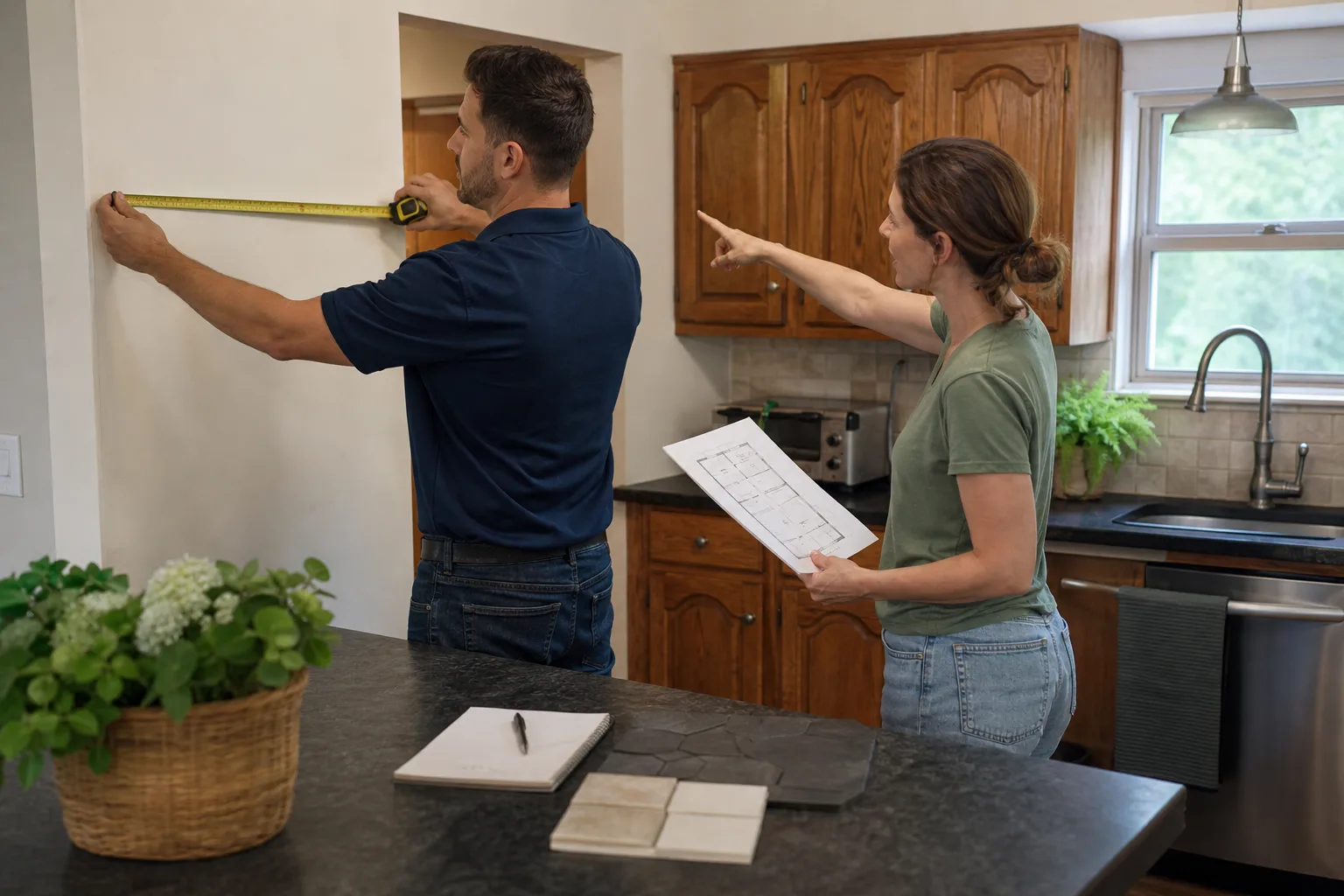
The estimate is where a kitchen remodel is either squared away or already going sideways. A real bid names products. A vague one names categories. If your proposal says “upgraded cabinets” without a species (maple, oak, painted MDF), a construction type (framed vs. frameless), and a manufacturer, that’s a red flag you can read at the kitchen table. When we write a Miami proposal, we document KraftMaid or Wellborn cabinetry by name so the specification is traceable and holds up in writing later.
Here’s what to look for in the document itself:
- Cabinet line item reads “cabinets – $8,500” with no species, door style, or box construction described. This is a placeholder, not a price.
- No countertop substrate mentioned. Every stone surface needs a substrate underneath (typically a plywood build-up or cement board). A bid that only lists the slab is only pricing half the installation.
- No electrical scope. A kitchen remodel almost always touches circuits. If the estimate doesn’t mention the panel capacity check or GFCI requirements, it’s incomplete.
- No plumbing scope for sink or dishwasher relocation – especially common in Miami where slab-on-grade homes make drain moves expensive.
- Missing demo and disposal. If it’s not in writing, it’s a change order waiting to happen.
Look closely at how the estimate handles labor too. A proposal that lists labor as a lump sum with no line-item breakdown is harder to hold anyone to. When we work under the General Contractor in Miami framing, every line is documented, priced, and signed before work begins.
Why Materials Allowances Are a Liability Transfer
A materials allowance is a budgeted dollar amount the contractor assigns to a category (say, $4,200 for tile) and then reconciles against what you actually pick. If you go over, you pay the difference. If you go under, you get a credit – usually. The problem isn’t the allowance model itself; it’s how it’s written. Buried allowances in Miami kitchen remodels routinely hide a 30-50% budget gap between what the allowance covers and what the homeowner actually wants.
Say a proposal lists “$2,500 for appliances.” Your actual range, dishwasher, and refrigerator selection runs $6,800. That $4,300 delta gets invoiced as a change order after demo, when you have no leverage and no functioning kitchen. That’s a liability transfer – the contractor has shifted the cost overrun risk to you, but only after construction has started.
How to spot them:
- Read every dollar figure in the proposal. Every category should either be a real spec (product name) or an explicit allowance with a note explaining what happens if you exceed it.
- Ask what the allowance covers. “Is this an allowance or a fixed price?” If the answer is “allowance,” ask for the unit price and the assumed quantity.
- Compare the allowance to reality. Look up the specific kitchen tile or fixture in the allowance tier on the manufacturer’s site. If the allowance can’t buy the product, the proposal is understated.
- Get the allowance written as a “not to exceed” with a variance threshold. Real contractors will do this in writing.
The cleanest proposals specify brands by name. When we document Cambria, Silestone, or Caesarstone for a Miami kitchen counter, that line item doesn’t fluctuate. It’s a price in writing, not a guess.
Permit and Inspection Avoidance Signals
If a contractor suggests you “save time and money” by skipping the permit on a kitchen remodel, they’re not doing you a favor. They’re proposing a structural and resale risk. In Miami, kitchen remodels that touch electrical, plumbing, or gas systems require permits and inspections. Skipping them can hit you in three ways: unsafe work that fails inspection later, a resale that stalls because the county has no record of permitted work, and potential insurance problems if anything goes wrong.
Watch for these signals:
- “We don’t need a permit for that” – said about moving plumbing, adding circuits, or relocating a gas line.
- “We pull permits in-house” – without showing you the permit number or telling you which inspection phases will occur.
- “You can pull the permit as owner-builder” – a common maneuver that makes you liable for the work.
- No mention of inspections at all in the scope of work.
Miami-Dade and the incorporated cities inside it have specific inspection phases. Rough-in electrical, plumbing, and framing all get inspected before drywall closes over them. If your contractor can’t tell you when those inspections happen, they’re not managing the process. That’s a permit problem you’ll inherit at resale.
Countertop Substrate and Cabinet Specs
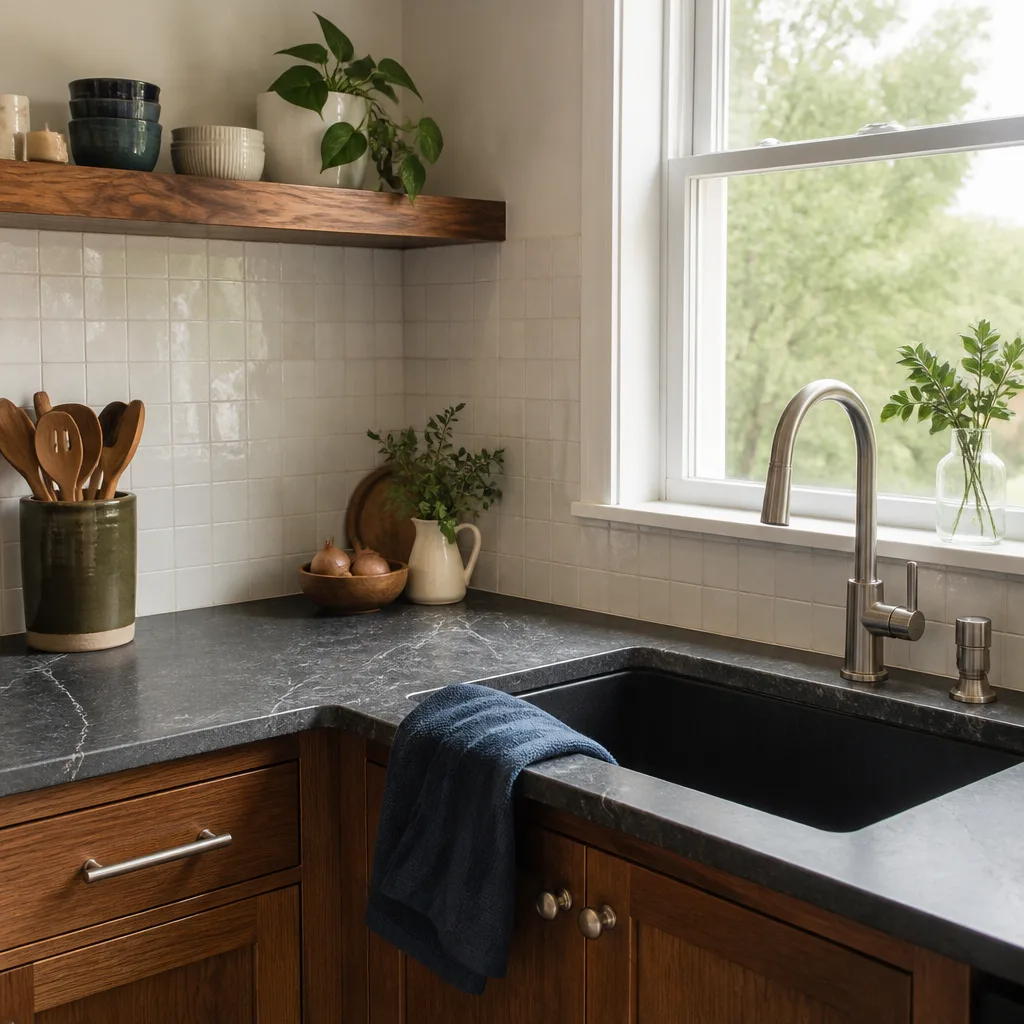
Countertop installations fail in the details. Stone slabs – quartz, granite, or the Cambria and Caesarstone surfaces we install – need a properly leveled substrate underneath. In Miami’s humid climate, plywood substrate is preferred over particleboard because glued moisture from the cabinet interior, from under-sink leaks, and from ambient humidity will swell particleboard and start showing as cracks in the stone. Ask what substrate is going in.
The cabinet specs matter just as much. When you see “36-inch base cabinets,” you should also see:
- Box construction: plywood vs. particleboard. Do the sides use dovetail or stapled construction?
- Drawer glides: side-mount, undermount, soft-close – and the manufacturer.
- Door style and finish: painted, thermofoil, or solid wood. Thermofoil doesn’t survive Miami humidity in an unconditioned kitchen.
- Toe kick depth and material. Often where value-engineering quietly happens.
When we work under our Kitchen Remodeling in Miami process, the substrate and cabinet construction are line items in the proposal. That’s the difference between a spec and a guess.
Electrical Panel Assessment Before Appliance Upgrades
Moving from a 30-inch gas range to a 48-inch induction range isn’t a simple swap. Induction cooking pulls 40 to 60 amps on its own. If your existing panel is a 100-amp service with a few open breaker slots, adding the range plus a convection wall oven plus a dishwasher plus a microwave draws will push you past capacity. The electrical panel must be assessed before appliance selections are finalized, not after.
Warning signs in an estimate:
- No panel assessment itemized. The bid should include “electrical panel capacity check” as a separate line.
- Appliance upgrades listed without amperage. If the proposal upgrades your range but doesn’t name amps, it’s not real.
- No GFCI or dedicated-circuit callouts. Kitchens need GFCI protection and dedicated circuits for major appliances. This is basic trade math.
- “We’ll figure out the panel later.” The panel is the starting point, not an afterthought.
In older Miami neighborhoods – Coral Gables, Little Havana, parts of Coconut Grove – a 1960s panel is common. Upgrading the panel is a real, legitimate cost that should appear in the proposal, not as a surprise change order mid-job. Electrical work belongs with a licensed electrician. We don’t walk homeowners through panel work over the phone for a reason: it’s dangerous, code-driven work that has to be inspected.
Mid-Project Warning Signs
Some red flags can’t be spotted at the estimate. They show up once the walls are open. Here’s the pattern we’ve seen in Miami kitchens where the contractor tight-scoped the bid or underbid to win the job:
- Change orders presented after work is done. If a subcontractor tells you they’ve already installed something and now it needs to be paid for separately, that’s not a change order. That’s an invoice for work you didn’t authorize. Change orders should be signed before work.
- Subcontractors who don’t know the scope. If the electrician walks in and asks where the outlets go because they haven’t seen the plan, the contractor isn’t coordinating.
- Unexplained gaps between trade visits. Electrician finishes rough-in Monday, plumber shows up three weeks later. That’s a scheduling problem, and it eats time and confidence.
- Site conditions are unmanaged. Debris pile-ups, no dust control, cabinets delivered and stacked in a hallway for a week – these cost you in delays and in potential damage the contractor may try to charge you for.
- The written guarantee disappears. A contractor who never mentioned a workmanship warranty at signing isn’t going to hand you one at close.
Every completed Bradford project closes with a signed 365-Day Done Right Promise in the homeowner’s hand. If the work fails inside that window, we come back and correct it at no charge. That’s not a marketing line. It’s a written document that goes into the project file.
Questions to Ask at the Bid Stage
Here are the questions that surface the flags above before you write a check. Ask them in the same meeting where the estimate is presented, and write down the answers.
- “What cabinet manufacturer and species are you pricing?” A real bid names the brand and construction. Vague means the number is going to move.
- “What substrate is going under the countertop?” Plywood is preferable in Miami’s humidity. Get the answer in the proposal.
- “Will you assess the electrical panel before we finalize the appliance list?” The panel is the limiting factor in most older Miami homes.
- “What inspections will we go through, and roughly when?” A contractor who can list the phases (framing, rough electrical, rough plumbing, final) knows their process.
- “Is every line item a fixed price or an allowance?” Then ask for allowances to be rewritten as “not to exceed” amounts.
- “What happens if the scope changes mid-project? Do we sign before work starts?” The answer should be an automatic yes.
- “What does your written workmanship guarantee cover, and how long is it?” Get the terms in the proposal, not in a verbal promise.
- “Who answers the phone if I have a problem?” A contractor whose calls go to voicemail is a contractor you can’t reach mid-project.
We work with a documented roster of premium brands – KraftMaid and Wellborn cabinetry, Cambria and Caesarstone surfaces, Kohler and Moen fixtures – so specifications can be traced back to manufacturing documents. If a bid’s product list reads like a series of categories, ask for names.
Common Mistakes to Avoid
- Picking the lowest bid without reading it. In Miami, the low bid is usually low because something is missing from the scope – permits, demo, substrate, or a whole category of trade work. The $34,000 bid that becomes $51,000 in change orders isn’t cheaper.
- Signing a contract with allowance language buried on page four. Every dollar figure should be a fixed price or explicitly documented as an allowance with a variance threshold. Read every line before you sign.
- Skipping permit research. Check Miami-Dade’s permit records for your address before work begins. If the permit doesn’t exist, the work isn’t tracked, and it will show up at resale.
- Finalizing appliance selections before the panel assessment. Every year we see kitchens where the range was ordered before anyone checked the panel. Upgrading the panel mid-project adds both cost and delay.
- Not knowing who’s walking through the door. Ask if the crew is background-checked and uniformed. Our technicians are background-checked and uniformed on every job, and we carry up to 22 years of trade experience into the project.
- Accepting a verbal workmanship warranty. A guarantee that isn’t written isn’t a guarantee. The 365-Day Done Right Promise is a signed document on every project we close.
- Ignoring the substrate question on stone counters. Quartz or granite on particleboard in a humid Miami kitchen is a crack waiting to happen. Get the substrate written into the scope.
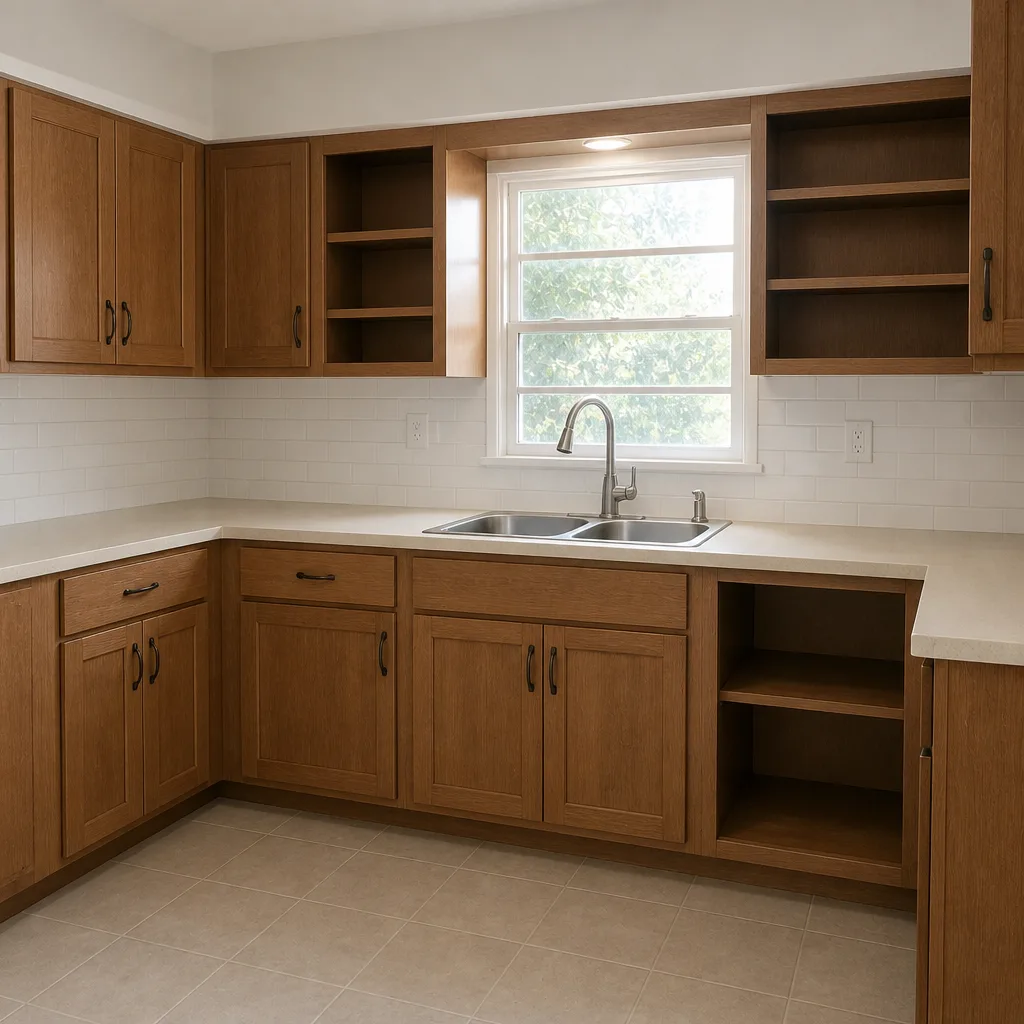
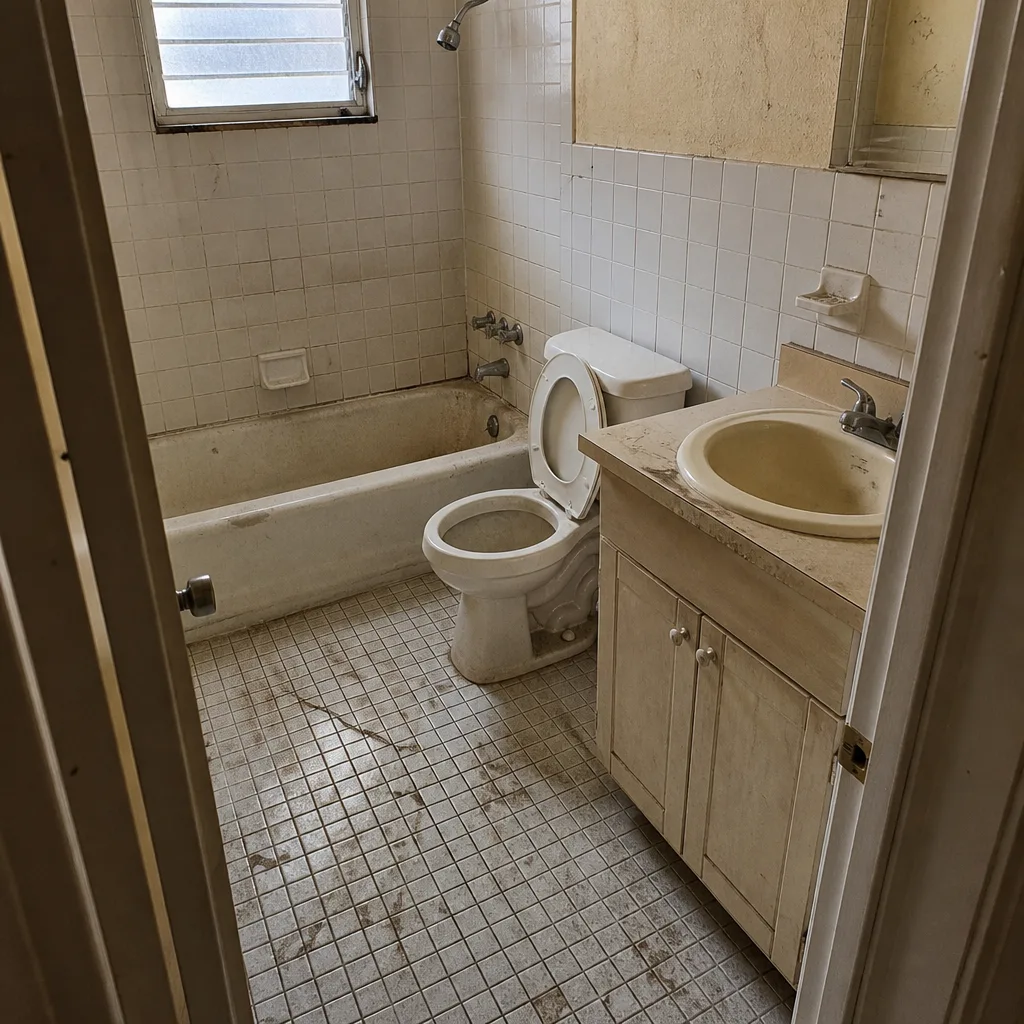
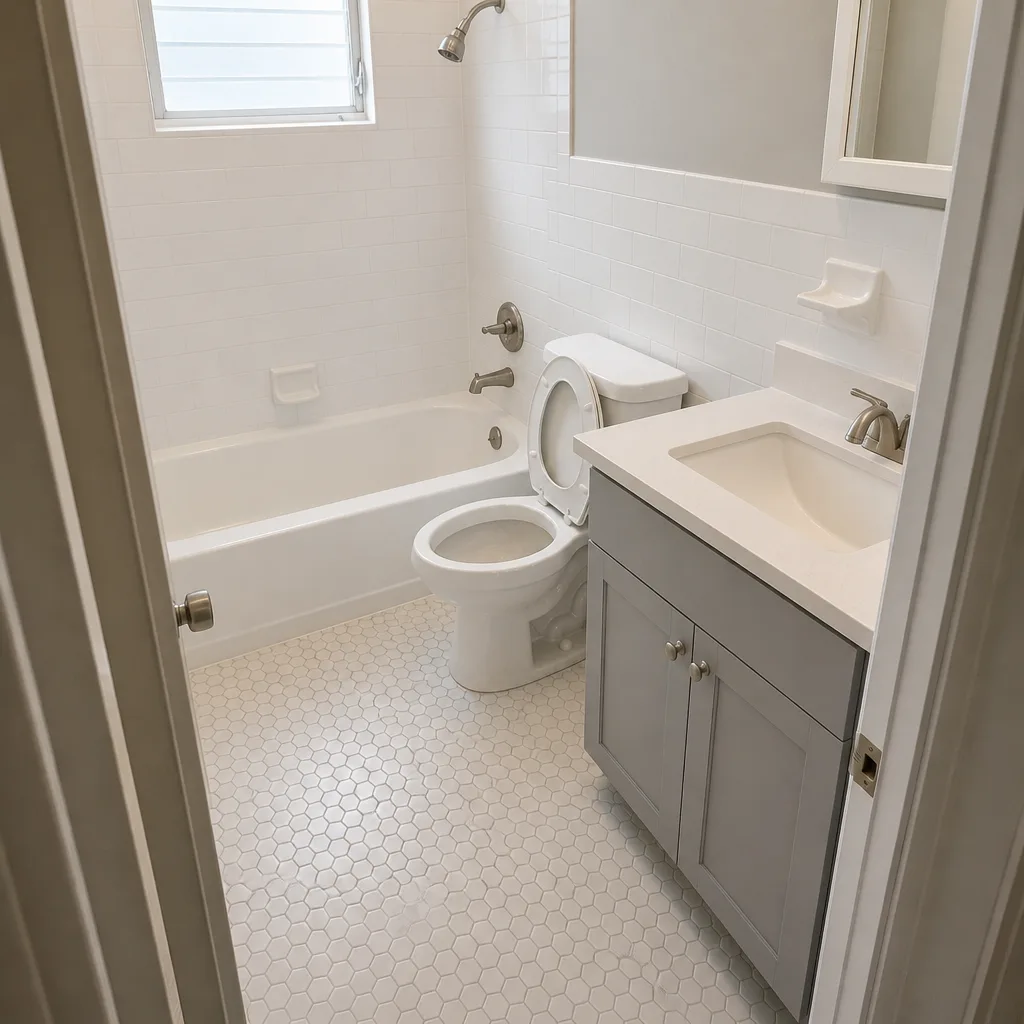
See the difference
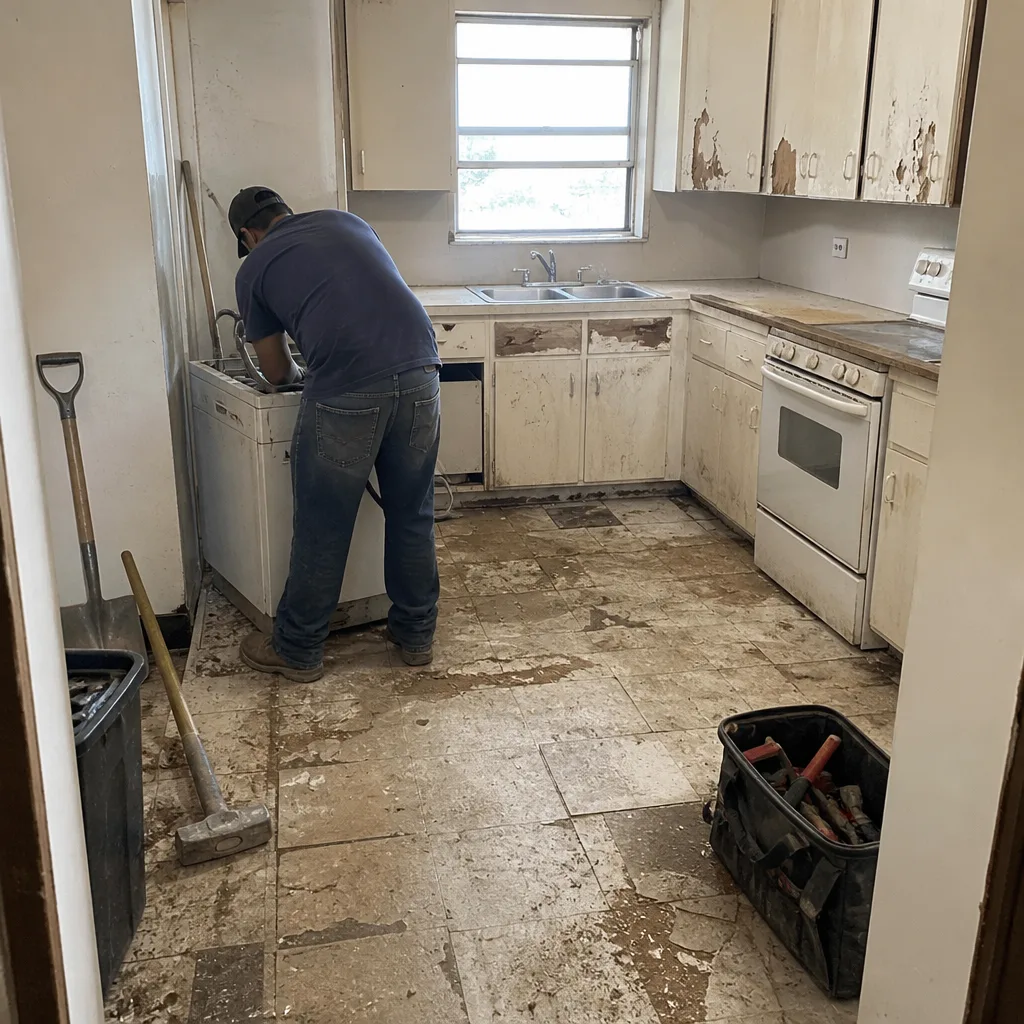 Before
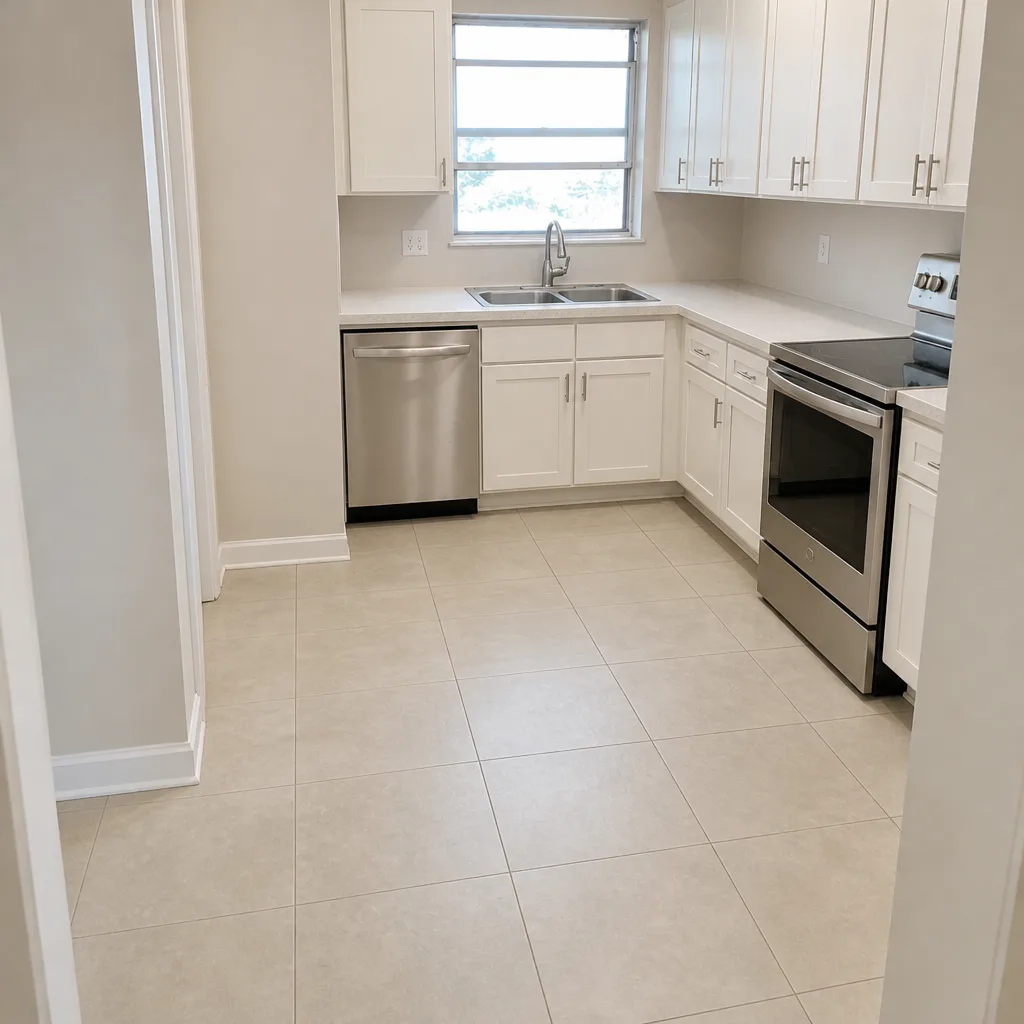 After
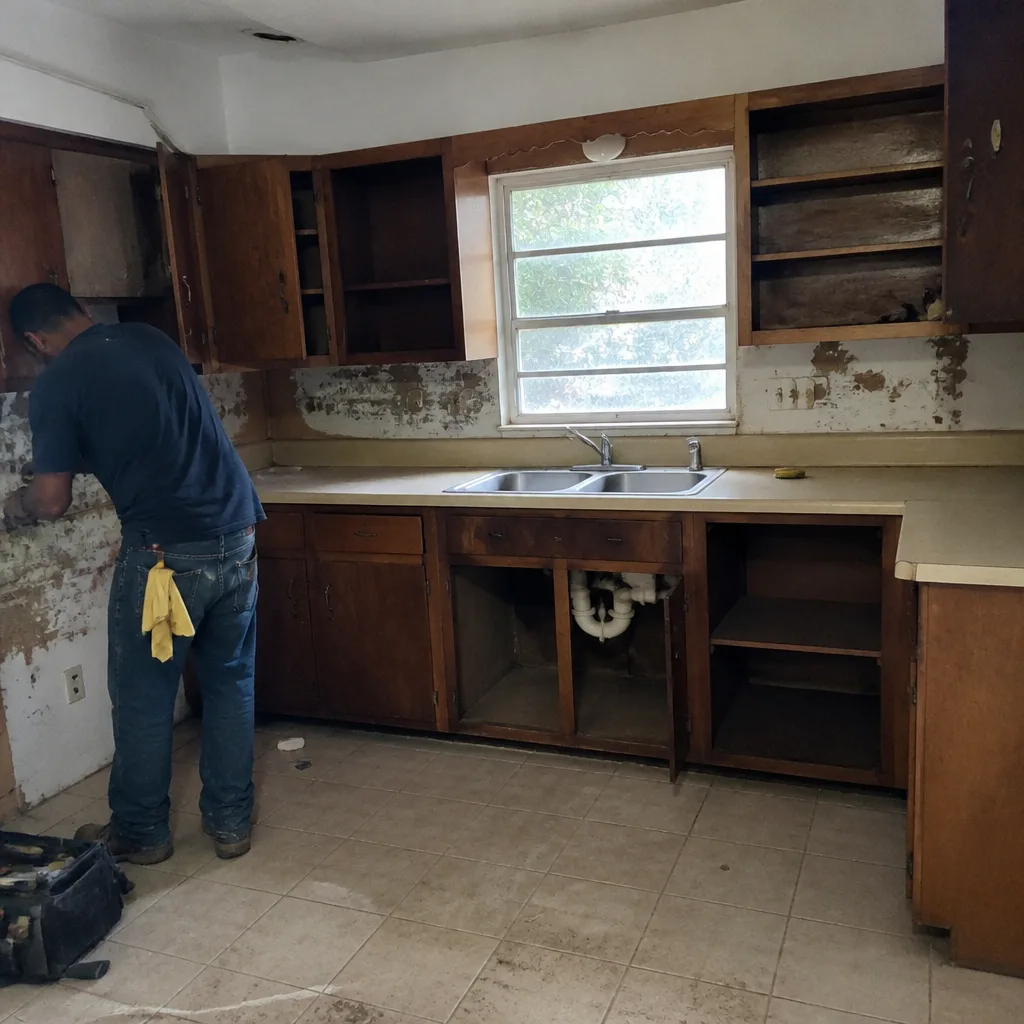 Before
 After
 Before
 After
When to Call a Professional
Call a professional before anything else if any of these are true: the proposal you’ve received doesn’t name specific cabinet brands or substrate, the electrical panel hasn’t been assessed and you’re changing appliances, the contractor has suggested skipping a permit, or you’ve received a change order for work that was already finished. These aren’t small problems – they’re scope and process failures that compound over the project. Kitchen remodeling involves electrical, plumbing, structural, and finish trades, and the coordination between them is where most projects fail. A licensed general contractor manages that coordination and hands you documentation at close: clean site, full scope in writing, signed guarantee. Bradford Remodeling Co Miami offers free estimates in Miami – call (844) 797-4435. We give you the price in writing before anything starts, and the 365-Day Done Right Promise on the finished work.
Frequently Asked Questions

A vague scope in the proposal. If the bid can’t name the cabinet manufacturer, the countertop substrate, and the electrical panel assessment, the number on the page isn’t a real price – it’s a starting figure that will move. Read every line before you sign.
A mid-range full kitchen remodel in Miami typically runs $65,000 to $130,000 depending on size, cabinetry tier, and whether electrical or plumbing relocation is involved. A smaller cosmetic kitchen remodel – cabinet doors, surfaces, fixtures – runs roughly $28,000 to $55,000. Call (844) 797-4435 for a written estimate specific to your kitchen, free of charge.
Skipping the permit removes the inspection safety net and can block your resale, since Miami-Dade requires disclosure and buyers check permit records. Electrical, plumbing, and gas work without inspection can also void homeowner insurance coverage on any related claim. Call (844) 797-4435 if you want a bid that includes permits and inspections in writing.
A materials allowance is a budgeted dollar figure the contractor assigns to a category (tile, appliances, lighting) that gets reconciled against what you actually buy. If your selections exceed the allowance, you pay the difference – often at change-order pricing after demo starts. Ask your contractor to spec products by name instead of allowances, or to rewrite allowances as “not to exceed” amounts.
Yes, every time appliances are being upgraded. Induction ranges, convection wall ovens, and dishwasher upgrades draw more amps than a 1960s panel can support, and adding new circuits to a full panel requires either a panel upgrade or a reconfiguration. In older Miami neighborhoods, we see 100-amp panels that can’t handle the appliance loads in a modern kitchen. Call (844) 797-4435 to schedule an estimate that includes the panel assessment in the written scope.
The 365-Day Done Right Promise is a written workmanship guarantee on every completed Bradford project. If the work fails inside the 12-month window – a cabinet door that warps, a tile joint that cracks, a fixture that fails – we return and correct it at no charge. It covers our workmanship and installation; it doesn’t cover product defects under manufacturer warranty, which are handled separately. You get the signed guarantee in hand at project close.
The Bottom Line
Most kitchen remodel disasters are telegraphed before the contract is signed. Vague scopes, hidden allowances, missing substrate details, unassessed electrical panels, and permit-skipping suggestions are all visible at the estimate stage – if you know what to look for. The questions in this guide will surface most of them before you write a deposit check. What to expect from a real bid: specific brands named, substrate documented, permits included, the panel assessed, and a written workmanship guarantee that survives the project. If the bid can’t do those things, the price isn’t real. Get a written number before any work starts. Call (844) 797-4435 for a free estimate from Bradford Remodeling Co Miami.
Written by the team at Bradford Remodeling Co Miami.