Last updated November 18, 2026





Free written scope consultation - allowances, timeline, and change-order rules on paper before a single trade is scheduled
Home Remodeling Warning Signs Every Homeowner Should Know
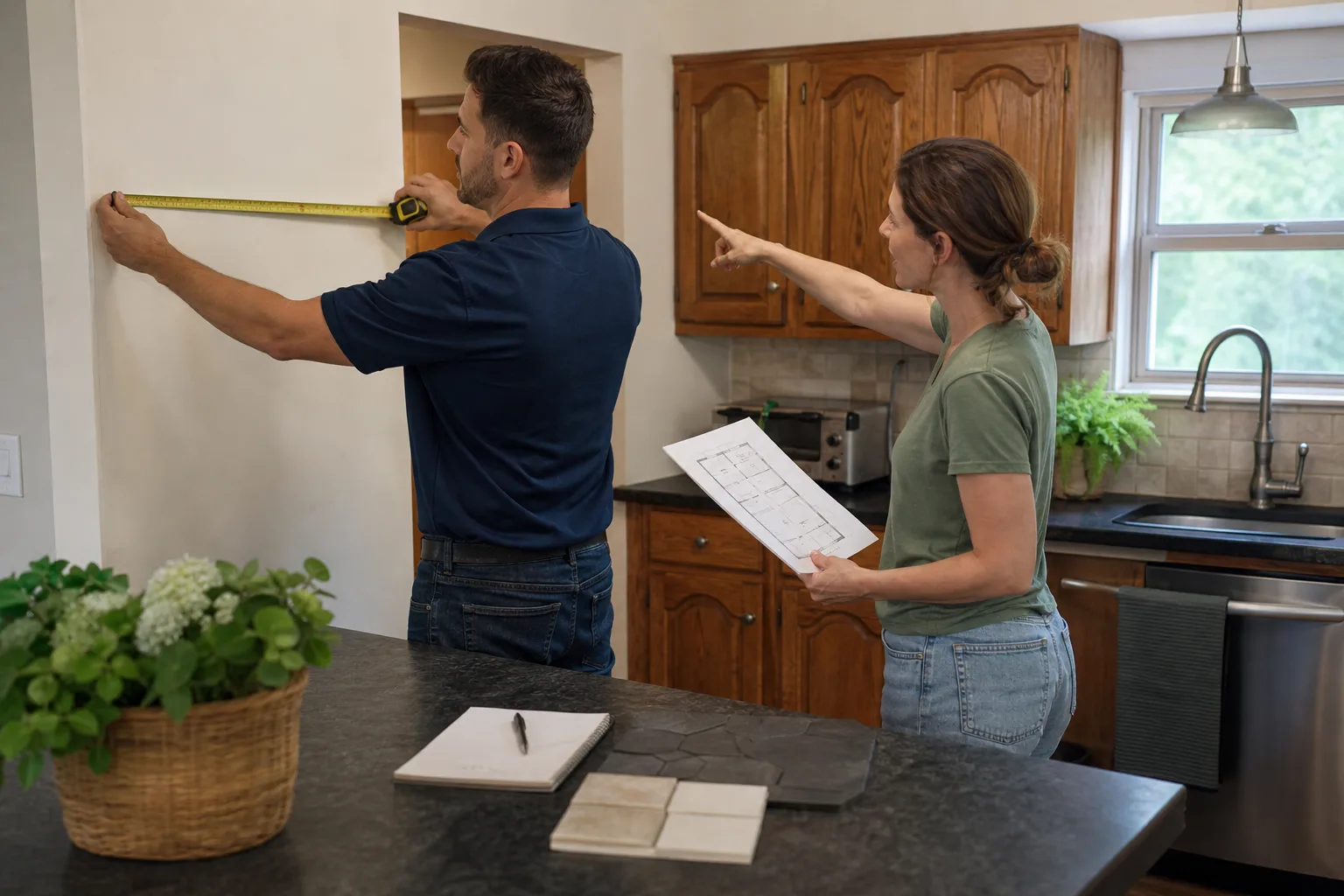
The contractor who burned you probably seemed fine at the estimate. He showed up on time, walked the kitchen twice, pulled a tape measure out of his pocket, and told you a number before he left the driveway. The problem wasn’t what he said. It was what he never put in writing – the dollar figures, the milestone dates, the order of operations, the name on the permit. This guide is about the paper trail: the specific documents a real remodeler produces before work starts, and the exact absences that predict trouble down the road. We’ll cover contract clauses, Florida payment norms, how to check a license on the DBPR database in five minutes, and the phrases that should end the conversation on the spot. Written from Miami, where the permitting rules and the humidity both test whether a contractor actually runs a disciplined operation.
Quick Answer
The warning signs that most reliably predict a failed remodel aren’t the obvious ones – they’re absences in the paperwork. A contractor who won’t produce a written scope with line-item pricing, who asks for more than 15% upfront before materials are ordered, who won’t name who pulls the permit, or who says “we’ll work out the details later” is telling you how the job will end. In Miami, a legitimate remodeler will give you a signed contract, a payment schedule tied to milestones, a permit record you can verify, and a license number you can check on the Florida DBPR database before a single tool comes out.
Styles & brands we work with
- Kitchen remodeling
- Bathroom remodeling
- Home additions & ADU
- Roofing
- Windows & doors
- Driveway & pavers
- Fence
Table of Contents
- The Contract Clauses That Separate a Real Agreement From a Handshake Deal
- Why a Contractor Who Skips the Permit Is a Bigger Liability Than One Who Costs More
- The Payment Structure Red Flag: What’s Normal Upfront in Florida
- How to Verify a Florida Contractor License in Five Minutes
- Three Phrases That Should Make You Walk Away on the Spot
- What South Florida Conditions Reveal About a Contractor’s Operation
- What ‘Squared Away’ Looks Like at Job Close
The Contract Clauses That Separate a Real Agreement From a Handshake Deal
A remodeling contract isn’t a receipt. It’s a plan for how the job resolves when things go sideways, which they sometimes do on every project that lasts more than a week. The difference between a real agreement and a handshake dressed up as paperwork comes down to four clauses, and if any of them is missing or vague, you’re exposed from day one.
Scope definition. The contract should name every fixture, cabinet, and surface with brand and model, not “customer’s choice” or “to be determined.” If you’re getting KraftMaid or Wellborn cabinetry, the door style and finish should be listed. A Cambria or Silestone countertop should be named with its color code. Vague scope is how a “standard grade” substitute appears on delivery day when you specified something else.
Change-order process. There must be a written procedure for scope changes – who initiates it, who signs off, and how the price adjusts before the change is executed. A remodeler who says “we’ll just figure it out as we go” is telling you the final invoice is going to be a surprise.
Payment schedule tied to milestones. Not to dates. Not to “phases.” To specific completed milestones – demolition finished, rough-in inspected, cabinets set.
Written guarantee terms. Not the words “warranty included” – the actual coverage window, what it covers, and how a claim is initiated.
In Miami, we frequently see contracts that omit all four. The homeowner signs, the deposit goes out, and the first change-order meeting is where the price doubles. Our approach through The Garrison Standard is simpler: every price and every guarantee in writing before a single tool comes out. It’s non-negotiable for a reason.
Why a Contractor Who Skips the Permit Is a Bigger Liability Than One Who Costs More
A contractor who undercuts the field by 15% and skips the permit isn’t saving you money. He’s transferring the liability to you, and you’ll be the one who eats it at resale, at insurance renewal, or after a water event. This matters more in Miami than most places because the inspections here trigger on things that affect structural and wind-load integrity – which is what your insurance carrier cares about most.
Here’s what the unpermitted job actually costs:
- Disclosure at resale. Florida requires sellers to disclose known unpermitted work. A buyer’s inspector will flag a bathroom or kitchen without permit records, and the ask-back is often five figures.
- Insurance complications. Carriers can deny a claim if the damaged area was modified without permits. A water intrusion into an unpermitted shower assembly is a classic denial scenario.
- Code corrections on your dime. If the work is later discovered during a future permit scope, you pay to open the wall, correct it, and re-inspect.
- Wind mitigation credits. Roof and opening work done without a permit and final inspection won’t qualify for the credits that lower your premium.
Verifying that a permit was actually pulled – not just promised – is straightforward:
- Ask for the permit number in writing before demolition begins.
- Look it up on Miami-Dade County’s online building portal using the address or the permit number.
- Confirm the permit lists the correct scope and the licensed contractor of record by name.
- Check the inspection record after each phase closes, not just at the end.
- Get a copy of the final inspection sign-off before you release the last payment.
If the contractor balks at any of that, that’s your answer. You can read more about how our general contractor in Miami service handles permits, inspections, and the paper trail on every job.
The Payment Structure Red Flag: What’s Normal Upfront in Florida
Any demand for more than 10-15% upfront before materials are ordered is outside industry norms in Florida. That’s the practical threshold – and it’s a threshold a lot of bad operators cross because a large deposit funds their next job rather than your materials. When the next job stalls, your project stalls with it.
What a disciplined payment schedule looks like on a typical Miami kitchen or whole-home remodel:
- Upfront deposit: 10-15%. Enough to cover permit submissions and initial ordering, not enough to fund someone else’s project.
- Rough-in and framing milestone: 20-25%. Tied to a completed, inspected phase.
- Drywall and finish phase: 25-30%. Payout after drywall is hung, finished, and inspected.
- Cabinet, counter, and fixture install: 25-30%. Paid when installed, not when ordered.
- Final payment: 10%. Held until punch list is complete and the final inspection is signed.
Two more signals: any demand for cash-only payment, and any request to make the check out to something other than the company that signed the contract. Both are how disputes become unrecoverable. A legitimate remodeler will accept a check to the business entity, provide a written invoice for each draw, and never ask you to release a payment before the milestone is actually complete. If you want a sense of what a documented price looks like on a real project, our kitchen remodeling in Miami page shows how the breakdown is structured.
How to Verify a Florida Contractor License in Five Minutes
Taking a contractor’s word for their license is the single most common mistake we hear about from homeowners who call us after a failed project. Florida maintains a public database, and you can check it in five minutes. Here are the exact steps.
- Go to the Florida Department of Business and Professional Regulation (DBPR) license lookup at myfloridalicense.com.
- Choose “Verify a License” and search by the contractor’s name or license number.
- Confirm the license status is “Current, Active” – not “Delinquent,” “Null and Void,” or “Inactive.”
- Confirm the license type matches the work you’re hiring for. A “Certified” or “Registered” general contractor, a “Certified Residential” contractor, or a specialty license (roofing, plumbing, electrical) each cover a different scope.
- Check the license expiration date and any public complaints or disciplinary actions on file.
- Confirm the county or jurisdiction covered matches the city (Miami-Dade has its own registration requirements for local work).
Insurance verification is a second call. Ask for a Certificate of Insurance naming you as certificate holder, sent directly from the insurer – not a photocopy the contractor hands you. Confirm both general liability and workers’ compensation are active. If a worker is injured on your property and the contractor has no workers’ comp, you’re the deep pocket.
The Garrison Partners standard for Bradford requires a background-checked, uniformed technician on every job – which matters once you’re dealing with people inside your home for weeks. But credentials are separate from licensing, and licensing is separate from insurance. Check all three.
Three Phrases That Should Make You Walk Away on the Spot
Certain sentences are diagnostic. They tell you, before a contract is signed, how the job is going to end. Three in particular should end the meeting.
“We don’t need a permit for that.”
In most cases in Miami, that statement is either wrong or an admission that the contractor isn’t licensed for the work. Kitchen and bathroom remodels that move plumbing, electrical, or structural elements require permits. Window and door replacements sized differently from existing openings require permits. Roof replacements require permits. There are narrow exceptions, and a licensed contractor should be able to cite them specifically. If they can’t, they don’t know the code.
“We’ll handle the details later.”
This phrase translates to: the scope, price, and timeline are going to shift, and you’re going to be on the wrong end of the shift. On a remodel of any size, “details” means cabinet specs, countertop grade, tile layout, fixture models, backsplash material, and paint. Each one has a price. “Later” is code for “we’ll figure out how to charge you for the upgrade after you’ve already committed.”
“The price is a ballpark – we’ll settle up when it’s done.”
Estimates are fine; the ballpark is where the number lives before it’s written down. What you want is a fixed written price before any work starts, with a clear change-order procedure for anything outside scope. If a contractor won’t commit to a number in writing, they’re not prepared to be held to it.
For a deeper look at how this plays out in one of the highest-cost rooms in the house, see our bathroom remodeling in Miami page – it walks through the specific permit and moisture-management decisions that most often reveal a contractor’s real discipline.
What South Florida Conditions Reveal About a Contractor’s Operation
Miami’s climate and code environment pose problems most national remodeling advice doesn’t cover, and how a contractor handles them is a second signal of whether the operation is disciplined. Three areas come up again and again.
Humidity and moisture control. A remodeled kitchen or bath has to manage vapor, not just water. Subfloor prep, backer board selection, and the drain and waterproofing assemblies in a shower are where cheap work fails first. In our experience, unpermitted shower remodels in Miami neighborhoods like Coral Gables and Doral tend to fail at the pan liner – two to four years after install, which is just late enough for the original contractor to be unreachable.
Wind-load and impact requirements. Miami-Dade has a High Velocity Hurricane Zone (HVHZ) product approval system. Windows, doors, and shutters have a Notice of Acceptance number, and it’s checkable. A remodeler who installs an impact window without confirming the NOA is either uneducated on the code or hoping you don’t check. Therma-Tru doors, for instance, have specific Miami-Dade-approved SKUs – the wrong SKU is an instant inspection failure.
Concrete slabs and clay soil behavior. Older homes in neighborhoods like Little Havana and Shenandoah sit on slab systems that can move seasonally. A remodeler who hasn’t scoped the substrate before quoting a tile floor is quoting against a guess.
None of this requires you to become an inspector. What it requires is hiring someone who can talk through these specifics without reaching for a brochure.
What ‘Squared Away’ Looks Like at Job Close
The proof that a contractor runs a disciplined operation shows up in the last week of the job. Squared away looks like this:
- A clean site. Debris removed, dumpster scheduled, protective coverings down, floors swept twice.
- A documented scope close-out. Every line item on the original contract accounted for or formally changed via signed change order.
- Final inspection signed off. The permit is closed, and you have a copy of the sign-off.
- A signed written guarantee in your hand. Not a verbal promise. Not a one-line “warranty” mention. A document with terms, coverage window, exclusions, and a claim process.
- A punch list in writing, with items crossed off in front of you before the final payment is requested.
The 365-Day Done Right Promise on our projects works this way: every completed project carries a full-year written guarantee. If the work fails inside that window – a cabinet door that warps, a fixture that leaks, a tile that debonds – we come back and correct it at no charge. That’s the whole point of putting it in writing. It isn’t a marketing line; it’s a commitment you can point to a year after the crew leaves.
Common Mistakes to Avoid
- Signing a contract with no line-item pricing. A single lump-sum number with no breakdown per phase, material, or trade is impossible to hold anyone to when the argument comes. In Miami, materials alone often represent 40-50% of the project budget – those should be itemized.
- Paying a deposit before the permit number exists. The permit is the contractor’s first real deliverable. If they haven’t submitted the permit application, they haven’t started the job. Don’t fund the next phase until you’ve seen the number.
- Accepting “we’ll get the insurance over to you later.” A Certificate of Insurance should be available before the first draw. If it isn’t, you don’t have a contractor – you have a stranger with a clipboard.
- Believing an initial verbal estimate is the price. Nothing is your price until it’s in writing and signed. A verbal number is a placeholder, and placeholders move.
- Letting material brands get switched on delivery without a signed change order. If KraftMaid or Wellborn cabinets are specified and something else shows up at the curb, that’s a scope violation, and you should refuse delivery – not install and argue later.
- Approving a change order on the spot for something you don’t understand. Ask for the price delta in writing before signing, even if the crew wants to keep the schedule moving.
- Releasing the final draw before the punch list and inspection are complete. Once the last payment is out, you have no leverage. Hold the final 10% until the sign-offs are done.
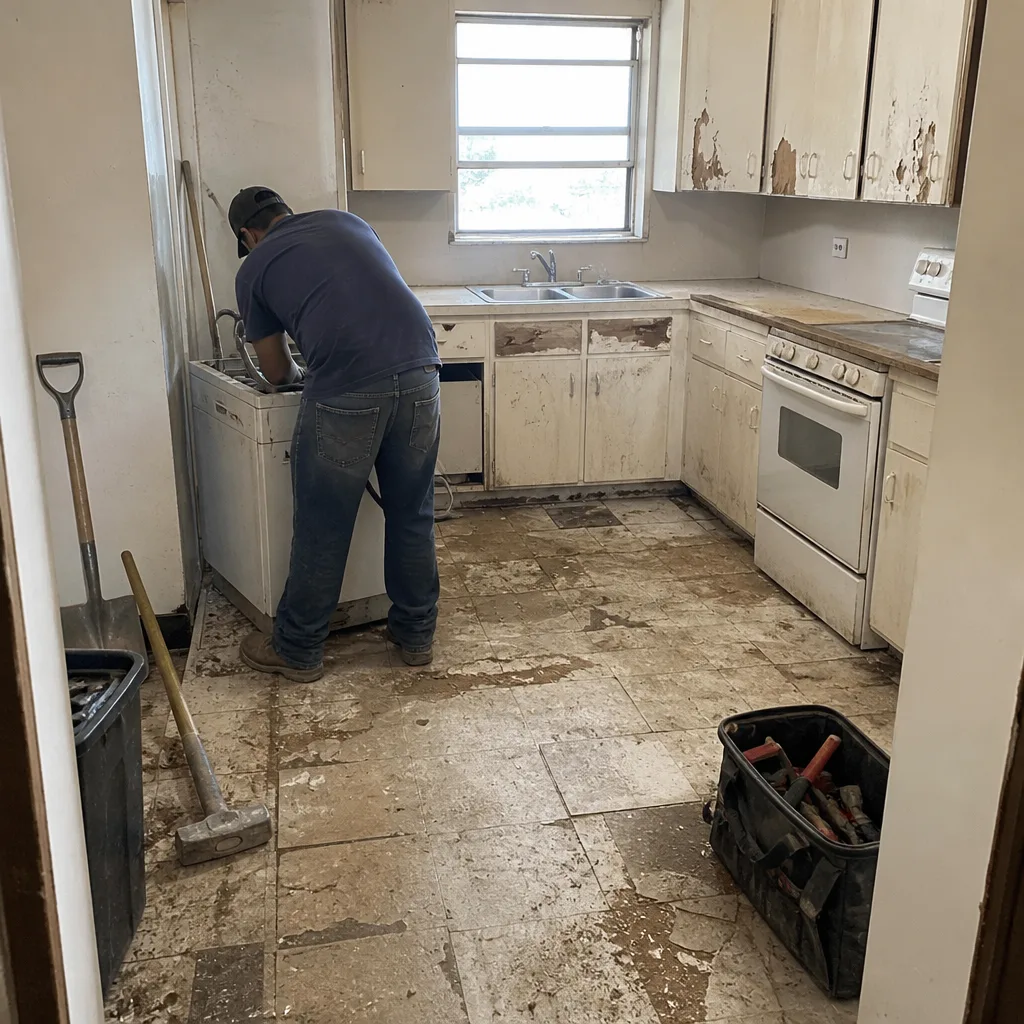
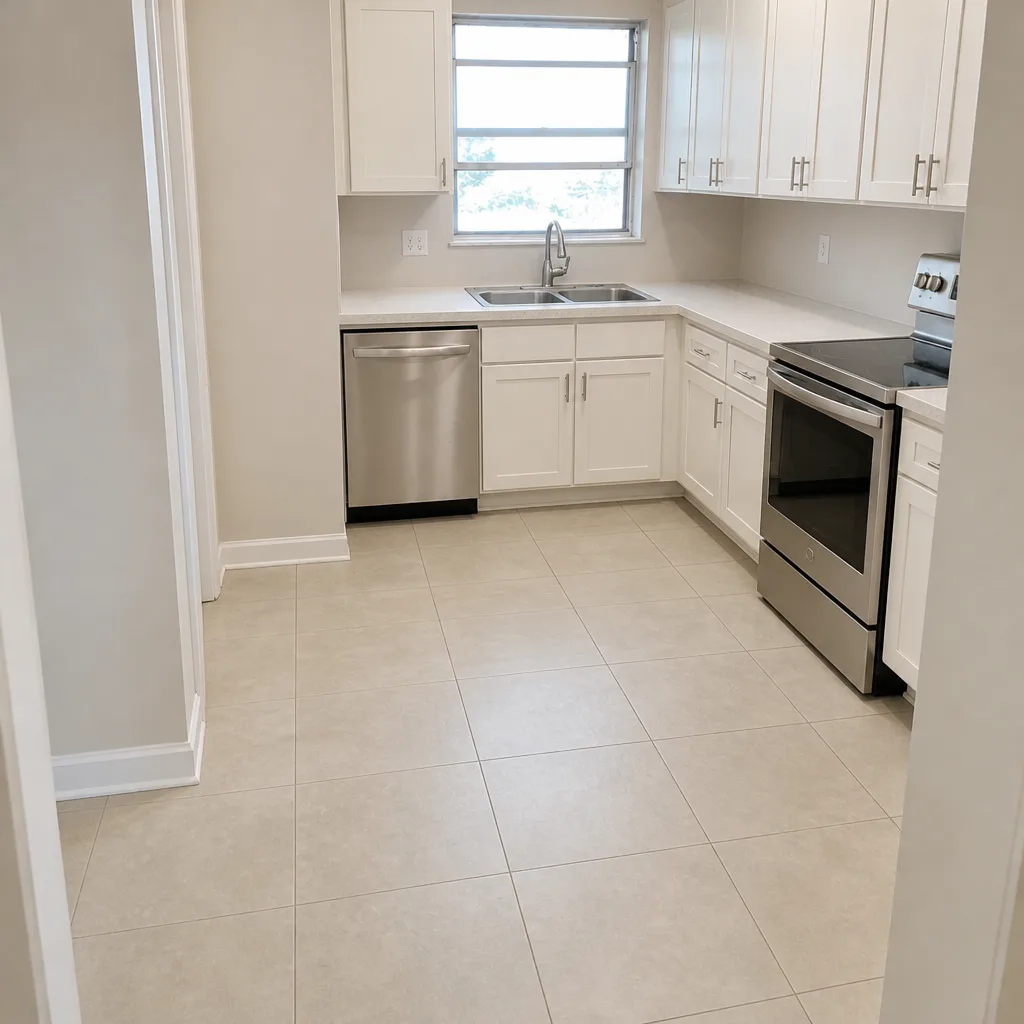
See the difference
 Before
 After
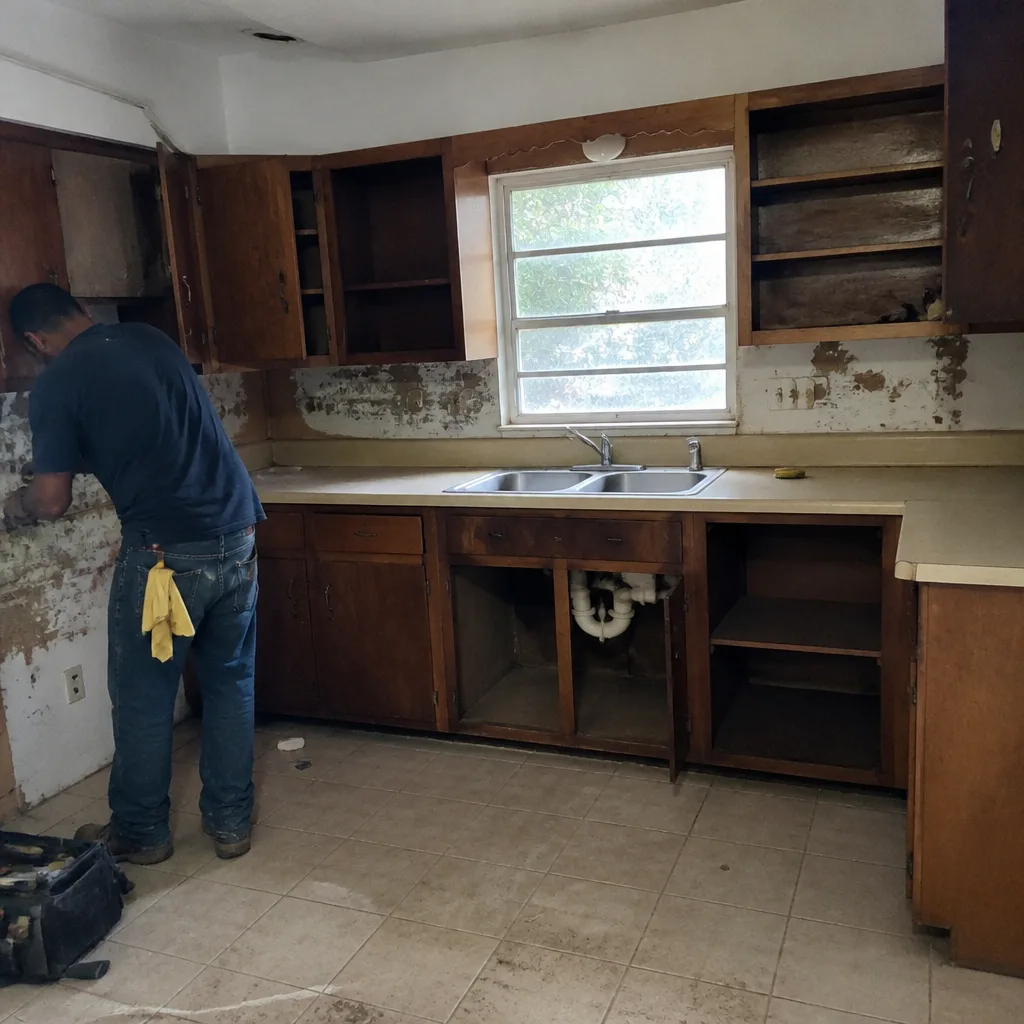 Before
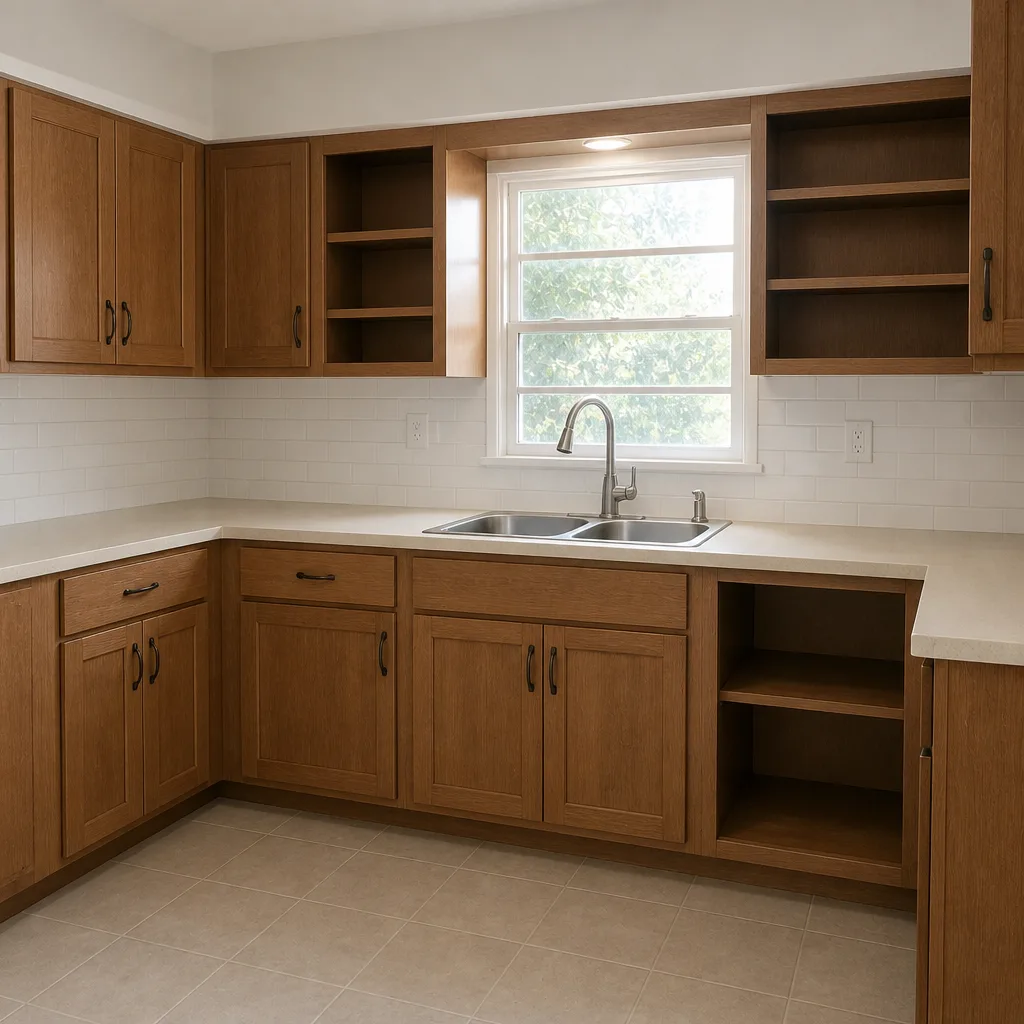 After
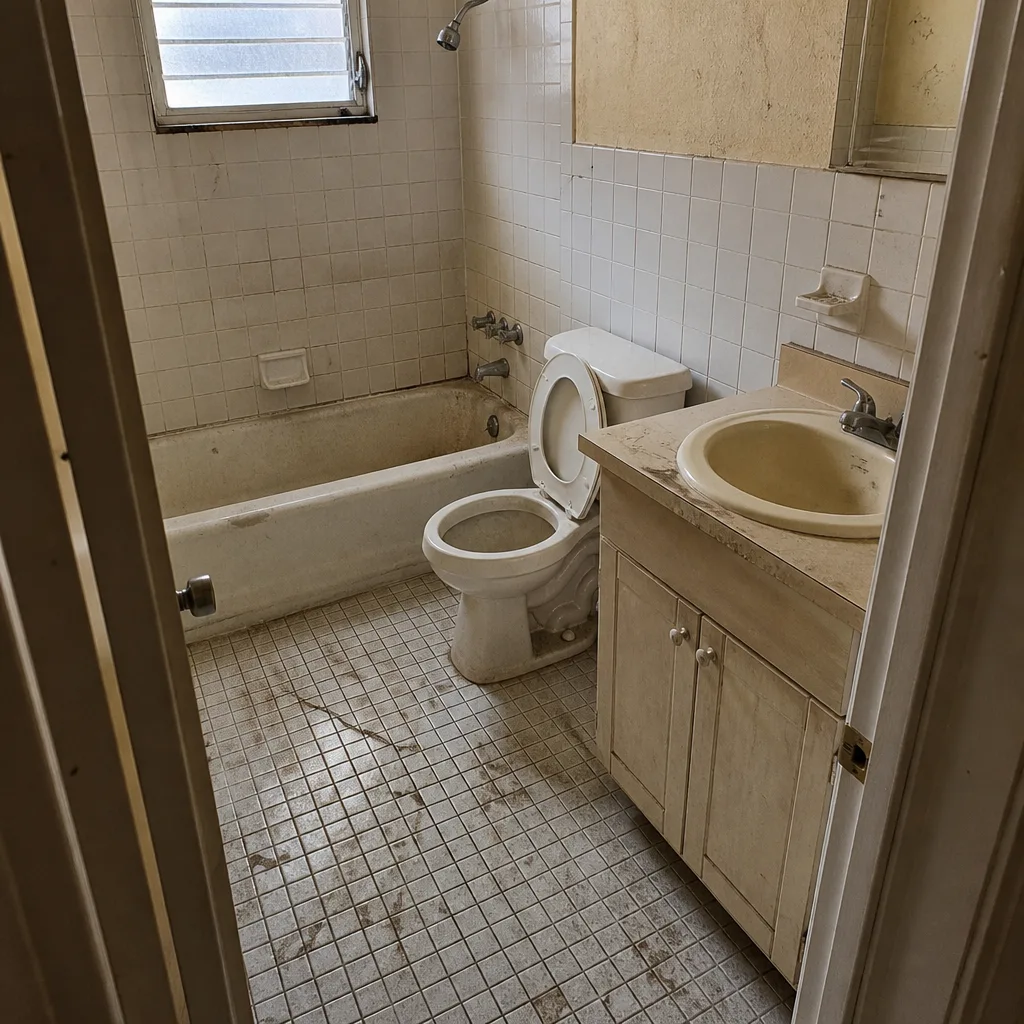 Before
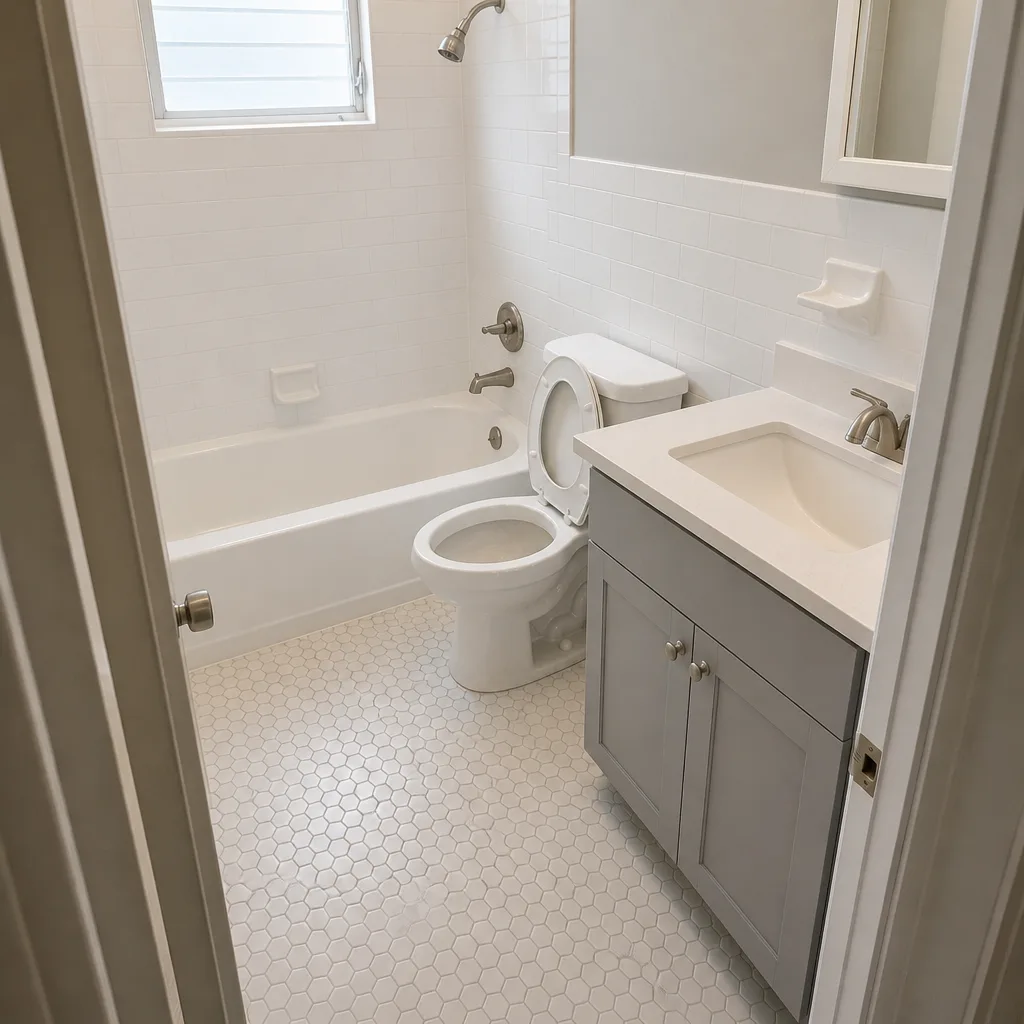 After
When to Call a Professional
Some of these checks you can and should do yourself before signing anything. Others – verifying permit history, confirming the substrate under a tile floor, evaluating whether a shower assembly’s waterproofing meets Miami-Dade code – belong with a licensed contractor. If you’re in the middle of a disputed job and the other contractor won’t produce a written scope or a copy of the permit, that’s a stop-and-call moment. If you’re pre-signature and the paperwork is thin, this is the point to get a second written price and a second opinion. Bradford Remodeling Co Miami offers free estimates in Miami – call (844) 797-4435 to schedule yours. You’ll get a written price before any work starts, and The Garrison Standard applies to every project.
Frequently Asked Questions

A missing or vague scope definition. If the contract doesn’t name specific brands, models, and quantities for the cabinets, surfaces, fixtures, and finishes, the scope isn’t defined – it’s a placeholder. In a typical Miami kitchen or whole-home remodel, missing scope is where surprise invoices come from. Call (844) 797-4435 for a free estimate with line-item scope included.
10-15% upfront before materials are ordered is the norm in Florida. Anything above that – 30%, 50%, or “half down” requests – is a red flag, because it typically means the deposit is funding the contractor’s next project rather than your materials. Call (844) 797-4435 for an exact pricing structure with milestones in writing.
Ask for the permit number in writing before demolition, then look it up on Miami-Dade County’s online building portal by address or permit number. Confirm the scope and the licensed contractor of record match what you signed. Final inspection sign-off should be in your hands before you release the last payment. If you’re unsure what to look for, call (844) 797-4435 and we’ll walk you through it.
It means the price is going to move, and you’ll be on the wrong side of the move. Every “detail” on a remodel – cabinet grade, countertop color, tile layout, fixture model – has a price. “Later” is how upgrades get billed after you’ve already committed. Call (844) 797-4435 to get every detail priced before you sign.
Confirm three things: the license is “Current, Active”; the license type matches the work (general, residential, or specialty); and there are no public complaints or disciplinary actions. Also confirm the license covers Miami-Dade specifically, since local registration requirements apply. Our licensed technicians have up to 22 years of experience and can walk you through what a valid credential set looks like – call (844) 797-4435.
It shouldn’t if the scope is defined and there’s a written change-order process. Our projects go forward on a fixed written price, and any change – material upgrade, added work, moved wall – goes through a signed change order with the price delta stated before the work proceeds. No numbers move at the door. Call (844) 797-4435 for a free estimate with that structure.
The Bottom Line
Warning signs on a remodel almost never announce themselves. They show up as absences – a contract without scope, a promised permit that never materialized, a deposit larger than the materials it’s supposed to cover, a license that turns out to be suspended when you finally check the DBPR database. The homeowners who end up frustrated are the ones who accepted those absences because the contractor seemed fine at the estimate. The fix is discipline on your side of the table: refuse to sign without written scope, refuse to fund without a permit number, refuse to pay a draw that doesn’t match a completed milestone, and hold the final 10% until inspections and punch list are signed. If a contractor can’t meet those four standards in Miami, they can’t meet the job. If they can, you’ve found someone whose paper trail matches their promise. That’s the only kind of contractor worth hiring.
Bradford Remodeling Co Miami is a member of the Garrison Partners family, established in 2004, operating as an independently owned and operated business held to The Garrison Standard. Every price and every guarantee in writing before work begins. Background-checked, uniformed technicians. Live-person phone coverage around the clock. A 365-Day Done Right Promise on every completed project. If you’re ready to get an honest written estimate on your Miami remodel – and to see what disciplined project paperwork actually looks like – call (844) 797-4435. Browse our work and full service list at the Bradford Remodeling Co Miami home page, or call directly to schedule your free estimate.
Written by the team at Bradford Remodeling Co Miami.