Last updated November 18, 2026







Free written scope consultation - allowances, timeline, and change-order rules on paper before a single trade is scheduled
Kitchen Remodeling Maintenance Schedule: What to Do and When
Silicone caulk at the joint where your backsplash meets the counter has an average service life of three to five years. In a Miami kitchen that sees daily cooking and year-round humidity, plan on two. That joint is the single most common entry point for water that rots out a cabinet base, and most homeowners don’t think about it until the claim gets denied. This guide gives you the actual service calendar tied to your finish choices: caulk and grout intervals by joint type, when to adjust a hinge versus replace it, how often to clean a range hood filter based on how you cook, and how to keep your written guarantee valid with a simple log.
Quick Answer
After a kitchen renovation, maintenance runs on two tracks. The first is a monthly check of moving parts and ventilation: hinges, drawer slides, the range hood filter, and under-sink connections. The second is a seasonal-or-longer re-service of sealants and finishes: caulk at splash joints and sink perimeters every 18 to 24 months in Miami, grout sealing every 12 to 18 months in wet zones, and cabinet hardware adjustment every 6 to 12 months. Log each task and its date. That record is what keeps a manufacturer warranty intact and your 365-Day Done Right Promise easy to honor.
Styles & brands we work with
- Kitchen remodeling
- Bathroom remodeling
- Home additions & ADU
- Roofing
- Windows & doors
- Driveway & pavers
- Fence
Table of Contents
- The Full Kitchen Maintenance Service Calendar
- Caulk and Grout Re-Service Intervals by Joint Type
- Cabinet Hinge and Drawer Slide Adjustment: Cadence and Warning Signs
- Range Hood Filter Cleaning: Tie It to How You Cook
- Inspecting Under-Sink Plumbing at 30, 90, and 365 Days
- Which Tasks Keep Your Written Guarantee Valid
- How Miami Conditions Shorten the Default Intervals
The Full Kitchen Maintenance Service Calendar
Here’s the schedule we hand homeowners at project close, the same one we organize around The Garrison Standard so nothing gets left to memory. Print it or keep it in a folder. The point isn’t to turn your kitchen into a second job; it’s to catch the small failures that become cabinet rot and warranty disputes.
- Monthly: Run a hand along the caulk at the sink perimeter and counter-to-backsplash seam. Wipe the range hood filter with a paper towel and check for tacky grease. Open the cabinet under the sink with a flashlight and look at the supply line connections.
- Every 6 months: Tighten or adjust cabinet hinges and drawer slides. Check the door alignment on KraftMaid and Wellborn boxes with a straight edge. Vacuum the refrigerator coils if they’re accessible.
- Every 12 months: Re-seal grout in high-traffic floor zones and around the toe-kick. Inspect the range hood duct connection. Test the under-sink shutoff valves by turning them a quarter turn and back.
- Every 18 to 24 months: Cut out and replace caulk at the counter-to-backsplash joint and the sink perimeter. In Miami, this is the default, not an emergency.
- Every 3 to 5 years: Full re-grout evaluation on floor tile. Replace worn cabinet hardware if finish is failing. New caulk in any joint you didn’t touch at the 24-month mark.
One note on the hardware: if your kitchen uses Cambria or Caesarstone surfaces, the seams are engineered and shouldn’t be re-caulked by a homeowner with a tube from the hardware store. Those need a color-matched silicone rated for stone. Get that detail from whoever installed it, and if that’s us, it’s in your written scope.
Caulk and Grout Re-Service Intervals by Joint Type
Not all seals fail at the same rate. The joint under your sink survives maybe half as long as the one behind the toe-kick, and knowing that saves you from re-caulking the whole kitchen every time one seam goes. Here’s where we’ve seen the failures land in Miami kitchens, and how often to plan for each.
- Counter-to-backsplash: 18 to 24 months in Miami. This is the highest-moisture horizontal seam in the room and the one most likely to grow mold behind the bead before you notice.
- Sink perimeter (drop-in or undermount): 12 to 18 months. Daily water contact plus the flex of a sink under load breaks the bond faster than the backsplash joint.
- Floor-to-toe-kick: 2 to 3 years. Lower moisture exposure but higher mechanical abuse from mops and brooms.
- Floor grout in the cook zone: Re-seal every 12 months. Grease and foot traffic work the sealer off faster than the rest of the floor.
- Wall tile grout around the range: Every 18 months. Heat cycling from the range dries and cracks the grout line.
- Wipe the joint dry and run a fingernail along the bead. If it peels up without resistance, it’s past due.
- Look for darkening or a musty smell in the seam. Both mean moisture is already behind the caulk and it needs to come out, not be topped.
- Press a paper towel against the joint and check for damp transfer. Anything wet means stop and investigate.
- For replacements, use 100% silicone rated for kitchens and baths. Acrylic-latex “paintable” caulk has no place in a wet seam.
Re-sealing a floor joint is a homeowner job. Replacing caulk at a stone counter seam where the backsplash is set on a fragile edge is not, and neither is re-grouting under a dishwasher. Those are worth a professional visit, and any failure inside the first year is covered by our kitchen remodeling in Miami guarantee at no charge.
Cabinet Hinge and Drawer Slide Adjustment: Cadence and Warning Signs
Hinges and slides are wear parts, not permanent fixtures. Every brand we install, from the hidden European hinges in KraftMaid boxes to the soft-close slides in a Wellborn drawer stack, expects adjustment over time. Wood moves with the season, screws loosen, and doors drift out of square. Catching it early is a ten-minute job; catching it late means stripped screw holes and a replaced hinge.
Adjust every 6 to 12 months. Walk the kitchen with a screwdriver and check each door. Open and close it slowly. A door that swings on its own, drops at the latch side, or rubs the frame needs attention. So does a drawer that pulls unevenly or won’t close flush.
- Signs you need adjustment: door rubs the adjacent cabinet, gap at the top of the door is uneven, drawer face is out of alignment with neighbors, soft-close mechanism slows but doesn’t stop the door.
- Signs you need replacement: hinge plate screws turn without biting (stripped wood), the slide has missing ball bearings or a bent rail, or the soft-close piston no longer functions after adjustment.
- Open the door and find the adjustment screws on the hinge body: usually one for depth and two for lateral alignment.
- Turn a quarter turn at a time and test the fit. Adjustments compound fast.
- For drawer slides, check the rail is level and the mounting screws are snug before touching the adjustment clip.
- If a screw hole is stripped, drill and glue in a wood plug and re-drive. If the slide is bent, replace it, not the drawer.
Stripped hinges in a cabinet we installed inside the first year are a call-in, not a homeowner fix. That’s the 365-Day Done Right Promise in action: if it fails inside that window, we come back and correct it at no charge. Outside the window, an annual adjustment visit is worth the hour.
Range Hood Filter Cleaning: Tie It to How You Cook
Filter cleaning is not a calendar task. It’s a cooking-volume task. A household that sears steak three nights a week loads the filter ten times faster than one that reheats leftovers. Grease-clogged filters cut airflow, strain the blower, and coat your cabinet fronts in a film that’s nearly impossible to remove without damaging the finish. And on a Miami kitchen that runs the hood during our humid summers, a clogged filter is a fire risk, not just a nuisance.
Here’s how to schedule it around your actual cooking:
- Heavy cooking (fry, sear, wok, or grill indoor 4+ nights a week): clean the filter every 4 to 6 weeks.
- Average cooking (3 to 4 nights a week, moderate oil): every 2 to 3 months.
- Light cooking (1 to 2 nights a week): every 4 to 6 months.
- Ducted vs. recirculating: recirculating hoods with charcoal filters need the charcoal swapped every 3 to 6 months regardless of cooking volume.
The visual test: hold the filter up to a bright light. If you can’t see through the mesh to a clear outline of the bulb, it’s past due. Run your finger across it. Any greasy smear means the filter’s already at about half capacity and should be cleaned this week, not this month.
Clean a metal mesh filter in a sink of hot water and degreaser, soak for 15 minutes, and rinse. Don’t run it through a dishwasher unless the manufacturer’s spec says it’s safe; some finishes fail. Ducted hoods also need an annual inspection of the exterior vent flap, which on most Miami homes sits on a wall or roof cap that can fill with debris. That’s a ladder job, and worth booking with your annual maintenance visit rather than doing yourself.
Inspecting Under-Sink Plumbing at 30, 90, and 365 Days
The cabinet under the sink is the most failure-prone space in a new kitchen. Supply lines, the P-trap, the disposal mount, and the dishwasher drain all converge there. After a remodel, the first year is when the connections either settle or fail. A three-point inspection at 30, 90, and 365 days catches every failure in the window where it’s covered.
- At 30 days: Open the cabinet, shine a flashlight on every connection, and run a dry paper towel along the base of each supply line and the P-trap joints. Any damp spot is a find. Check the disposal mount for looseness and the dishwasher drain for a proper high loop.
- At 90 days: Repeat the towel test. Look for a white crust on any fitting (mineral scale from a slow seep) and dark staining on the cabinet shelf under the pipes. Both are early moisture indicators, and both are worth a professional look even if you can’t find liquid water.
- At 365 days: Full visual: shutoff valves, supply lines, P-trap, disposal ring, and the cabinet floor. Test the valves by turning them a quarter turn and back. Log it. This is the last formal check while the 365-Day Done Right Promise is active.
Delta and American Standard faucets warranty their cartridges and bodies for years, but not the connections a homeowner overtightened or the disposal install that wasn’t snug. Keep the log. If a leak appears at the 30-day mark, you’re inside the window and a call gets it corrected free. If it appears at month 14, the manufacturer warranty or our written scope determines who fixes it. Either way, the log answers the question faster than any memory.
One caution: never hand-tighten or crank a compression fitting under a live sink without knowing the difference between wrench-tight and cross-threaded. A burst supply line at 2 a.m. isn’t a maintenance task, it’s a flood. Under-sink plumbing is one of those jobs where a professional visit is cheaper than the water damage.
Which Tasks Keep Your Written Guarantee Valid
A kitchen guarantee, ours or anyone else’s, has terms. Ours is specific: the 365-Day Done Right Promise means if a completed project fails within the first year, we return and correct it at no charge. What the guarantee does not cover is neglect. A caulk joint left to rot for 24 months isn’t a workmanship defect; it’s a missed maintenance item. The difference gets decided by whether you have a maintenance record.
- Log every sealant replacement: date, joint location, product used.
- Log every hinge and slide adjustment: date, cabinet, and whether any hardware was replaced.
- Log under-sink inspections: date and the result of the towel test.
- Keep the written scope and price from project close: you’ll need it if a dispute ever comes up, and it answers most questions on its own.
- Photograph any fail-point before you call: caulk lifting, water staining, a broken slide. It speeds the diagnosis.
We hand every homeowner a copy of the written price and the guarantee at close. That’s not marketing, it’s The Garrison Standard in practice: the numbers are set before the work starts and don’t move at the door. The same discipline applies here. Your maintenance log is the paperwork that proves the upkeep measure was reasonable, and it protects the manufacturer warranties on the Kohler and Moen fixtures as much as it protects ours.
How Miami Conditions Shorten the Default Intervals
National maintenance defaults assume a climate that isn’t ours. Miami runs humid year-round, our rainy season pushes interior moisture into any unsealed seam, and our kitchens sit in homes that often air-condition differently than the rest of the country. Those conditions shorten sealant life, speed up mold growth behind a bead, and accelerate cabinet wood movement. If a product label says 5 years, plan on 2 to 3 here.
- Grout sealer: a national 2-year default shrinks to 12 to 18 months in a Miami kitchen with a humid crawl or slab.
- Caulk at counter and sink seams: 3 to 5 years nationally, 18 to 24 months here.
- Cabinet wood expansion: doors and drawer faces drift out of alignment faster during the seasonal humidity swing, which is why our adjustment cadence is 6 to 12 months and not annual.
- Ventilation components: the exterior hood vent cap collects debris from palms, bougainvillea, and windblown grit in our climate. Annual inspection is not optional.
- Mold inspection after any leak: a slow under-sink seep that would dry out in a drier city can start a mold colony inside a Miami cabinet base in under two weeks.
This matters for neighborhoods too. A Coral Gables kitchen near the bay sees more humidity than one in Kendall, and a Brickell condo with a recirculating hood can’t vent outside at all. If you’re not sure which default applies to your home, ask. We’ve walked enough Miami kitchens to know how they age.
Common Mistakes to Avoid
- Topping failed caulk instead of cutting it out. Layering new caulk over a moldy bead traps the moisture and hides the rot while it spreads. Cut it out and start clean.
- Cleaning range hood filters on a calendar, not cooking volume. A heavy-cooking household on a 6-month filter schedule clogs the mesh in half that time and strains the blower.
- Adjusting a door without checking the hinge plate screws. Half of “sagging doors” in Miami kitchens are stripped screws, not hinge drift. Adjusting the hinge body doesn’t fix a plated screw that’s pulling out.
- Ignoring the first under-sink seep because it “stopped.” Water that appears once and disappears is telling you the trap is slowly weeping. Find it before it soaks the cabinet floor.
- Assuming a manufacturer warranty covers install labor. Delta and American Standard cover parts, not the labor to swap them. That’s where our 365-Day Done Right Promise does the work.
- Skipping the maintenance log because it feels like paperwork. It’s the record that carries a warranty claim when the failure was a workmanship issue and the homeowner kept up their side of the deal.
- Re-grouting floor tile without checking the substrate. In a Miami kitchen with a slab foundation, cracked grout often means a substrate issue, not a grout failure. Grouting over it is a re-do waiting to happen.
See the difference
 Before
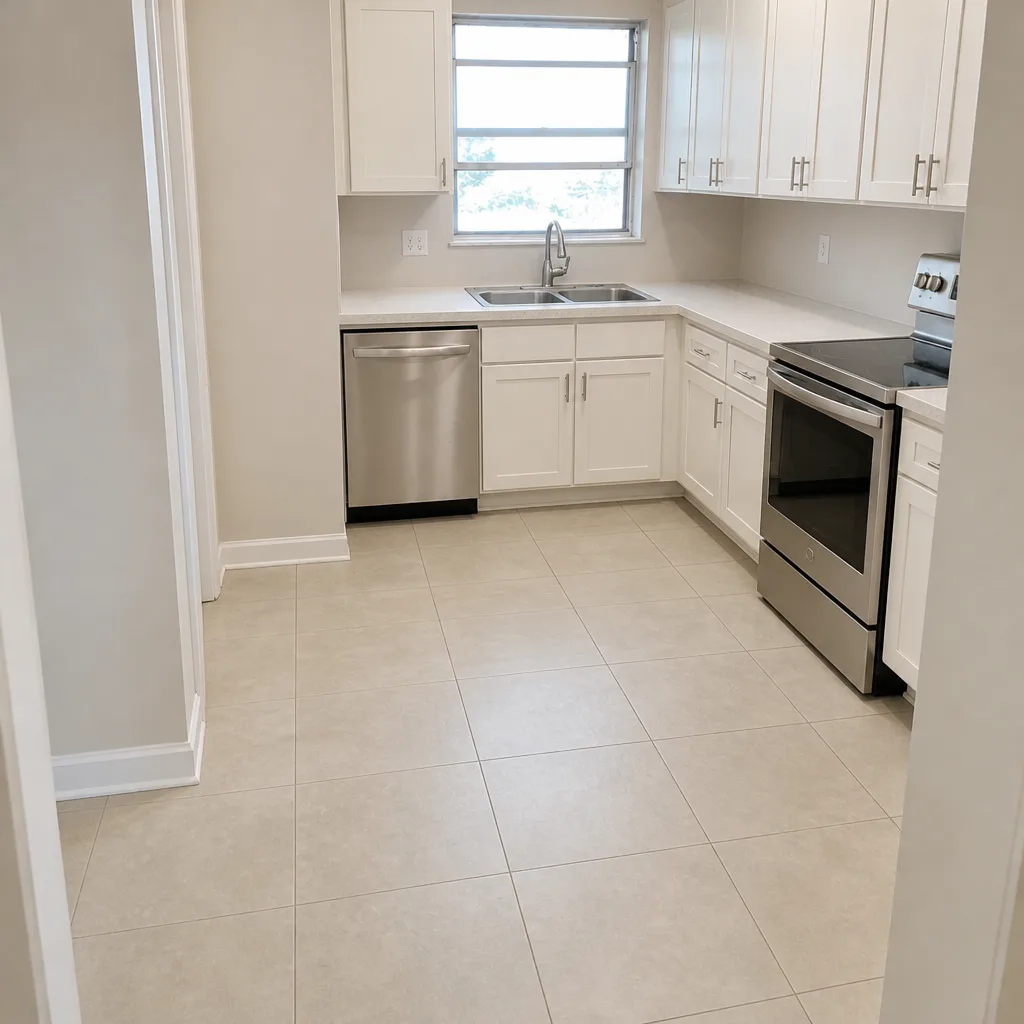 After
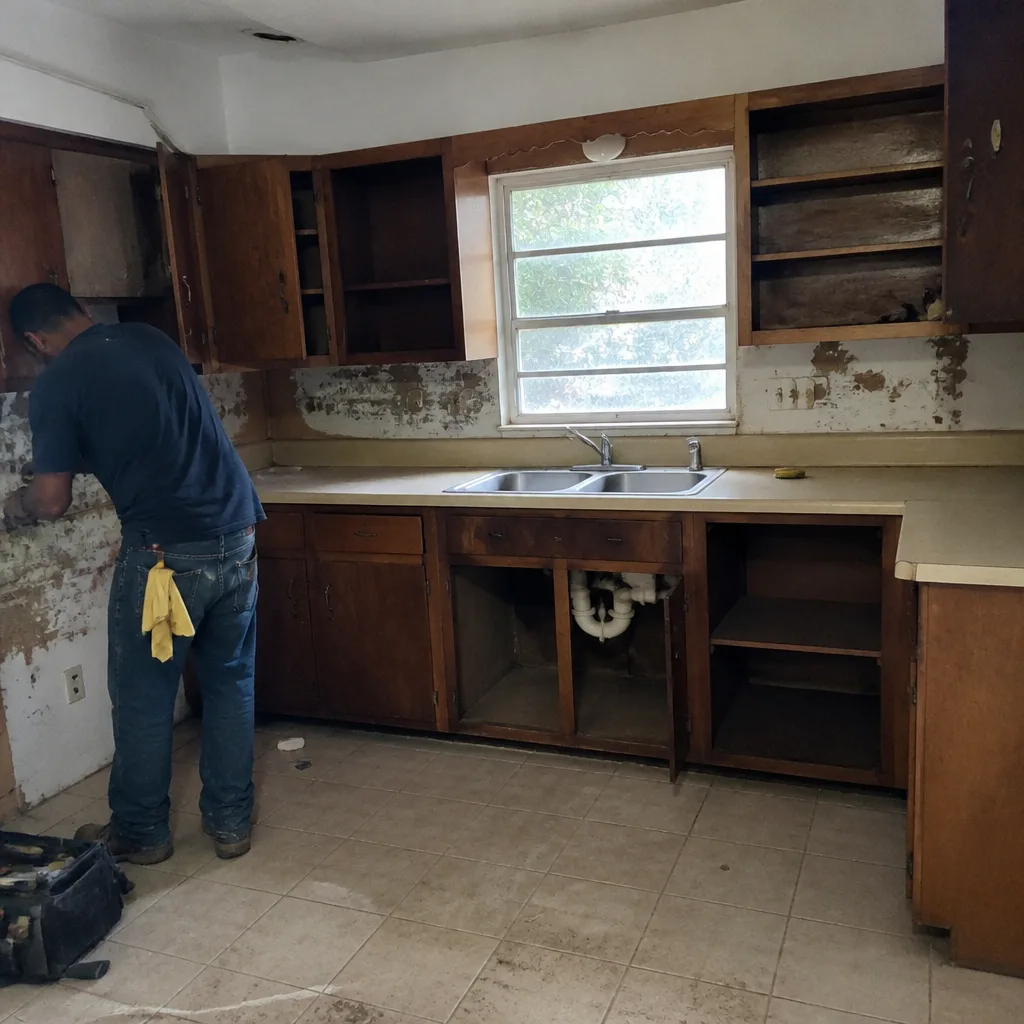 Before
 After
 Before
 After
When to Call a Professional
Most of this schedule is homeowner work: a flashlight and a paper towel cover a lot. Call us when you hit any of these. A caulk seam that darkens or smells and won’t dry out. A drawer slide that fails to close after adjustment, or a hinge screw that won’t bite. Any under-sink moisture past the 30-day mark. Grout cracking along a straight line across a floor tile, which usually points to a substrate problem. A range hood that loses suction even after a clean filter. Any failure inside the first year after a project we completed – that’s the 365-Day Done Right Promise in force, and the visit is free.
Bradford Remodeling Co Miami offers free estimates in Miami. Call (844) 797-4435 for an exact quote, and a live person answers, not a voicemail. If you want to see the full scope of what we handle, our Bradford Remodeling Co Miami home page and general contractor in Miami page lay out the written-price approach we take on every job. For a full bathroom that’s due for the same schedule, our bathroom remodeling in Miami work follows the same calendar logic.
Frequently Asked Questions

Plan on 18 to 24 months in a Miami kitchen. That’s shorter than the 3 to 5 years a manufacturer label may suggest, because our humidity and daily cooking load break the bond faster. Check the joint monthly and replace it as soon as it peels or darkens. Call (844) 797-4435 if the seam is at a stone counter and you want it done right.
Yes, if the failure traces to workmanship. A caulk joint that lifts, cracks, or leaks inside the first 12 months of a completed project we finished gets corrected at no charge. The guarantee only stops covering a seam if the maintenance record shows it was left un-inspected long past the service interval. Call (844) 797-4435 to schedule the free return visit.
A professional maintenance visit for sealant re-service, hinge and slide adjustment, and an under-sink inspection typically runs $200 to $450 depending on the number of joints and cabinets involved. That’s a real range for a straightforward kitchen. Call (844) 797-4435 for an exact written price before any work starts.
Two reasons: cooking volume and ambient humidity. Humid air holds grease vapor longer, and if your kitchen sees heavy cooking 4 or more nights a week, the mesh loads up in 4 to 6 weeks. Recirculating hoods with charcoal filters need the charcoal swapped every 3 to 6 months. Call (844) 797-4435 if the hood loses suction after cleaning.
Adjustment handles drift: a door that rubs the frame, sits unevenly, or swings on its own. Replacement handles failure: stripped screw holes in the cabinet wood, missing ball bearings in a drawer slide, or a soft-close piston that won’t function after adjustment. Try adjustment first; if the hardware won’t hold the correction, replace it. Call (844) 797-4435 if the hinge hole is stripped and you’re inside the first-year window.
Yes, if you want the paperwork on your side. The log proves the maintenance measure was reasonable, and it protects manufacturer warranties on fixtures like Toto or Delta alongside our own written guarantee. A dated entry per task takes a minute and answers any warranty question faster than memory. Call (844) 797-4435 if you’d like a template to start with.
The Bottom Line
Finish choices determine your maintenance calendar, and Miami conditions shorten every default interval on the label. Caulk at the counter-to-backsplash seam and sink perimeter should be re-serviced every 18 to 24 months, not 3 to 5 years. Grout in wet zones needs re-sealing every 12 to 18 months. Hinges and slides need adjustment every 6 to 12 months. Range hood filters run on cooking volume, not months. Under-sink inspections at 30, 90, and 365 days catch the failures that would otherwise turn into rotted cabinet bases and denied claims. Log each task and the date. That record is what keeps your written guarantee clean and your written price honest. If any of this feels out of reach, call (844) 797-4435 for the free estimate and we’ll walk through it with you.
Written by the team at Bradford Remodeling Co Miami.