Last updated November 18, 2026


Free written scope consultation - allowances, timeline, and change-order rules on paper before a single trade is scheduled
DIY vs Professional Bathroom Remodeling: What’s Safe to Do Yourself
Here’s the part most DIY bathroom guides skip: in Miami-Dade County, a homeowner can pull an owner-builder permit and legally do a lot of the work. But the moment you hire anyone to help with the electrical or plumbing rough-in, that person has to be a licensed contractor of record. Not “handy.” Licensed. The fines for getting this wrong are substantial, and a failed inspection can stall your project for weeks. This guide covers what you can legally and safely do yourself in Miami, where the licensed-trade line falls, and how to compare real costs before you pick up a pry bar.
Styles & brands we work with
- Kitchen remodeling
- Bathroom remodeling
- Home additions & ADU
- Roofing
- Windows & doors
- Driveway & pavers
- Fence
Quick Answer
In Miami-Dade, you can legally self-perform demolition, painting, accessory installation, and a like-for-like vanity swap on existing supply lines under an owner-builder permit. You cannot legally self-perform electrical, plumbing, or gas rough-in work that requires a licensed trade, and you cannot hire unlicensed helpers to do it for you. Waterproofing a shower is doable but is the single most consequential step in the build, and it’s where DIY inspections fail most often.
Table of Contents
- What Miami-Dade’s Owner-Builder Permit Actually Allows
- The Genuinely DIY-Safe Tasks
- Where the Licensed-Trade Line Falls
- Waterproofing: The Step That Decides Your Shower
- The Honest Cost Comparison
- How to Hire Out Just the Licensed Trades
- Permits, Inspections, and Insurance
- When to Call a Professional
What Miami-Dade’s Owner-Builder Permit Actually Allows
An owner-builder permit lets you act as your own general contractor on your own primary residence. You’re telling the county you’ll supervise the work and take responsibility for code compliance. That’s a real legal role, not a formality. It means you sign the affidavit, you carry the liability, and you answer to the inspector.
Here’s the catch most DIY guides leave out: the owner-builder permit covers you. It does not extend to anyone you pay to help. In Miami-Dade, if you bring in a worker to run new electrical circuits, move a drain line, or install a gas line, that worker must hold a valid license in that trade. Hiring an unlicensed helper while holding an owner-builder permit is a violation, and Miami-Dade enforces it. Fines can run into the thousands, and the county can require you to tear out and redo unpermitted work at your own cost.
Homeowners who take this route are usually doing it to save the general contractor markup on a project they plan to supervise anyway. That’s a legitimate strategy. Some of our own clients at Bradford Remodeling Co Miami have come to us after an owner-builder attempt went sideways, usually because a rough-in inspection failed and the wall was already closed. The permit was fine. The sequencing wasn’t.
What the permit does not do
- It doesn’t let you skip inspections. Rough-in, waterproofing, and final inspections still apply.
- It doesn’t cover rental properties or second homes. Owner-builder is for your primary residence only.
- It doesn’t authorize unlicensed helpers on licensed-trade work, even if you’re the one supervising.
- It doesn’t transfer to a future buyer as a warranty. If you sell, your work history goes with the permit record.
The Genuinely DIY-Safe Tasks
Some bathroom work is well within a careful homeowner’s reach. None of it requires a licensed trade, none of it touches the permit-critical systems, and all of it can be undone or corrected without opening a wall. If you’re gutting a hall bath in Kendall or refreshing a guest bath in Coral Gables, this is the list where DIY genuinely pays.
- Demolition. Pulling tile, removing the old vanity, taking out the toilet, and stripping drywall are within reach for most homeowners with a pry bar, a utility knife, and a dust mask. Watch the drain and supply lines as you go. One careless hammer swing into a copper stub-out turns a $0 task into a $400 plumber visit.
- Painting and drywall finishing. No permit, no inspection, and the results are visible. This is where a homeowner’s labor translates directly into a professional-looking finish.
- Vanity swap on existing supply lines. If the new vanity lands on the same rough-in locations as the old one, you can usually set and connect it yourself. The moment you relocate the drain or add a supply, you’ve crossed into plumbing permit territory.
- Accessory installation. Towel bars, mirrors, shelving, medicine cabinets, and a new showerhead are all DIY-safe. Use proper anchors for tile and block, and skip drilling into a wall where you can’t see what’s behind it.
- Fixture swaps that don’t move plumbing. A faucet swap on existing valves is common DIY work. If the shutoff valve is seized or the supply line is corroded, stop and call a plumber.
Exterior fencing and gate hardware around a South Florida home follow the same logic. If you’re replacing a gate on existing posts, brands like Barrette and Master Halco make components that install cleanly with the right tools and no permit. If you’re running new posts and anchoring into stucco near the property line, that’s a different conversation with the building department. For interior work that touches the whole house, our general contractor service in Miami handles the sequencing and permit coordination so the trades land in the right order.
Where the Licensed-Trade Line Falls
This is the section that saves you the most money, and it’s the one that gets skipped. The line between “I can do this” and “I legally cannot hire myself to do this” is set by trade licensing, not by your confidence.
You cannot legally self-perform or hire unlicensed for:
- Electrical rough-in. New circuits, relocated outlets, GFCI installation in wet zones, and any work inside the panel. Bathrooms in Miami require GFCI protection within code-mandated distance of water sources, and an inspector will check.
- Plumbing rough-in. Moving a drain, adding a supply line, relocating a toilet flange, or installing a new shower valve. Fixture swap on existing valves is different. Moving the plumbing is not.
- Gas work. Any gas appliance connection, line relocation, or new gas run. This is the highest-risk trade in the bathroom and never a DIY job.
- Water heater replacement. Requires a licensed plumber and a permit in Miami-Dade. No exceptions.
In our experience, the failure point isn’t the ambitious DIY homeowner. It’s the homeowner who hires a friend who “does this on the side.” The friend isn’t licensed, the work fails inspection, and the homeowner is on the permit as the responsible party. If a fire or a leak results from that unlicensed work, your homeowner’s insurance can deny the claim. That’s the real risk: not the cost of redoing the work, but the cost of an uncovered loss on a home worth what Miami homes are worth.
The trade-off cuts the other way too. A licensed plumber or electrician is expensive in Miami, and the inspection record is public. Buyers ask for it. When you sell, unpermitted work shows up on the permit history, and it can sink a deal or force a price reduction. That’s the trade you’re making when you cut the licensed trade out.
Waterproofing: The Step That Decides Your Shower
Waterproofing a shower is not technically complex. Bonding flange, topical membrane, proper thinset, corners sealed. A careful homeowner can learn the process in a weekend. It is, however, the single most consequential step in any shower build, and inspection failure rates on DIY waterproofing are high. Real numbers from builders across the country back this up: shower waterproofing fails inspection more often than almost any other rough-in category.
Here’s why it matters so much in Miami specifically. South Florida’s humidity doesn’t give a shower pan a chance to dry out between uses. A pinhole in the membrane, a corner that wasn’t fluid-applied properly, or a flange set above the pan instead of below it, and you get water in the substrate. Water in the substrate in Miami means mold within a season, and a slow leak into the ceiling below within two. By the time you see the stain at the cove base of the wall on the other side, you’re tearing out the shower you just built.
What a proper waterproofing sequence looks like
- The substrate goes down first, and it has to be flat and clean. Backer board seams get taped and thinset-bedded.
- The waterproofing membrane is applied in two coats, with mesh reinforcing tape at every corner and seam.
- The drain bonding flange is set so the waterproofing layer laps over it, not under it. This is where most DIY installs fail.
- The flood test runs for 24 hours, with the water level marked and checked. If it drops more than a small amount, it fails.
- The inspection happens before tile goes up. A failed waterproofing inspection at this point costs you a re-do of the membrane. A failed one after tile costs you the whole shower.
Clients sometimes ask us why we don’t just let them finish the shower themselves if they’re careful. We do, when they want to. What we won’t do is sign off on a waterproofing job we didn’t install. The 365-Day Done Right Promise covers our work, not work we supervised from a distance. If your shower fails inside a year because of a membrane you installed, there’s no guarantee to call on. That’s the honest math. For a shower, the waterproofing is the step we want in our own hands.
The Honest Cost Comparison
Most DIY-vs-pro comparisons give you a single number: “DIY saves 20 to 50 percent.” That number is useless in a bathroom remodel because it ignores the cost of a failed rough-in. Here’s the honest breakdown of what you’re actually saving on a mid-size Miami bathroom, and what a failure costs you.
What DIY finish work actually saves
- Demolition labor: $600 – $1,400 saved. This is a weekend of hard work for most homeowners.
- Painting and drywall finishing: $800 – $2,000 saved. The most reliable DIY savings on the list.
- Vanity install on existing lines: $300 – $700 saved. Set and connect, no permits, no plumbing moves.
- Tile setting: $1,500 – $4,000 saved. Doable, but the wall tile mistakes show up within a year. Level 3 job.
- Accessory install and fixture swaps: $200 – $500 saved. Low risk, real savings.
A homeowner who takes on all of the above saves a realistic $3,400 – $8,600 on a bathroom in Miami. That’s real money. It’s also exactly the range where a single re-do eats the savings.
What a failed rough-in inspection costs
- Re-opening a wall to expose a failed rough-in: $400 – $900. Cut, remove, repair, re-patch.
- Re-inspection fee: $100 – $250 depending on the jurisdiction.
- Re-do of a failed shower waterproofing after tile is set: $2,500 – $5,500. Tile, backer, membrane, and redo labor.
- Unpermitted-work penalty and permit extension: $500 – $2,500, and it can delay the final sign-off indefinitely.
- Insurance denial after unlicensed-trade work: total loss of the claim. There’s no band on this one.
The math is clear. DIY finish work saves real money. DIY rough-in work risks it, and the legal exposure makes the risk asymmetric. For a broader look at what a full scope costs in Miami, our bathroom remodeling service in Miami breaks down the line items with the same transparency we’d want from any contractor.
How to Hire Out Just the Licensed Trades
This is the strategy a lot of Miami homeowners actually use: hire the licensed electrical and plumbing trades only, handle the finish work themselves. It’s legitimate, and it can work. But the scope separation has to be explicit from the first handshake, and it has to be in writing.
What to ask before you sign
- Who is the permit of record? If you’re the owner-builder, the permit is in your name and you carry the liability for everything. Make sure the licensed sub understands this and confirms in writing they’ll pull their own sub-permit where their trade requires it.
- What’s the scope, line by line? “Rough-in and inspection-ready” is not a scope. “Rough-in electrical to four fixture locations, GFCI protection, inspection-ready” is. Get it written.
- Who’s responsible for the inspection? If the electrician’s rough-in fails inspection, who fixes it and who pays the re-inspection fee? The answer has to be in the agreement, not assumed.
- What happens at the handoff? When does the licensed trade’s responsibility end and yours begin? Date it, photograph it, and move the wall forward after that point, not before.
- Is the contractor insured? Ask for the certificate of insurance before they walk in. Every crew. Every time. A licensed trade without general liability is a different risk than a licensed trade with it.
Bradford Remodeling operates differently. When we run a bathroom remodel, the licensed trades work under our umbrella, the permit is coordinated at the office level, and the 365-Day Done Right Promise covers the whole project: if a rough-in fails an inspection inside the guarantee window, we return and correct it at no charge. That’s not a knock against the DIY-plus-subs route. It’s just a different risk structure, and you should know which one you’re buying.
One practical note for separating scope: coordinate your licensed trades with your certificate of occupancy deadlines if the project involves structural changes. For bigger scope, our kitchen remodeling service in Miami runs on the same permit-first sequence, and every price lands in writing before work starts.
Permits, Inspections, and Insurance
Every bathroom remodel in Miami-Dade that touches plumbing, electrical, or structural work requires a permit. Cosmetic work like paint, tile over existing substrate, and accessory install generally does not. The line is close enough to the plumbing and electrical trades that a permit should be assumed, not avoided.
The inspections that apply to a typical Miami bathroom remodel:
- Rough-in electrical. Before the wall closes. GFCI and outlet locations verified.
- Rough-in plumbing. Before the wall closes. Drain slope, vent, and supply verified.
- Waterproofing. After the flood test, before tile. The inspection that matters most in a shower.
- Framing. If the layout changes and walls move or openings shift.
- Final inspection. After the last fixture is set and the last switch works.
Each one is a checkpoint. Skip one under an owner-builder permit and the county can stop the project, require the wall to be opened, and hold the final sign-off. That’s the expensive version of a bathroom remodel. The cheap version is the one where the inspection comes back clean and the project moves on schedule.
Insurance belongs in the same conversation. Verify general liability and workers’ comp for anyone on the project, including a licensed subcontractor. Homeowner’s insurance in Florida has tightened considerably in the last few years, and claims arising from unpermitted or unlicensed work are among the most likely to be denied. That’s a fact worth taking seriously when you’re deciding whether to save $600 by hiring a friend.
Common Mistakes to Avoid
- Treating the owner-builder permit as covering everyone. It covers you. The moment you hire a helper for licensed trade work, that worker needs a license. Miami-Dade enforcement on this has tightened, and the fines reflect it.
- Closing the wall before the rough-in inspection. This is the most common and most expensive mistake. Once drywall is up and finished, the re-open cost runs into the hundreds, and the re-inspection adds a week.
- Skipping the flood test on the shower pan. A 24-hour flood test is cheap. Replacing the ceiling below a failed pan leak is not. Do the test, mark the water level, and check it.
- Hiring unlicensed tile setters for a bathroom in South Florida. Tile setters don’t need a trade license in most cases, but the waterproofing they do behind the tile is where projects fail. Ask how they waterproof and what product they use, before you sign.
- Assuming home warranty or insurance covers unpermitted work. It doesn’t. Florida carriers are explicit on this. If the work wasn’t permitted and inspected, the claim is likely denied.
- Forgetting the Miami humidity factor. A bathroom exhaust fan sized for a Northern climate will not move enough air in Miami. The fan needs to be rated for the moisture load, and it needs to vent to the exterior, not the attic. A fan that vents into the attic is a mold problem on a timer.
- Choosing the cheapest bid on the licensed trade. A $900 plumber and a $2,400 plumber are not doing the same job. Ask for the scope in writing. A written price before work starts is the standard, not the exception.
When to Call a Professional
Call a professional when the work crosses into licensed trades, when permits are in play, or when the step is consequential enough that a failure costs more than the labor you’d save. Plumbing rough-in, electrical rough-in, gas work, structural changes, and shower waterproofing fall on that side of the line. For anything you can’t dry-fit first and see the finished result before you commit, stop and price out the professional option. A wrong turn in a bathroom remodel is expensive to unwind.
Bradford Remodeling Co Miami offers free estimates in Miami. We pull the permits, coordinate the licensed trades, and put a written price and a written guarantee in your hand before any work starts. The 365-Day Done Right Promise means if the work fails inside the year, we return and correct it at no charge. Call (844) 797-4435 for a free estimate. A live person answers, day or night.
Frequently Asked Questions
Yes, if you pull an owner-builder permit and do the work yourself on your primary residence. What you cannot do is hire unlicensed workers for electrical, plumbing, or gas work. The owner-builder permit covers you, not the people you pay to help. Once a licensed trade is involved, that trade must hold a valid license of record in Miami-Dade.
The fines for unlicensed contracting in Miami-Dade run substantial, and they come with a requirement to redo unpermitted work at your own cost. They also complicate your homeowner’s insurance. Call (844) 797-4435 for an exact quote on a licensed, permitted project – estimates are free.
The process isn’t complex, but it’s the highest-consequence step in the shower build. DIY waterproofing fails inspection at high rates, and a failure found after tile goes up costs $2,500 – $5,500 to redo. If you waterproof yourself, do the 24-hour flood test, photograph it, and get the inspection before any tile goes up.
A realistic savings on a mid-size Miami bathroom is $1,400 – $3,400 for demo, paint, and drywall finish combined. The bigger savings come from tile and vanity work, which push the total range to $3,400 – $8,600 if you take on everything safe. The savings disappear the moment a rough-in fails.
With Bradford Remodeling, no. We put the full price in writing before work starts, with no numbers that move at the door. If the scope changes mid-project because of something found inside the wall, we price the change in writing before it happens – never after. Call (844) 797-4435 for a free estimate.
Yes. On every project that touches plumbing, electrical, structural, or waterproofing work, we pull the permit and coordinate the inspections through final sign-off. The permit, the written scope, and the 365-Day Done Right Promise all land in your hands before the first tool comes out.
The Bottom Line
The DIY-versus-hire question in a Miami bathroom remodel comes down to permit jurisdiction and license requirements, not skill level. You can legally self-perform demolition, painting, accessory install, and a like-for-like vanity swap under an owner-builder permit. You cannot legally self-perform or hire unlicensed for electrical, plumbing, or gas rough-in. Waterproofing is doable, but it’s the step where a failure costs the most, and the flood test plus inspection is what protects you. DIY finish work saves real money. DIY rough-in work risks it. Match the risk to the step, keep every scope in writing, and the project stays squared away.
When you’re ready to price the work you don’t want to touch yourself, call (844) 797-4435 for a free estimate from Bradford Remodeling Co Miami. Written price. Written guarantee. Live person on the line.
Written by the team at Bradford Remodeling Co Miami.
See the difference
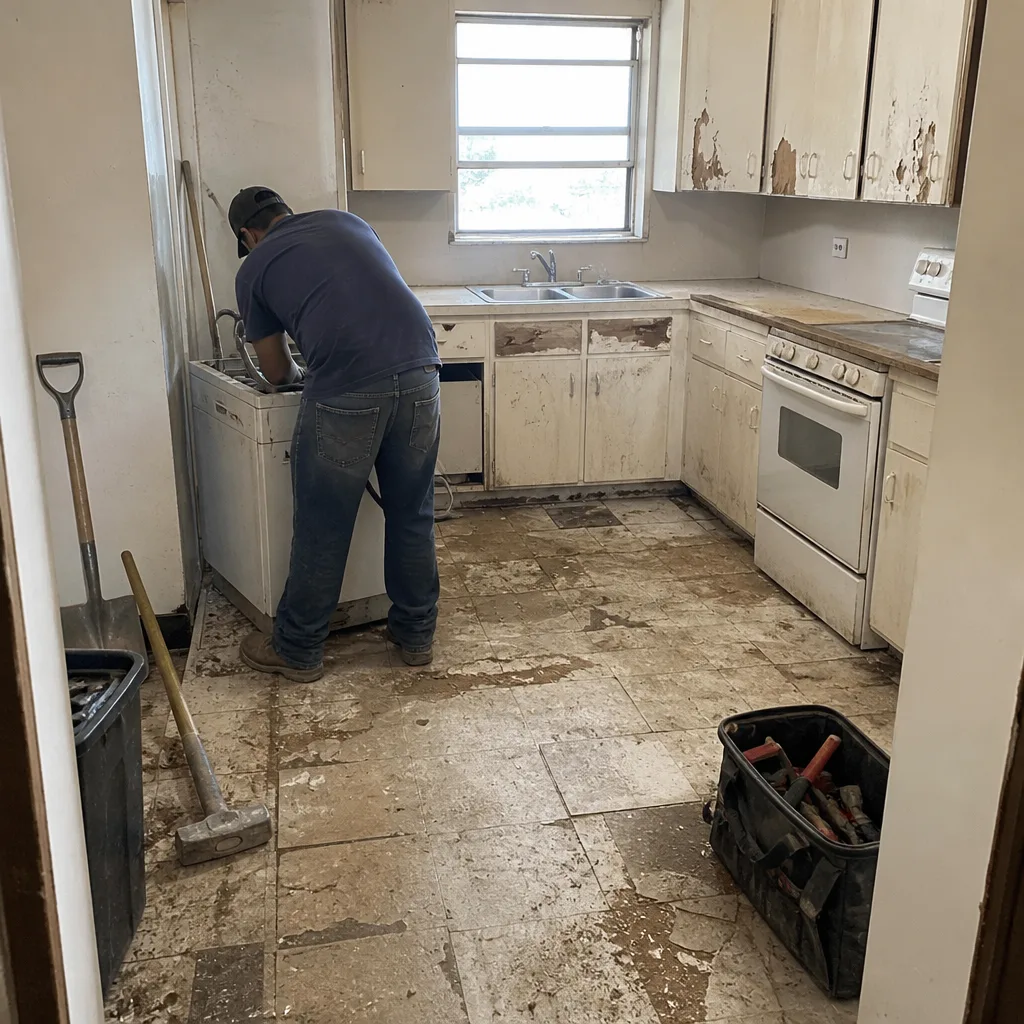 Before
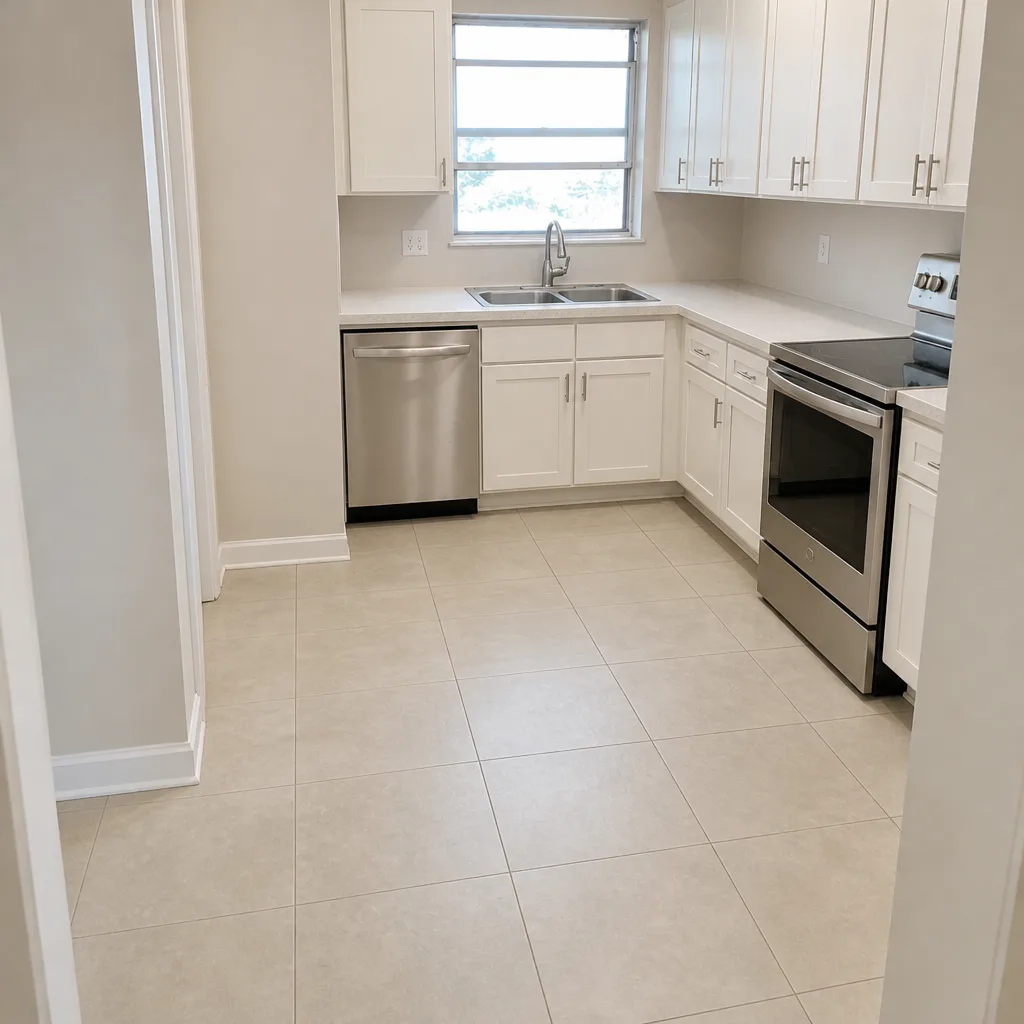 After
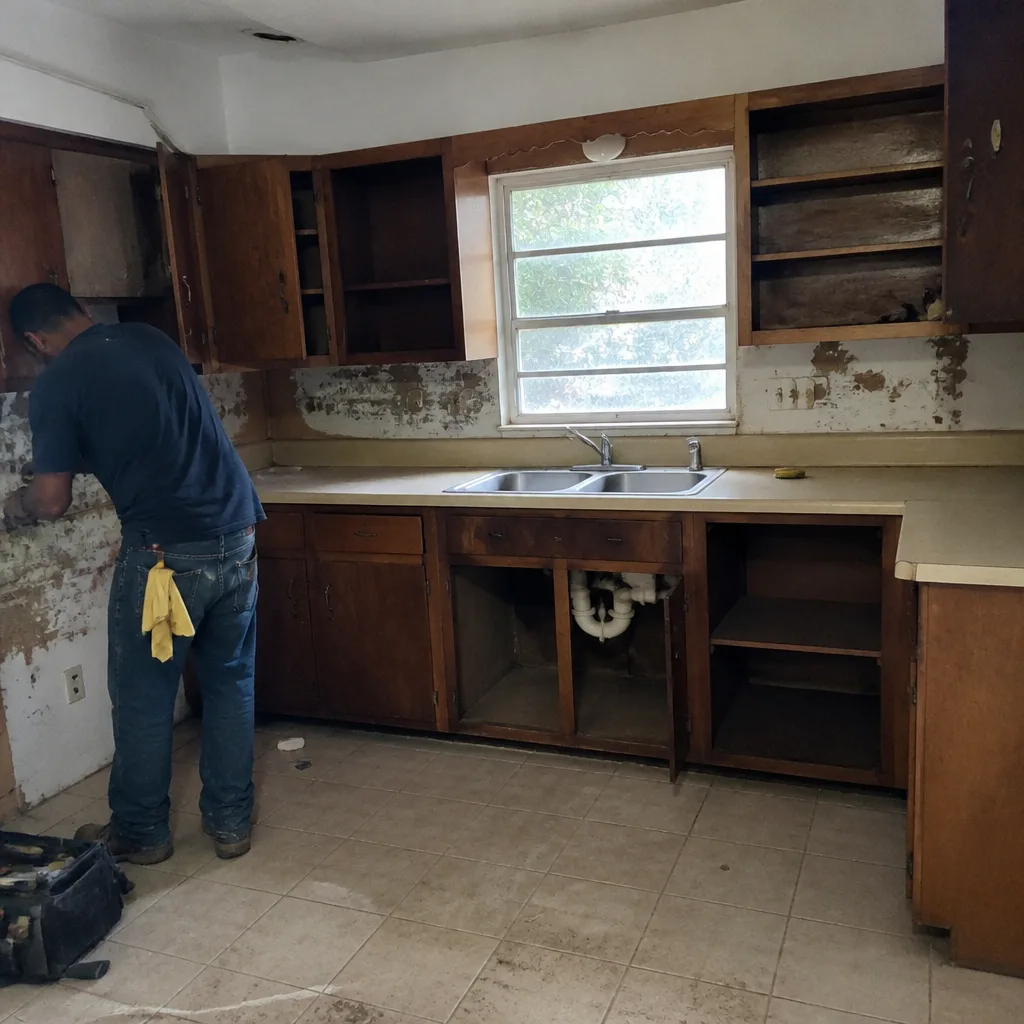 Before
 After
 Before
 After